Dental Implant Longevity Estimator
Your Lifestyle Factors
Estimated Outcomes
Titanium Post Survival Probability
Crown Replacement Frequency
Every 10-15 Years
Personalized Care Tips
- • Maintain excellent oral hygiene.
- • Visit your dentist every 6 months.
You’ve just spent a small fortune getting that titanium screw in your jaw. It feels solid, permanent, like it’s part of you now. So, when someone asks, "How long do dental implants last?" you probably assume the answer is "forever." But here’s the uncomfortable truth: while the metal post might outlive you, the tooth attached to it won’t. The average dental implant is a surgical component that interfaces with the bone of the jaw or skull to support a dental prosthesis such as a crown, bridge, denture, facial prosthesis or to act as an orthodontic anchor typically lasts 25 years or more, but that number swings wildly based on one critical factor: how well you take care of it.
The Two-Part Reality of Implant Longevity
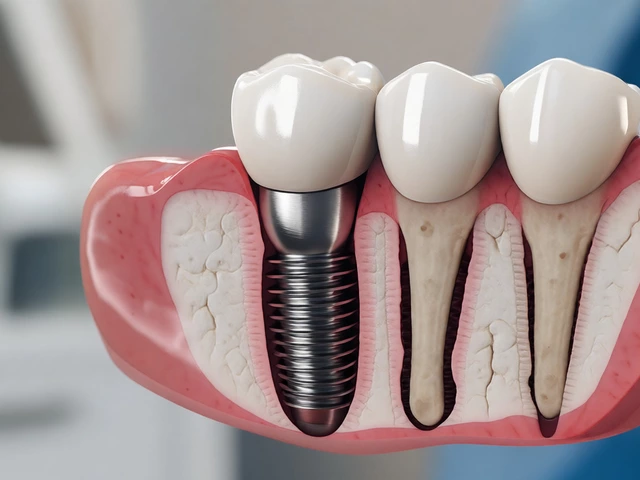
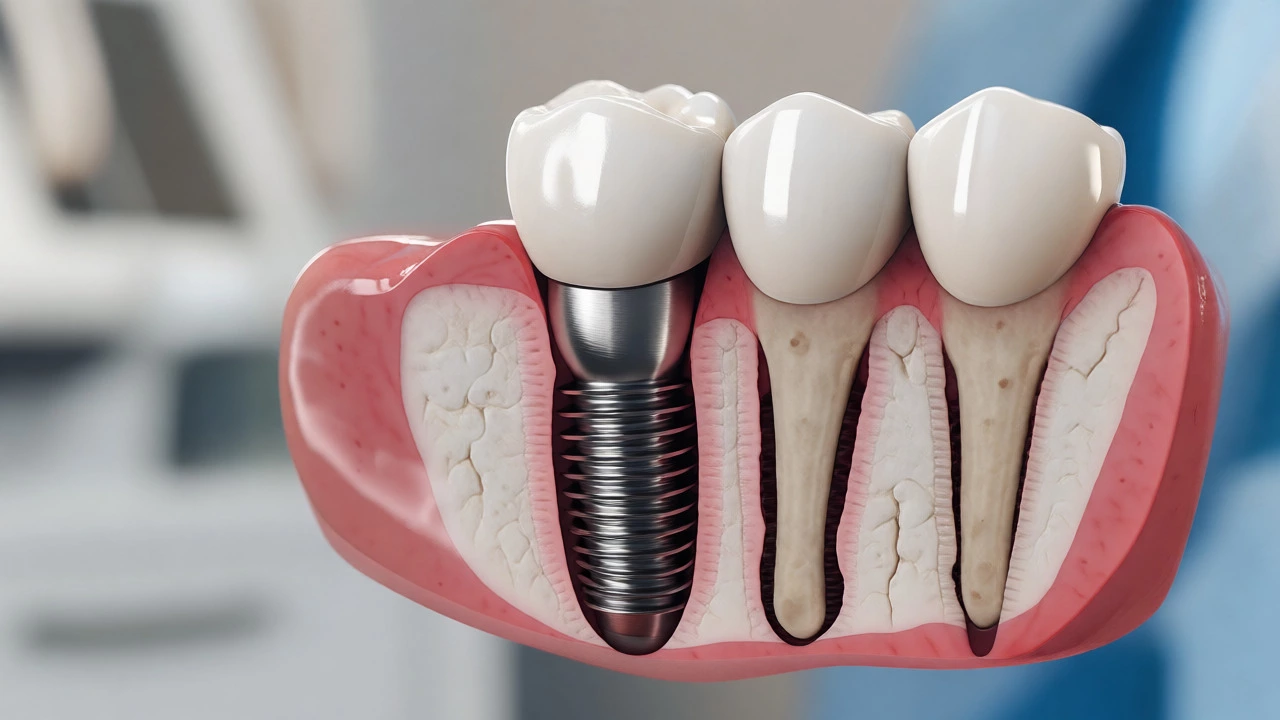
To understand the timeline, you have to stop thinking of an implant as one thing. It’s actually two distinct components with different lifespans. Think of it like a house. The foundation (the implant post) is designed to be permanent. The roof and walls (the crown or bridge) are subject to weather, wear, and tear.
The titanium post is a biocompatible fixture placed into the jawbone that undergoes osseointegration to become stable is made of medical-grade titanium. This material doesn’t rot, decay, or dissolve. Once it fuses with your bone-a process called osseointegration-it becomes essentially immovable. Studies from major dental journals suggest that with proper care, these posts can last 30, 40, or even 50+ years. Many patients who got their first implants in the 1980s still have them today.
However, the dental crown is the visible artificial tooth attached to the implant abutment, usually made of porcelain or zirconia sitting on top? That’s a different story. Porcelain chips. Zirconia cracks. Composite resin wears down. On average, you should expect to replace the crown every 10 to 15 years. If you grind your teeth at night, that timeline shrinks dramatically. So when people say their implant "failed," they often mean the cosmetic part broke, not that the root fell out.
Why Implants Fail (And It’s Rarely the Metal)
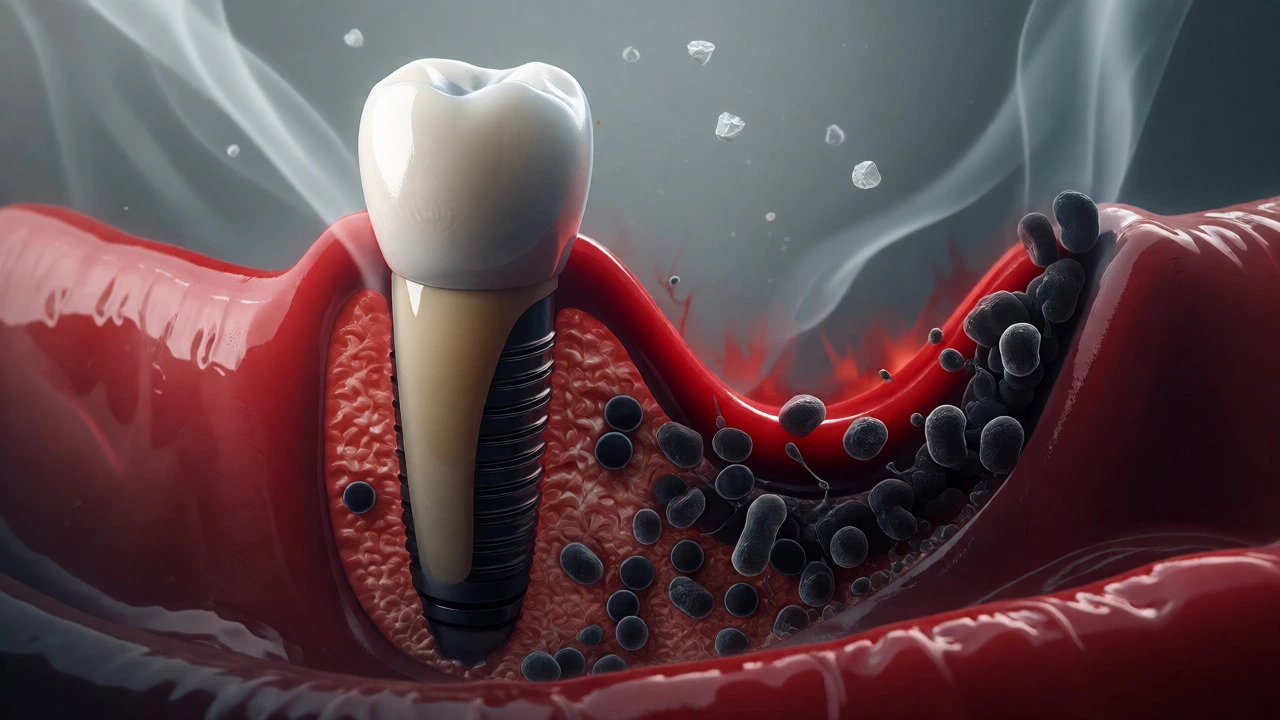
If the titanium is so durable, why do some implants fail within five years? It’s almost never because the metal gave up. It’s usually biology fighting back. The biggest enemy of any implant isn’t age; it’s bacteria.
Peri-implantitis is an inflammatory condition affecting the soft and hard tissues around dental implants, leading to bone loss if untreated is the term for gum disease around an implant. Unlike natural teeth, implants don’t have a periodontal ligament-the shock absorber that connects your tooth root to the bone. This means there’s no immune defense mechanism built into the connection point. If plaque builds up, it attacks the bone directly. Once bone starts receding, the implant loses its grip. And unlike natural teeth, you can’t just fill a cavity or do a deep cleaning easily around a rough-textured titanium surface.
Smoking is another killer. Nicotine constricts blood vessels, reducing oxygen supply to the gums and slowing healing. Smokers have a failure rate nearly three times higher than non-smokers. If you smoke and get an implant, you’re gambling with your investment. Uncontrolled diabetes is similar; high blood sugar impairs healing and increases infection risk.
Factors That Shorten Your Implant’s Life
Your lifestyle dictates the clock. Here’s what actually moves the needle on longevity:
- Oral Hygiene Routine: Brushing twice a day isn’t enough. You need interdental brushes or water flossers. Plaque hides under the gumline where toothbrush bristles can’t reach.
- Teeth Grinding (Bruxism): Chewing force is manageable. Nighttime grinding force is massive. Without a night guard, you can fracture the crown or loosen the screw connecting it to the post.
- Dietary Habits: Chewing ice, hard candy, or opening packages with your front teeth can crack porcelain crowns instantly.
- Systemic Health: Osteoporosis medications (bisphosphonates) can affect bone density and integration. Always tell your dentist about your meds.
Let’s look at the data. A comprehensive review published in the Journal of Clinical Periodontology found that the 10-year survival rate for implants is roughly 90-95%. But the complication rate rises significantly after year 10. Most failures happen either very early (first few months due to poor integration) or late (due to peri-implantitis).
| Component | Average Lifespan | Common Failure Cause | Replacement Frequency |
|---|---|---|---|
| Titanium Post | 25-50+ Years | Peri-implantitis, Bone Loss | Rare (Only if infected) |
| Abutment (Connector) | 15-20 Years | Screw Loosening, Fracture | Every 10-15 Years |
| Crown (Porcelain/Zirconia) | 10-15 Years | Chipping, Wear, Cracking | Every 10-15 Years |
| All-on-4 Bridge | 10-15 Years | Acrylic Wear, Frame Breakage | Every 10 Years |
Maximizing Your Return on Investment
You didn’t spend thousands just to have it fail in a decade. To push that 25-year mark closer to 40, you need to treat your implant like a luxury car. Regular maintenance isn’t optional; it’s mandatory.
First, find a hygienist who specializes in implants. Standard scraping tools can scratch titanium surfaces, creating grooves where bacteria hide. They need plastic or ultrasonic scalers specifically designed for implants. Go for professional cleanings every 3 to 6 months, not just annually.
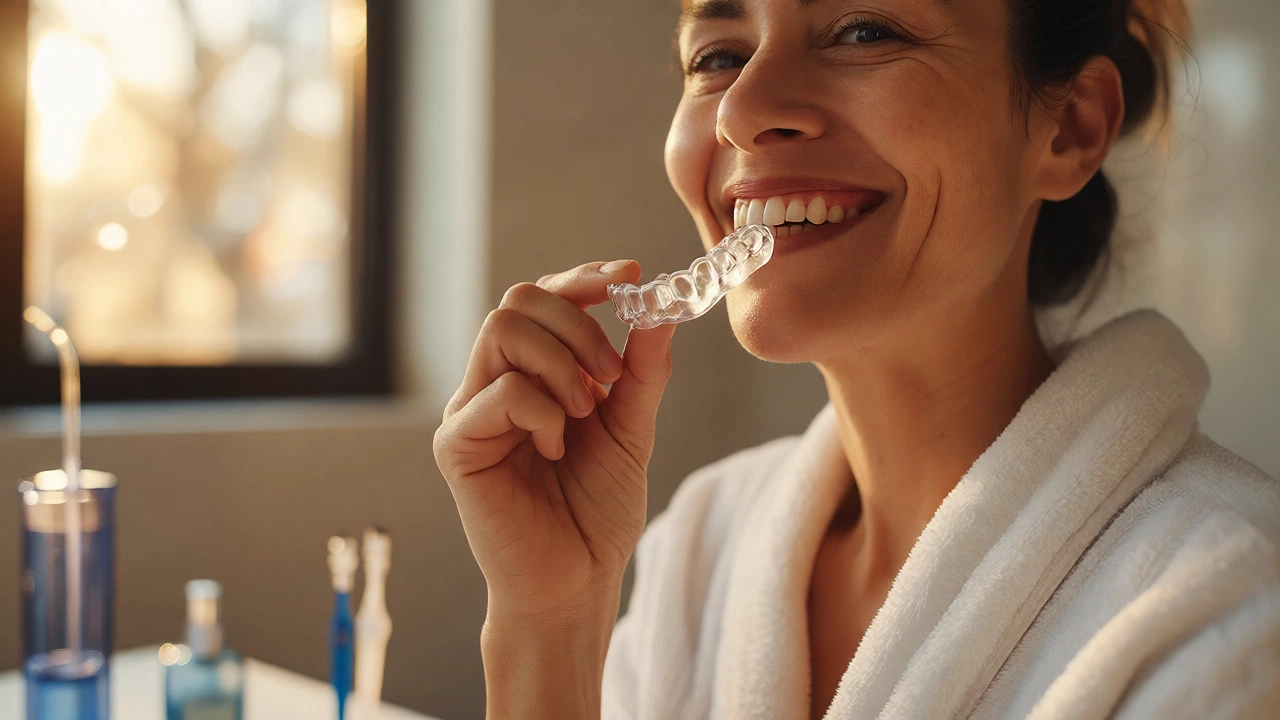
Second, invest in a good night guard. If you wake up with a sore jaw or headaches, you’re likely grinding. A custom-fitted guard from your dentist protects both your natural teeth and your expensive implant crown. Over-the-counter boil-and-bite guards often lack the precision needed to distribute force evenly.
Third, quit smoking. If you can’t quit entirely, cut back drastically before and after surgery. The vascular constriction caused by nicotine is the single biggest modifiable risk factor for early implant failure.
Signs Your Implant Is in Trouble
Pain is a late sign. By the time it hurts, you’ve likely already lost bone. Watch for these subtle red flags instead:
- Bleeding Gums: If your gums bleed when you floss around the implant, it’s inflamed. Healthy implant gums should not bleed.
- Mobility: Natural teeth have slight movement. Implants should feel rock-solid. If it wiggles, call your dentist immediately. It could just be a loose screw, which is easy to fix, or it could be failing integration.
- Bad Taste or Breath: Persistent bad breath localized to one area suggests pus or infection underneath the gum line.
- Gum Recession: If the metal collar starts showing, the bone may be receding. This exposes the threads of the implant to bacteria.
Don’t wait for pain. Early intervention can save the implant. Late intervention often means removing the whole system and starting over with bone grafts, which costs more time and money.
When Replacement Becomes Necessary
So, when do you actually replace the entire implant? Usually, it’s when peri-implantitis has destroyed too much bone. The treatment involves removing the old implant, letting the site heal (often with a bone graft), and placing a new one. This process takes 6 to 9 months.
In rare cases, the implant itself fractures. This happens if the diameter was too small for the bite force or if the patient suffered significant trauma. Modern wide-platform implants reduce this risk significantly, but it’s still possible.
Remember, "how long do dental implants last" isn’t a fixed expiration date. It’s a probability curve. For a healthy non-smoker with excellent hygiene, the odds are heavily in your favor. For a smoker with diabetes and irregular check-ups, the clock ticks faster. Your behavior determines whether you pay once or multiple times.
Can dental implants last a lifetime?
The titanium post can theoretically last a lifetime if maintained perfectly, but the crown attached to it will likely need replacement every 10-15 years due to normal wear and tear. True lifetime retention of the post without any complications is possible but requires exceptional oral hygiene and regular professional monitoring.
What is the most common cause of implant failure?
Peri-implantitis, which is gum disease around the implant, is the leading cause of late-stage failure. Early failure is often due to poor osseointegration, frequently linked to smoking, uncontrolled diabetes, or premature loading of the implant before the bone has fully healed.
Do I need to change my toothpaste for implants?
You don't necessarily need a special toothpaste, but you should avoid highly abrasive whitening pastes that can scratch the porcelain or zirconia crown. Use a low-abrasive fluoride toothpaste to protect your remaining natural teeth and keep gums healthy. Some dentists recommend antimicrobial rinses if you are prone to inflammation.
How often should I see my dentist after getting implants?
Most specialists recommend professional cleanings every 3 to 6 months. This is more frequent than the standard six-month checkup for natural teeth because implants lack the protective ligament, making them more susceptible to rapid bone loss if plaque accumulates. Regular X-rays help monitor bone levels.
Can I sleep without a mouthguard if I have implants?
If you know you grind your teeth (bruxism), you absolutely need a night guard. Even if you don't think you grind, many people do so subconsciously during stress. The forces exerted during grinding can exceed chewing forces by ten times, potentially cracking the ceramic crown or loosening the abutment screw over time.