Herb Effectiveness Timeline Calculator
How Long Will It Take?
Find out the typical timeframe for herbs to show effects based on the herb and your body.
Why Patience Matters
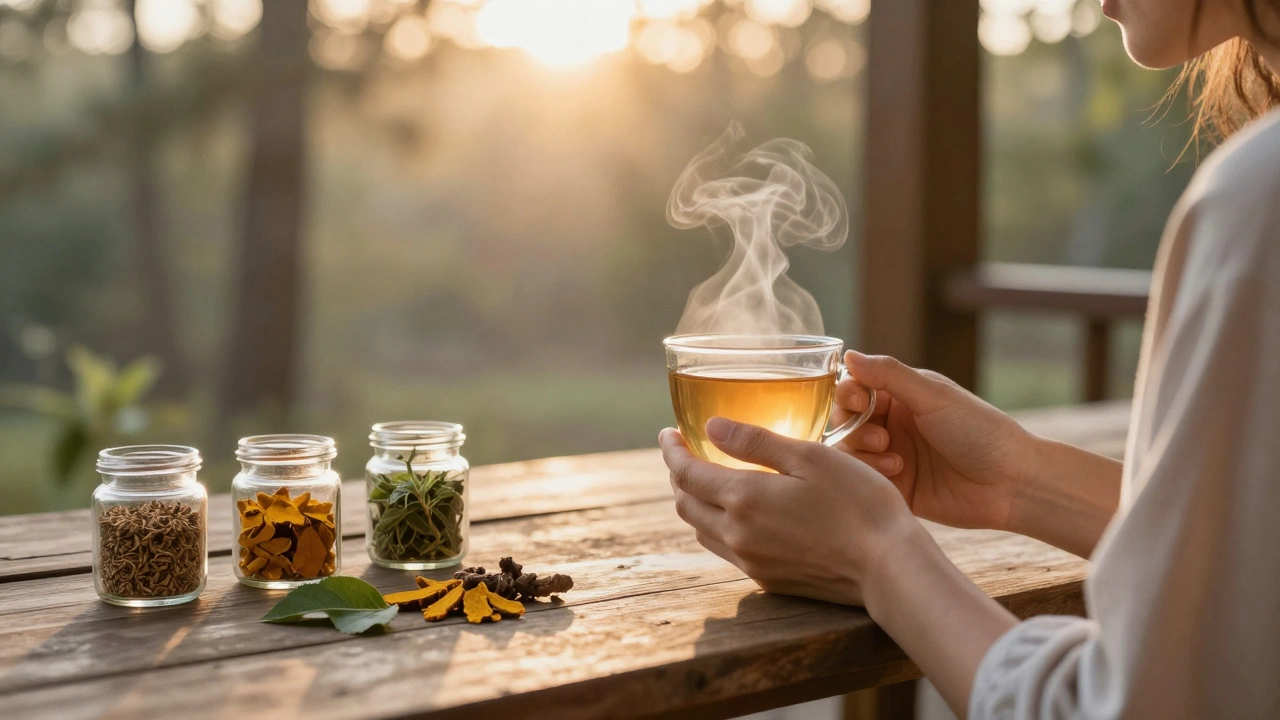
Herbs work differently than drugs. They support your body's natural healing processes over time.
Pro Tip: Consistency is key—take herbs daily at the same time for best results.
Ever taken an herbal supplement and wondered why you don’t feel anything after a few days? You’re not alone. Many people expect herbs to act like pills-fast, strong, and immediate. But herbs don’t work that way. They’re not drugs. They’re whole plants, with dozens of compounds working together, slowly tuning your body’s systems. So how long does it really take for herbs to start working? The answer isn’t one-size-fits-all. It depends on what herb you’re using, why you’re using it, and how your body responds.
Herbs aren’t instant fixes
Think of herbs like gardening. You don’t plant a seed and expect a full-grown tree in a week. Same with herbs. If you’re taking ashwagandha for stress, you won’t feel calm after your first capsule. That’s not because it’s broken-it’s because your body needs time to adjust. Unlike synthetic drugs that flood your system with a single active compound, herbs deliver subtle, layered effects. They support your liver, calm your nervous system, or balance hormones over days and weeks.
Some people stop taking herbs after three or four days because they don’t feel a difference. That’s like turning off your car engine after three minutes because it didn’t reach 60 mph. Herbs work differently. They’re not meant to mask symptoms-they’re meant to restore balance. That takes patience.
How fast do different herbs work?
Not all herbs act at the same speed. Some start showing effects in days. Others take weeks. Here’s a rough guide based on real-world use and clinical observation:
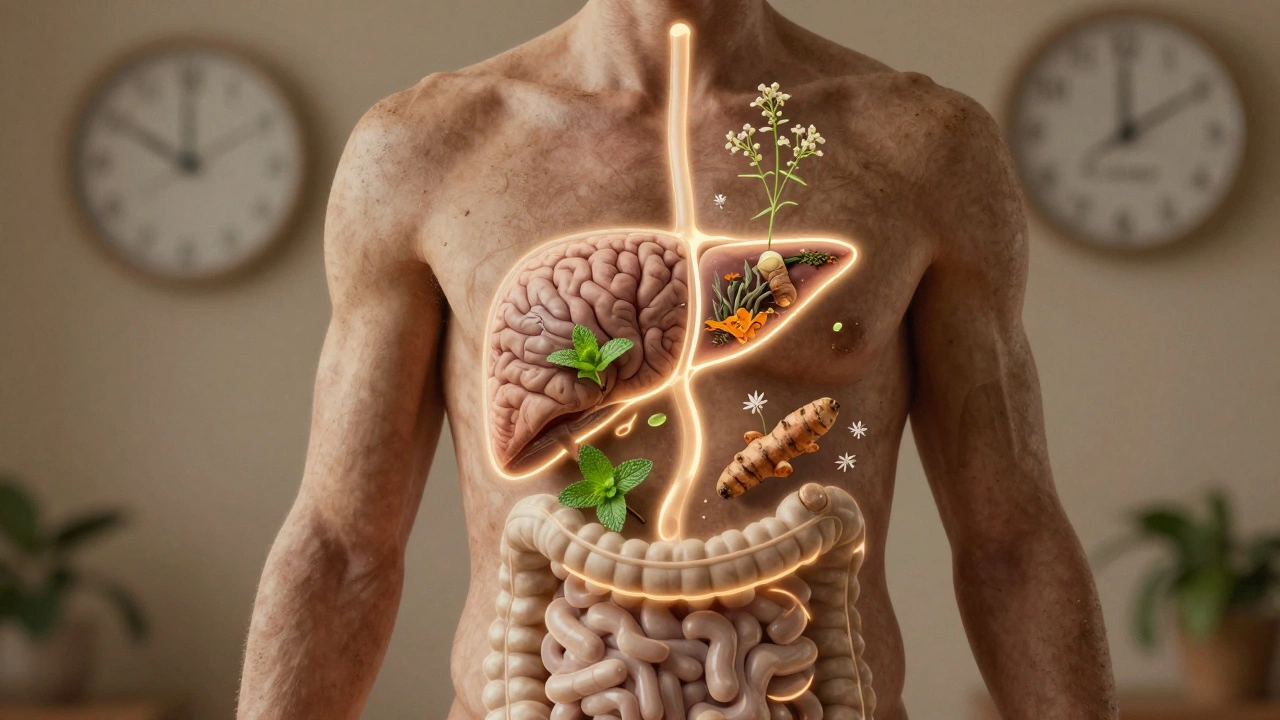
- Peppermint or ginger for digestion: 30 minutes to 2 hours. These work fast because they directly soothe the gut lining and stimulate bile flow.
- Valerian root for sleep: 3 to 7 days. It doesn’t knock you out-it helps your brain shift into rest mode gradually.
- St. John’s wort for mild depression: 4 to 6 weeks. Studies show it takes about the same time as SSRIs to lift mood.
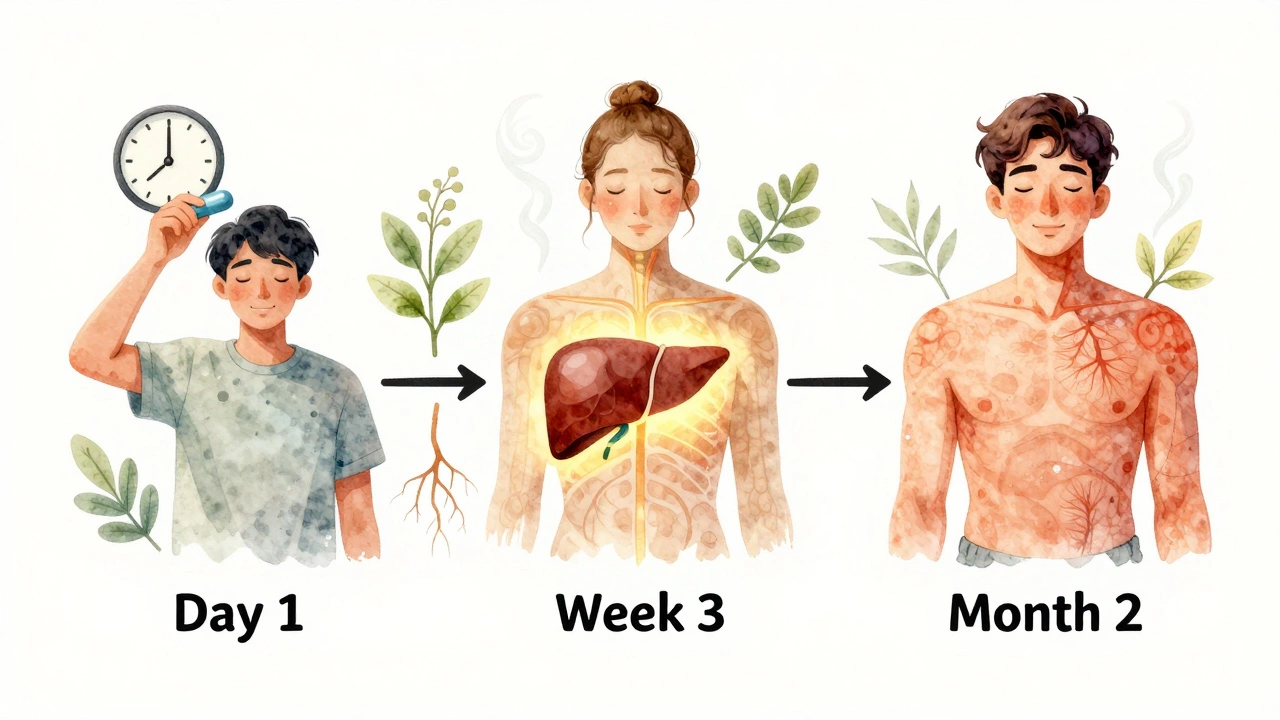
- Ashwagandha for cortisol and stress: 2 to 4 weeks. One 2019 study found participants saw significant drops in cortisol after 60 days, but noticeable calmness often appeared by day 30.
- Turmeric (curcumin) for inflammation: 4 to 8 weeks. The active compound needs time to build up in tissues and suppress inflammatory markers.
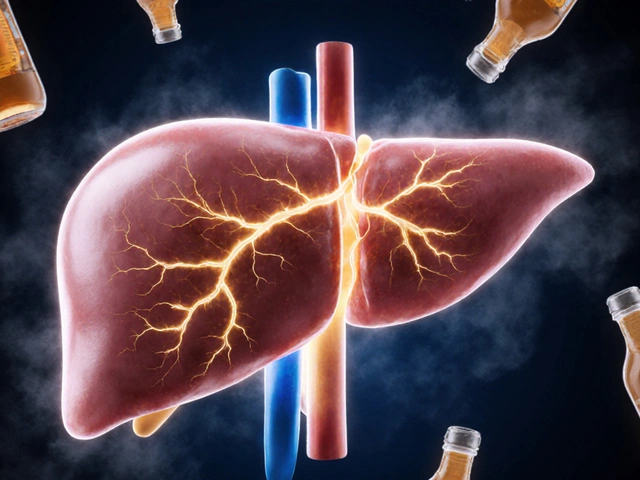
- Dandelion or milk thistle for liver support: 6 to 12 weeks. These work slowly because they’re rebuilding organ function, not just flushing toxins.
These timelines aren’t magic numbers-they’re patterns from people who stuck with the herbs long enough to see results. Skip the first week and you’ll never know if it works.
Your body’s role in herbal timing
Two people can take the same herb, at the same dose, and have totally different experiences. Why? Because your body’s chemistry matters. Digestion, liver function, gut health, and even your microbiome affect how herbs are absorbed and used.
If you have slow digestion or low stomach acid, you might not break down herbs well. That means less of the active compounds get into your bloodstream. If your liver is overloaded with toxins, it might prioritize detoxing over using the herb’s benefits. If you’re constantly stressed, your body may not respond to calming herbs until your nervous system has a chance to reset.
That’s why some people feel changes in days and others need months. It’s not the herb’s fault-it’s your body’s starting point.
Dose and form matter more than you think
Not all herbal products are created equal. A cheap capsule from a big-box store might contain barely any active ingredient. A high-quality tincture made from fresh, organic herbs could be 5 to 10 times more potent.
Here’s what actually affects absorption:
- Form: Tinctures (alcohol extracts) absorb faster than capsules. Powders in tea can be quicker than tablets.
- Standardization: Look for products that list the percentage of active compounds-like “5% curcuminoids” for turmeric.
- With food or on empty stomach? Some herbs (like milk thistle) absorb better on an empty stomach. Others (like ginger) are easier on the stomach if taken with food.
- Combination: Herbs often work better together. Black pepper boosts curcumin absorption by 2000%. Piperine isn’t just a filler-it’s essential.
Using the wrong form or dose is like trying to fill a pool with a teaspoon. You might be taking the right herb, but not enough of it, or not in a way your body can use.
What to expect-and what not to expect
Herbs won’t give you a sudden energy spike like caffeine. They won’t erase pain like ibuprofen. They won’t make you lose 10 pounds in a week. What they can do is help you feel more steady, more resilient, and more in tune with your body.
Real signs an herb is working:
- You sleep deeper, even if you don’t feel drowsy.
- You don’t get as easily overwhelmed by small stressors.
- Your digestion improves-less bloating, more regularity.
- Your skin clears up, or your nails grow stronger.
- You feel more energy-not from stimulants, but from deeper calm.
These are subtle shifts. They’re not dramatic. But they’re lasting. That’s the point.
When to give up-or keep going
Some herbs just don’t work for certain people. Genetics, lifestyle, and underlying health conditions play a role. If you’ve taken a herb consistently for 8 to 12 weeks and seen zero change, it might not be right for you.
But here’s the trap: people quit too soon. They try one herb for 10 days, feel nothing, and decide “herbs don’t work.” Then they switch to another, repeat the cycle, and end up frustrated.
Instead, try this: pick one herb, take it daily at the same time, and track how you feel-not just your mood, but your sleep, digestion, energy, and stress levels. Use a simple journal. After 4 weeks, review it. Then decide.
And if you’re taking multiple herbs at once? Stop. You won’t know which one is helping-or causing side effects.
Herbs and safety: Don’t rush
Just because something’s natural doesn’t mean it’s harmless. Herbs can interact with medications. St. John’s wort can reduce the effectiveness of birth control and antidepressants. Licorice root can raise blood pressure. Turmeric can thin the blood.
If you’re on any prescription meds, talk to a qualified herbalist or integrative doctor before starting. Don’t assume safety just because it’s sold in a health store.
Bottom line: Patience is the active ingredient
Herbs don’t work fast because they’re not meant to. They’re designed to support your body’s own healing-not override it. If you want quick fixes, pills are better. If you want lasting change, herbs are the right tool.
Most people who stick with herbs for 2 to 3 months report feeling more balanced, more grounded, and more in control of their health. That’s not hype. That’s the science of slow healing.
So if you’re just starting out? Give it time. Take the herb daily. Don’t expect fireworks. Watch for quiet improvements. And remember: the body doesn’t heal on a schedule. It heals when it’s ready. Your herbs are just helping it along.