Post-Surgery Car Travel Planner
Your Status
Travel Assessment
Select your status and click "Check Travel Safety" to see recommendations.
Recovery Timeline Reference
| Timeframe | Status | Driving Allowed? | Passenger Allowed? |
|---|---|---|---|
| Weeks 1-2 | Critical Healing | No | Short Rides Only |
| Weeks 3-4 | Early Recovery | No | Yes (with breaks) |
| Weeks 5-6 | Mid-Recovery | Assessment Phase | Yes (Longer trips) |
| Weeks 6+ | Late Recovery | Yes (With Clearance) | Yes |
Key Safety Tips:
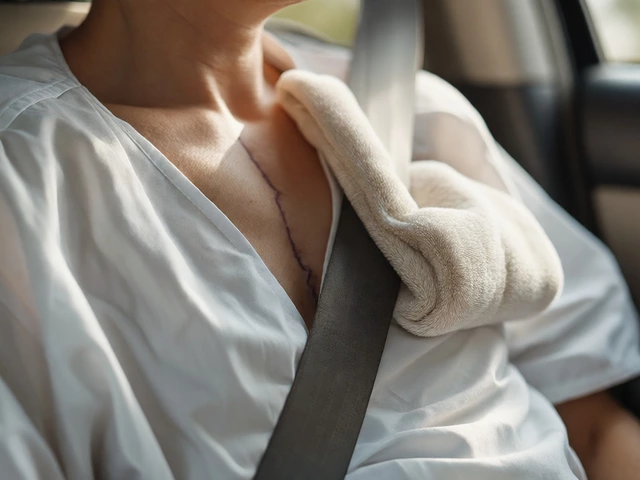
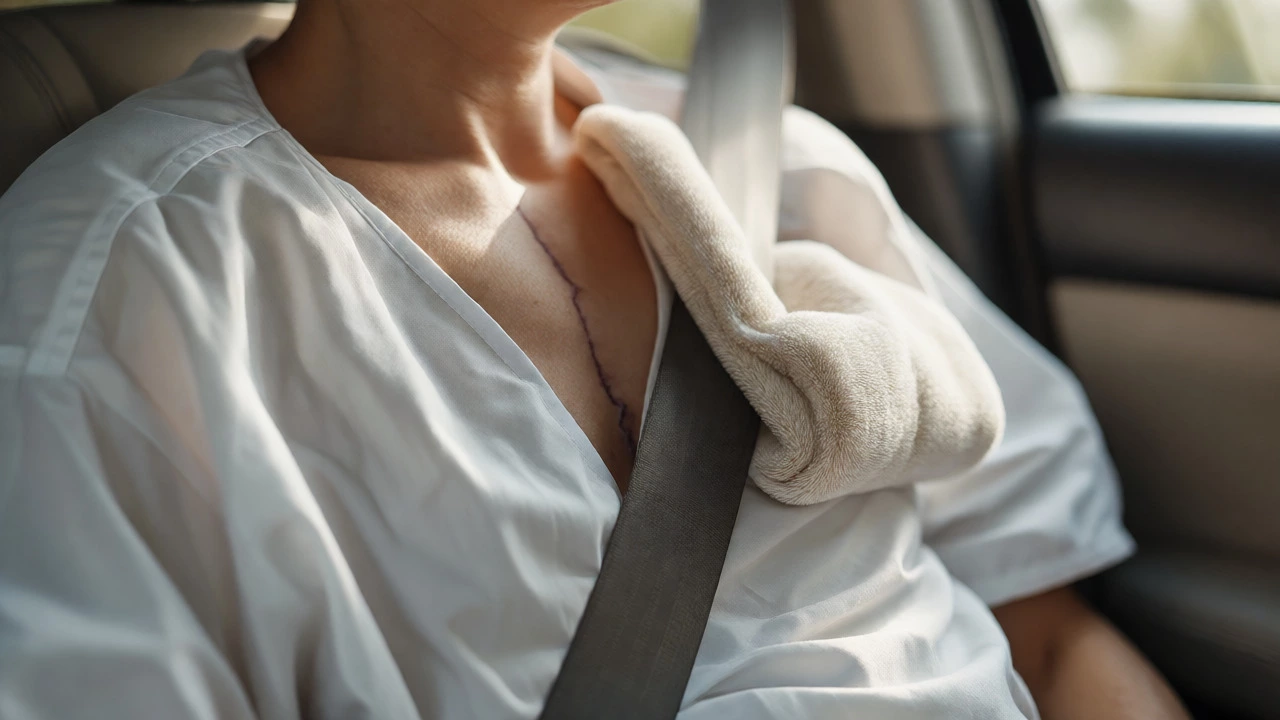
- Seatbelt Hack: Place a small pillow or folded towel between the shoulder strap and your chest to distribute pressure.
- Positioning: Recline the seat slightly backward to reduce tension on the sternum.
- The 90-Minute Rule: If traveling long distances, stop every 90 minutes to walk and stretch to prevent blood clots.
- Driver Selection: Ensure your driver avoids sudden acceleration or hard braking.
You just survived the biggest physical challenge of your life. The chest pain is gone, the bypass grafts are doing their job, and you’re finally home. But then the itch kicks in. You need to go to a relative’s house, attend a wedding, or maybe just escape the four walls of your bedroom for a change of scenery. The first thought that hits you isn’t about the destination-it’s about the seatbelt. Is it safe? Will the vibration hurt? Can I even sit there?
It’s a valid fear. Your sternum (the breastbone) was sawed open and wired back together. It’s like healing from a major bone fracture, but in the center of your chest. While you might feel mentally ready to hit the road, your body needs time to knit those bones. So, how long do you actually have to wait before you can hop into a car? And more importantly, who should be behind the wheel?
The Short Answer: Who Drives and When
Let’s clear up the confusion right away because the rules are different depending on whether you are driving or riding as a passenger.
If you are planning to drive yourself, the general medical consensus is strict: do not drive for at least 4 to 6 weeks after open-heart surgery. This isn’t just about feeling weak; it’s about reaction time and physical capability. Turning the steering wheel requires upper body strength and core stability that you simply don’t have yet. Plus, many patients are still taking medications like opioids or beta-blockers that can slow your reflexes.
If you are a passenger, you can usually travel by car much sooner-often within 1 to 2 weeks, provided the trip is short and comfortable. However, "sooner" doesn't mean "anywhere." A 30-minute ride to a nearby clinic is very different from a 5-hour highway journey. The key factor here is comfort and safety, specifically regarding seatbelt placement and vibration.
Why Waiting Matters: The Sternum Healing Process
To understand the timeline, you have to look at what happened inside your chest. During coronary artery bypass grafting (CABG) or valve replacement, surgeons perform a median sternotomy. They cut through the sternum and spread it apart to access the heart. Once the surgery is done, they wire the bone back together.
Bone healing is a slow process. It takes roughly 6 to 8 weeks for the sternum to achieve initial bony union. During the first few weeks, that area is held together only by wires and soft tissue. Any sudden movement, heavy lifting, or impact can disrupt this delicate process. Imagine trying to set concrete while it’s still wet-you wouldn’t want someone jumping on it, right? The same logic applies to your chest.
| Timeframe | Status | Allowed Activities | Risk Factors |
|---|---|---|---|
| Weeks 1-2 | Critical Healing | Short rides (under 30 mins) as passenger only. Hospital discharge transport. | Pain spikes, sternal instability, medication side effects. |
| Weeks 3-4 | Early Recovery | Passenger trips up to 1 hour with breaks. No driving. | Fatigue, discomfort from seatbelt pressure. |
| Weeks 5-6 | Mid-Recovery | Longer passenger trips possible. Driving assessment begins. | Reduced stamina, potential dizziness if dehydrated. |
| Weeks 6+ | Late Recovery | Driving permitted (with doctor's clearance). Long-distance travel. | Sternum fully stable, but avoid heavy luggage handling. |
Passenger Safety: How to Sit Without Hurting Yourself
Just because you’re allowed to be a passenger doesn’t mean you should jump into any car. Standard sedan seats aren’t designed for post-sternotomy patients. Here is how to make your ride survivable and comfortable.
Positioning is everything. Recline the seat slightly backward. Sitting upright forces your shoulders forward, which puts tension on the sternum. A slight recline opens up the chest cavity and reduces strain. If your car has lumbar support, use it, but ensure it doesn’t push against your lower ribs where drains might have been placed.
The Seatbelt Dilemma. This is the most common complaint. The shoulder strap crosses directly over the healing incision. To mitigate this, place a small pillow or a folded towel between the seatbelt and your chest. This distributes the pressure and prevents the belt from digging into the wound site. Never skip the seatbelt-even if it hurts. Airbags deploy with immense force, and being ejected from the vehicle is far worse than a bruised chest.
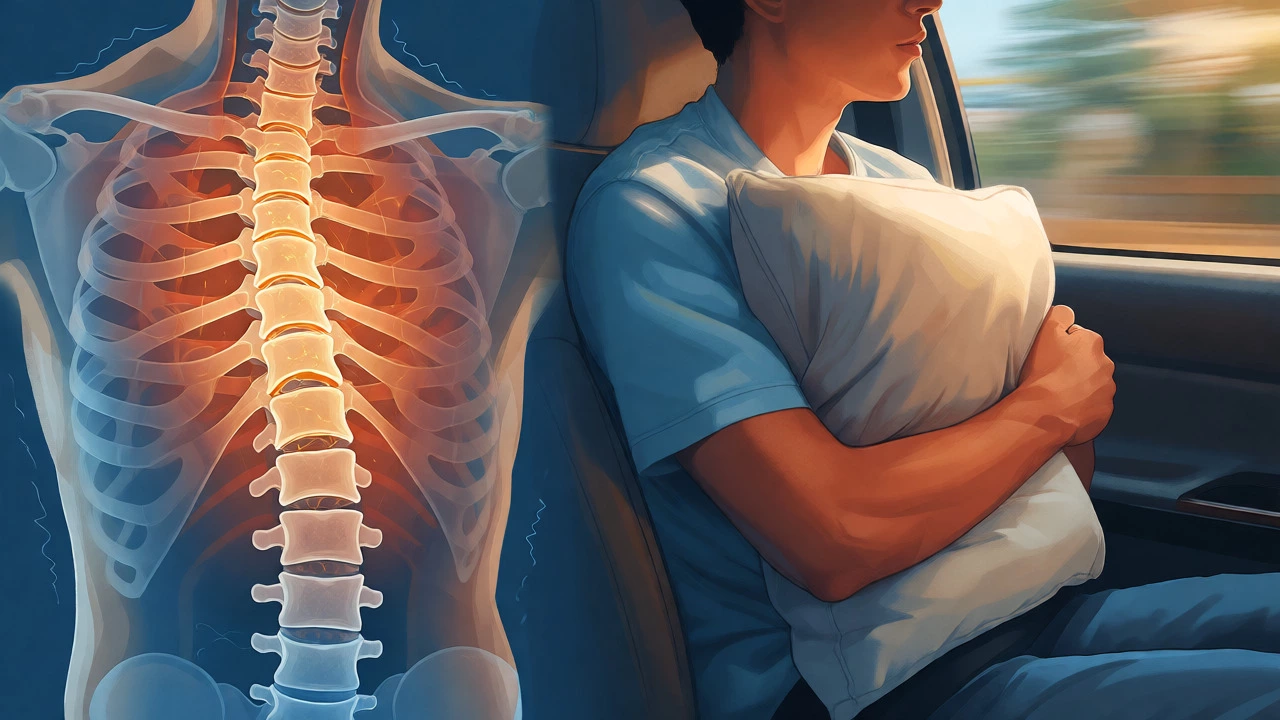
Vibration and Bumps. Indian roads, especially outside metro cities, can be unpredictable. Potholes and speed breakers cause jolts that transmit directly to your torso. Choose smooth highways over rough backroads whenever possible. If you must take a bumpy route, hold a pillow firmly against your chest when going over bumps. This acts as a splint, supporting the sternum during sudden movements.

Driving Again: More Than Just Feeling Better
Many patients ask, "I feel fine, why can’t I drive?" Feeling fine isn’t the metric. Medical clearance is. Before you turn the key, you need to pass three specific tests:
- Reaction Time Test: Are you off strong painkillers? Opioids like tramadol or codeine can impair judgment and slow reaction times significantly. Most doctors require you to be off these meds for at least 48 hours before driving.
- Physical Capability: Can you check your blind spot without twisting your entire torso? Can you press the brake pedal firmly without bracing yourself with your arms? If turning your head causes sharp pain in your chest, you’re not ready.
- Emergency Braking: Simulate an emergency stop in a parking lot. Does the force of stopping pull on your chest wires? If yes, you risk sternal dehiscence (separation of the breastbone).
Remember, insurance companies may deny claims if you drive before your doctor officially clears you. In India, this is often documented in your discharge summary or follow-up notes. Keep that paperwork handy.
Long-Distance Travel: Planning for Comfort
Once you’re past the 6-week mark and cleared to travel, long drives become feasible. But "feasible" doesn’t mean "easy." Fatigue sets in faster than you expect. Your heart is still adapting to its new workload efficiency.
The 90-Minute Rule. Stop every 90 minutes. Get out of the car, walk around gently, and stretch your legs. This prevents blood clots (deep vein thrombosis), which are a higher risk after major surgery and prolonged sitting. Don’t just stand still; move your ankles and calves.
Hydration and Diet. Dehydration thickens the blood, increasing clot risk. Drink water regularly, even if you don’t feel thirsty. Avoid heavy meals before a long drive; digestion diverts blood flow away from muscles and can make you feel sluggish or nauseous. Pack light snacks like nuts or fruit instead.
Air Conditioning Matters. Extreme temperatures stress the cardiovascular system. Keep the car cool but not freezing. Cold air can cause vasoconstriction (narrowing of blood vessels), making your heart work harder. Aim for a moderate, consistent temperature.
Red Flags: When to Cancel the Trip
Sometimes, plans change because your body says "no." Listen to it. Cancel or postpone your car travel if you experience:
- New or worsening chest pain.
- Shortness of breath at rest or with minimal exertion.
- Dizziness or lightheadedness.
- Swelling in the legs or feet that hasn’t resolved.
- Fever or signs of infection at the incision site.
If you feel palpitations or an irregular heartbeat during a ride, pull over immediately. These could be signs of atrial fibrillation, a common complication after heart surgery that requires immediate attention.
Practical Checklist for Your First Ride
Before you get in the car, run through this quick checklist to ensure you’re prepared:
- Medication Kit: Carry all prescribed heart meds in a bag within arm’s reach, not in the trunk.
- Medical Records: Have a copy of your discharge summary and ECG results in case of an emergency.
- Comfort Items: Small neck pillow, chest cushion for seatbelt, and sunglasses (to reduce eye strain/fatigue).
- Contact Info: Save your cardiologist’s number and the nearest hospital along your route.
- Driver Selection: Ensure the driver knows to avoid sudden acceleration or hard braking.
Traveling after open-heart surgery isn’t about restriction forever; it’s about pacing yourself. The freedom of the road will return, but respecting the healing process now ensures you’ll be enjoying those scenic routes for decades to come.
Can I drive myself home from the hospital after open-heart surgery?
No, absolutely not. You will be under the influence of anesthesia and pain medications, and your physical strength will be significantly compromised. A family member or friend must drive you home.
Is it safe to wear a seatbelt over my surgical incision?
Yes, wearing a seatbelt is mandatory for safety. To protect your incision, place a small pillow or folded towel between the shoulder strap and your chest to distribute pressure and prevent irritation.
How long should I wait before driving again?
Most cardiologists recommend waiting 4 to 6 weeks before driving. You must also be off opioid painkillers and able to perform an emergency stop without pain or hesitation. Always get explicit clearance from your doctor.
What are the risks of traveling too soon after surgery?
Risks include sternal dehiscence (bone separation due to jolts), increased pain, fatigue, and potential complications like deep vein thrombosis (blood clots) from prolonged sitting. Sudden movements can also disrupt healing tissues.
Can I travel by train or plane earlier than by car?
Generally, cars offer more flexibility for frequent stops compared to trains or planes. Planes involve cabin pressure changes and limited mobility, which can be stressful. Trains allow walking but can be crowded. Cars are often preferred for shorter distances initially due to control over environment and timing.