Zepbound Insurance Approval Checklist Tool
Step 1: Your Insurance Profile
Insurance Approval Guide
Collect all required documents:
- Current BMI calculation
- Recent lab results (HbA1c, lipid panel, blood pressure)
- Medical necessity letter from your physician
- Documentation of previous weight-loss attempts
Fill out the specific Zepbound prior authorization form:
- Use HCPCS code J3490
- Include your specific dosage (2.4 mg)
- Reference the STEP-UP 2024 clinical trial
Appeals often succeed with:
- Peer-reviewed study evidence (e.g., STEP-UP 2024)
- Documentation of adverse effects from alternative drugs
- State-specific coverage mandates
Appeal within 30 days of denial.
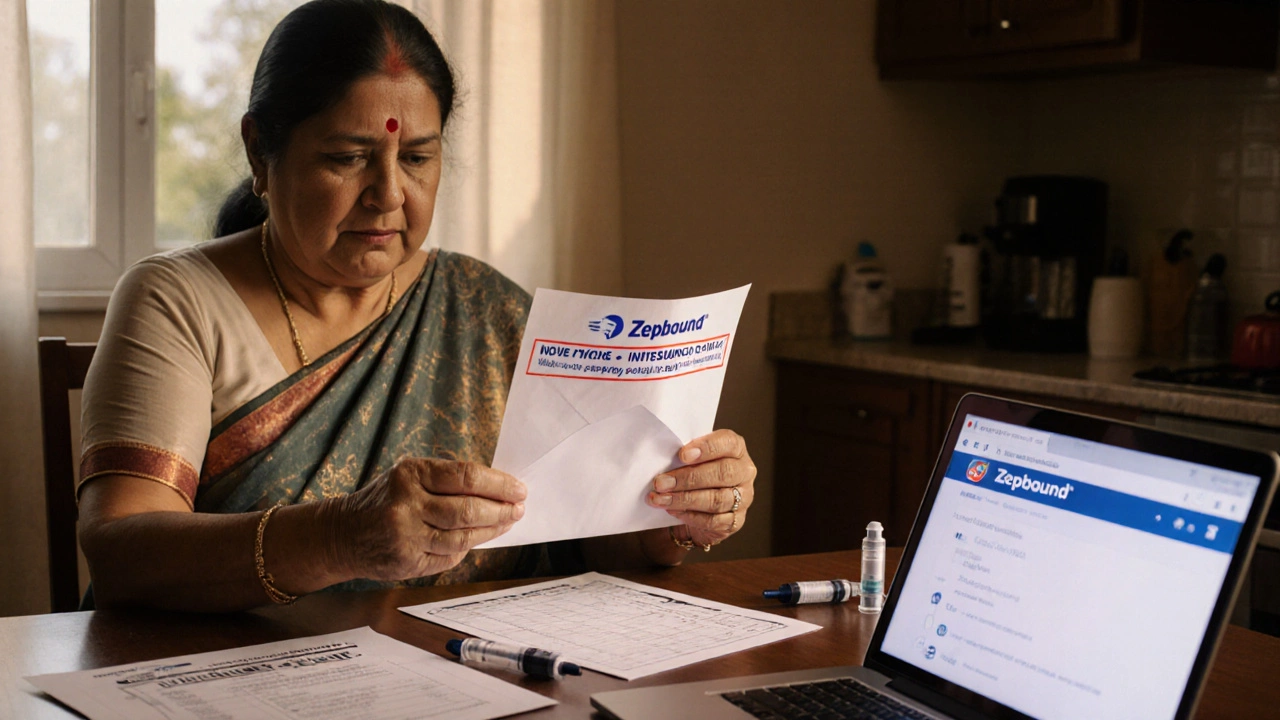
Ever wondered why your insurance company says "no" when you try to get Zepbound? You’re not alone. Hundreds of patients hit the same wall every month, and the reasons are often more paperwork than medicine. This guide breaks down exactly why Zepbound gets denied, what the rules are, and how you can turn a rejection into an approved prescription.
What Is Zepbound?
Zepbound is a prescription medication approved by the U.S. Food and Drug Administration (FDA) in 2024 for chronic weight management. Its active ingredient, semaglutide, belongs to the GLP‑1 receptor agonist class, which mimics a gut hormone that reduces appetite and slows gastric emptying. In clinical trials, patients on Zepbound lost an average of 15% of body weight over 68 weeks, outperforming many older diet drugs.
Because Zepbound targets obesity-a condition linked to diabetes, heart disease, and joint problems-physicians often prescribe it as part of a broader lifestyle plan. However, insurance carriers view it through a cost‑control lens, which explains the frequent denials.
How Insurance Companies Decide on Weight‑Loss Drug Coverage
Most health plans use a tiered formulary system. Tier 1 covers generic drugs at the lowest co‑pay, while specialty tiers (usually Tier 4 or 5) hold high‑cost, brand‑name products like Zepbound. To move a drug off the high‑cost shelf, insurers apply a set of criteria:
- Medical necessity: The prescriber must prove the drug is essential for treating a diagnosed condition.
- Prior authorization (PA): A formal request that includes supporting lab results, BMI, and failed attempts at other therapies.
- Coverage policy: Each plan publishes a policy document-often a Pharmacy Benefit Manager (PBM) contract-detailing which weight‑loss drugs are covered, under what circumstances.
- Plan type: Private commercial plans, Medicare Advantage, and Medicaid each have different rules.
If any of these boxes are unchecked, the claim gets denied, and the patient receives a confusing rejection notice.
Top Reasons Zepbound Gets Denied
- Not listed on the formulary: Some PBMs simply don’t include Zepbound in their specialty tier, preferring older drugs like Wegovy or Saxenda.
- Missing medical necessity documentation: Insurers want a documented BMI ≥ 30 kg/m², history of failed lifestyle interventions, and sometimes a trial of another GLP‑1 drug.
- Improper prior‑authorization code: Using the wrong HCPCS or CPT code can trigger an automatic denial.
- Plan exclusions for obesity treatment: Medicare Part D, for example, historically excludes anti‑obesity drugs unless they are classified as a treatment for a secondary condition like type 2 diabetes.
- Cost‑containment policies: Some employers negotiate a price cap, and any drug above that cap gets rejected until a step‑therapy is completed.
Steps to Increase the Likelihood of Approval
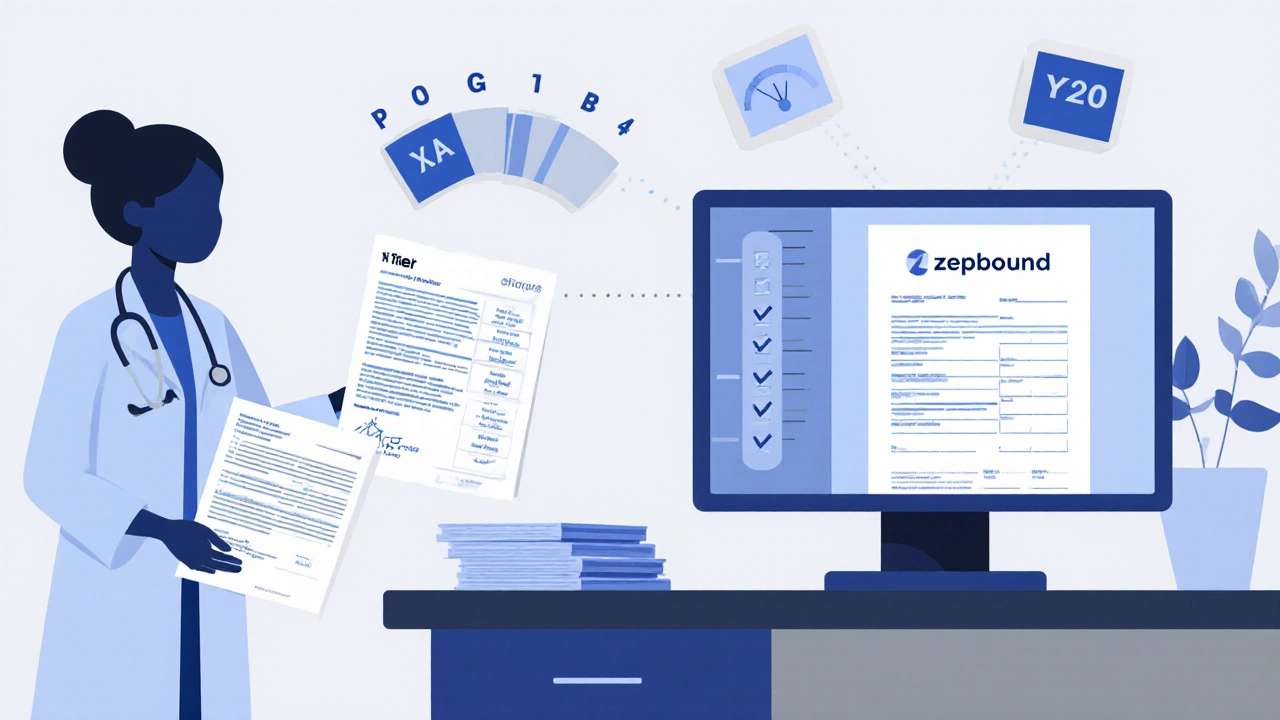
Getting a denial doesn’t mean you’re out of options. Follow this roadmap to improve your chances:
- Collect baseline data: Record your current weight, BMI, comorbidities (e.g., hypertension, sleep apnea), and any previous weight‑loss attempts. A simple spreadsheet works.
- Ask your doctor for a detailed letter: The letter should cite the FDA indication, your BMI, and why alternatives like diet, exercise, or other GLP‑1 drugs have failed.
- Use the correct prior‑authorization (PA) form: Most insurers have a specific Zepbound PA form with fields for "Medical Necessity" and "Previous Therapies." Fill every field-blank spots are a red flag.
- Include supporting lab results: Recent HbA1c, lipid panel, and blood pressure readings demonstrate the broader health impact of obesity.
- Leverage Medicare or Medicaid guidelines: If you’re on Medicare or Medicaid, reference the specific coverage memo that allows GLP‑1 drugs for patients with BMI ≥ 30 kg/m² plus a comorbidity.
- Appeal with a peer‑reviewed study: Cite the 2024 STEP‑UP trial showing Zepbound’s weight‑loss efficacy. Attach the abstract or a PDF link.
- Ask for a step‑therapy exception: If the plan requires you to try Wegovy first, request an exemption because you experienced adverse effects or contraindications with Wegovy.
- Follow up within 5‑7 days: Call the insurer’s PA department, reference the claim ID, and ask if any additional info is needed.
Most successful appeals combine a solid medical‑necessity narrative with clear, concise paperwork. The more data you give the insurer, the less likely they are to send a generic "no coverage" stamp.
Comparison: Zepbound vs. Other GLP‑1 Weight‑Loss Drugs
| Feature | Zepbound | Wegovy | Saxenda |
|---|---|---|---|
| Active ingredient | Semaglutide (2.4 mg) | Semaglutide (2.4 mg) | Liraglutide (3.0 mg) |
| FDA approved indication | Chronic weight management | Chronic weight management | Weight management (obesity) |
| Average % weight loss (clinical) | ~15 % over 68 weeks | ~12 % over 68 weeks | ~7 % over 56 weeks |
| Typical co‑pay (Tier 5 specialty) | $75‑$150 per month | $80‑$160 per month | $60‑$120 per month |
| Common denial reason | Formulary exclusion | Step‑therapy requirement | Limited to diabetic patients |
Notice how Zepbound’s higher efficacy can actually help the insurer save on downstream costs (fewer hospitalizations for diabetes, heart disease, etc.). Including these cost‑offset arguments in your PA can tip the scales.
Real‑World Tips for Patients Facing Denials
- Use a pharmacy that offers concierge services: Some online pharmacies have dedicated staff who will help you fill out PA forms and even submit appeals.
- Ask your doctor to code the indication as "obesity with comorbidity": Insurers often have separate pathways for "obesity" vs. "obesity with hypertension"-the latter gets higher approval rates.
- Consider a supplemental health plan: If your primary plan won’t cover Zepbound, a secondary plan (often a small‑group or professional association plan) may pick up the specialty tier.
- Check state mandates: Some states (e.g., Massachusetts, New York) have enacted laws requiring insurers to cover FDA‑approved weight‑loss drugs for patients with BMI ≥ 30 kg/m².
- Leverage patient assistance programs: The manufacturer of Zepbound offers a co‑pay card for eligible patients, which can reduce out‑of‑pocket costs while you fight the denial.
These tactics aren’t guarantees, but they’ve helped dozens of patients get the medication they need without breaking the bank.

Checklist: What to Pack Before Submitting a Prior Authorization
- Doctor’s letter stating diagnosis, BMI, and failed prior therapies.
- Recent lab results (HbA1c, lipid panel, blood pressure).
- Copy of your insurance formulary (highlight Zepbound’s tier).
- Correct HCPCS code: J3490 (Other therapeutic uses). Include dosage.
- Supporting peer‑reviewed study (e.g., STEP‑UP 2024).
- Patient’s prior medication history (Wegovy, Saxenda, etc.).
- Any relevant state or Medicare coverage memo numbers.
Keep this list handy, attach all documents in one PDF, and you’ll reduce the back‑and‑forth with the insurer.
Frequently Asked Questions
Why does my insurance say Zepbound isn’t covered?
Most plans place Zepbound on a high‑cost specialty tier and require a prior‑authorization that proves medical necessity. If the form is incomplete or the drug isn’t on the formulary, the claim is denied.
Can I appeal a denial?
Yes. Submit an appeal with a detailed medical‑necessity letter, supporting lab data, and a peer‑reviewed study. Many insurers have a 30‑day window for appeals.
Does Medicare ever cover Zepbound?
Medicare Part D generally excludes anti‑obesity drugs, but if you have a comorbidity like type 2 diabetes, you can request a coverage exception. Medicare Advantage plans may be more flexible.
What’s the difference between Zepbound and Wegovy?
Both contain the same active ingredient (semaglutide 2.4 mg), but Zepbound is marketed specifically for chronic weight management, while Wegovy is approved for both weight loss and diabetes management. Insurers sometimes favor Wegovy because of its dual indication.
Are there patient assistance programs for Zepbound?
Yes. The manufacturer offers a co‑pay card for eligible patients and a free‑trial program for the first month. Enrollment usually requires proof of insurance denial.
Armed with the right paperwork and a bit of persistence, you can turn a frustrating denial into a green light for Zepbound. Remember, insurance isn’t infallible; they just need a clear, evidence‑based reason to pay.
Key Takeaways
- Insurance often denies Zepbound due to formulary exclusion or missing medical‑necessity documentation.
- Submit a thorough prior‑authorization packet: doctor’s letter, BMI, lab results, and a peer‑reviewed study.
- Leverage Medicare, Medicaid, or state mandates that specifically allow GLP‑1 drugs for obesity with comorbidities.
- Use appeals, step‑therapy exceptions, and patient‑assistance programs to reduce out‑of‑pocket costs.
- Keep the Zepbound insurance checklist handy - it’s your fastest route to approval.