Total Knee Replacement Recovery: What to Expect and How to Speed Up Healing
When you undergo a total knee replacement, a surgical procedure where damaged knee joint surfaces are replaced with artificial components. Also known as knee arthroplasty, it’s one of the most common orthopedic surgeries in India, helping people walk again without constant pain. But the surgery is only half the battle. The real work starts after you leave the hospital.
Knee replacement recovery, the process of regaining strength, mobility, and function after surgery isn’t a race—it’s a rhythm. Most people walk with a cane or walker within days, but full recovery takes 3 to 6 months. You’ll hit milestones: bending your knee past 90 degrees by week two, climbing stairs by week four, and walking without pain by three months. Skipping physical therapy? That’s like buying a new car and never changing the oil. The knee rehab exercises, specific movements prescribed by a physiotherapist to restore joint function aren’t optional. They prevent stiffness, rebuild muscle, and reduce scar tissue. Skipping them doubles your risk of long-term stiffness or needing a second surgery.
Not everyone recovers the same way. If you’re overweight, diabetic, or have heart issues, healing takes longer. Smoking? It cuts off oxygen to the wound and slows bone and tissue repair. And yes—showering right after surgery is risky. Your incision needs to stay dry for days, or you could get an infection that sends you back to the hospital. That’s why doctors give you waterproof covers and sponge bath instructions. You’ll also need help at home for the first few weeks. Lifting groceries, getting out of bed, even using the toilet can be hard when your leg is weak and stiff. Plan ahead. Get a raised toilet seat. Buy a shower chair. Ask a family member to stay with you for a bit.
Some people expect to feel 100% in a month. That’s not realistic. Pain fades, but swelling can stick around for months. Numbness around the scar? Normal. Clicking sounds when you move? Also normal—your new joint isn’t a natural one. But if your leg turns red, hot, or swells suddenly, call your doctor. That could be a blood clot. Or if you can’t straighten your knee after six weeks, you might need a manual manipulation under anesthesia. These aren’t rare. They’re part of the process.
What you eat matters too. Protein helps rebuild muscle. Vitamin D and calcium keep your bones strong. Skip the sugary snacks and sodas—they fuel inflammation. Drink water. Sleep well. Your body heals when you rest, not when you push too hard.
There’s no magic pill, no miracle cream, no shortcut. But there are proven steps: move gently every day, do your exercises, listen to your body, and don’t rush. The people who recover fastest aren’t the ones who push the hardest—they’re the ones who stick to the plan.
Below, you’ll find real stories and practical advice from people who’ve been through it—what worked, what didn’t, and how to avoid the mistakes that delay healing.
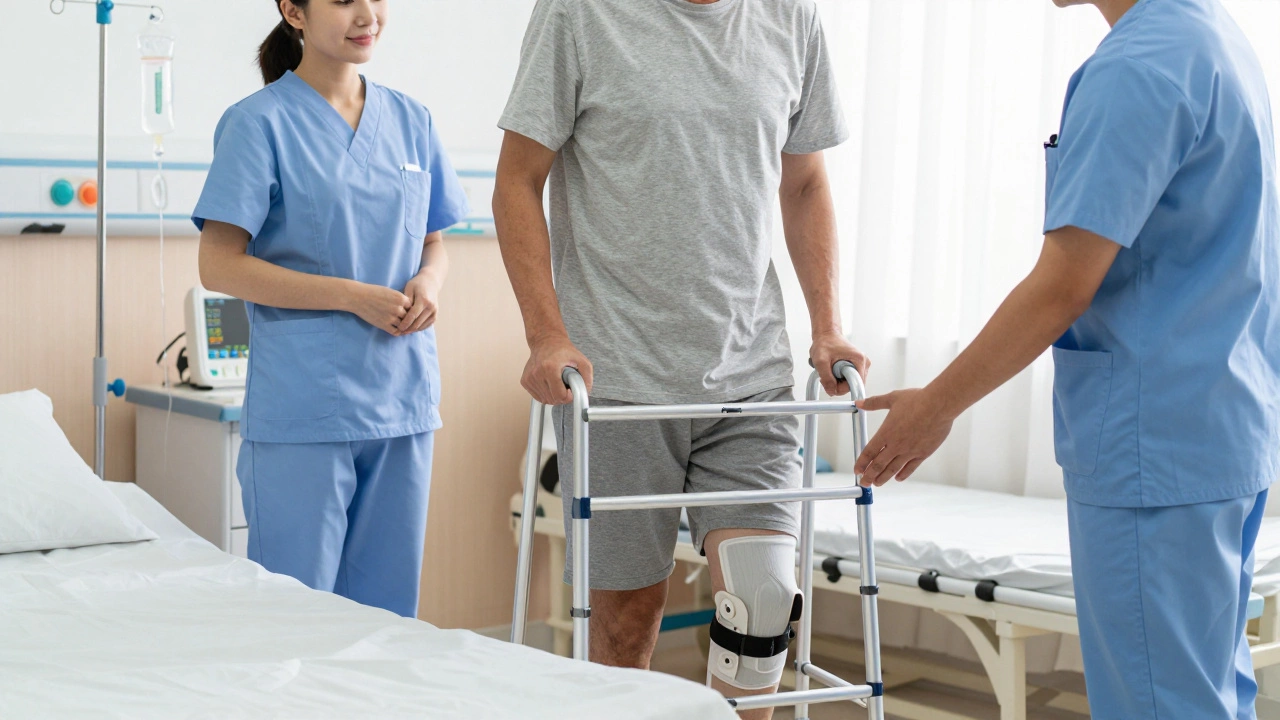
5
DecemberHow Long Do You Stay in Hospital After Full Knee Replacement?
Most patients leave the hospital 1 to 3 days after full knee replacement. Recovery depends on health, mobility, and home support. Early movement and following rehab steps are key to a smooth recovery.
Recent posts
-
 26 Oct 2025
What Is the 5th Most Common Orthopedic Surgery? - Rotator Cuff Repair Explained
-
 24 Jan 2025
Chemotherapy and Kissing: Understanding the Risks and Precautions
-
 10 Apr 2025
Do You Eat Meat in Ayurveda?
-
 22 Feb 2025
What’s Included in Your Health Check: An Inside Look
-
 25 Nov 2025
What Does a Full Body Blood Test Include? Complete Breakdown of Common Tests