Knee Replacement Hospital Stay Estimator
How Long Will You Stay?
This tool estimates your hospital stay duration after knee replacement based on your health factors and recovery milestones. Based on data from Indian hospitals and global standards.
Most people who get a full knee replacement leave the hospital within 1 to 3 days after surgery. That’s the standard for most patients in India and around the world. But how long you actually stay depends on your age, overall health, how well you move after surgery, and whether you have any complications. Some people go home the same day. Others stay longer. It’s not just about the surgery-it’s about your body’s response to it.
What Happens in the First 24 Hours?
You’re not just wheeled into a room and told to rest. Right after surgery, nurses check your vital signs every hour. They watch your blood pressure, heart rate, and oxygen levels. Pain control is a big focus. Most hospitals use a mix of IV pain meds and oral pills. You’ll also get blood thinners to prevent clots-something you’ll keep taking for weeks after you go home.
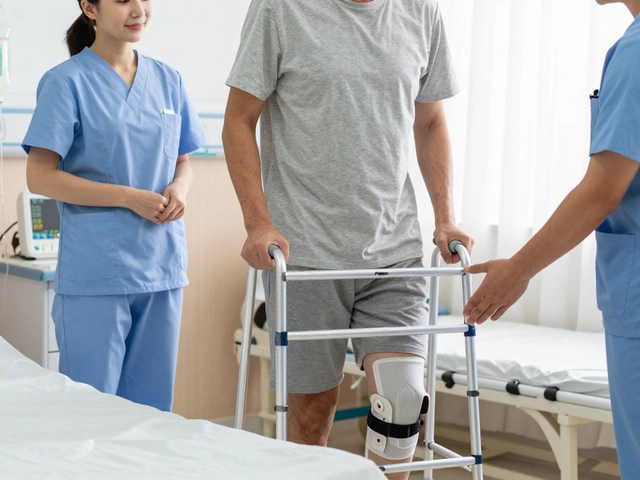
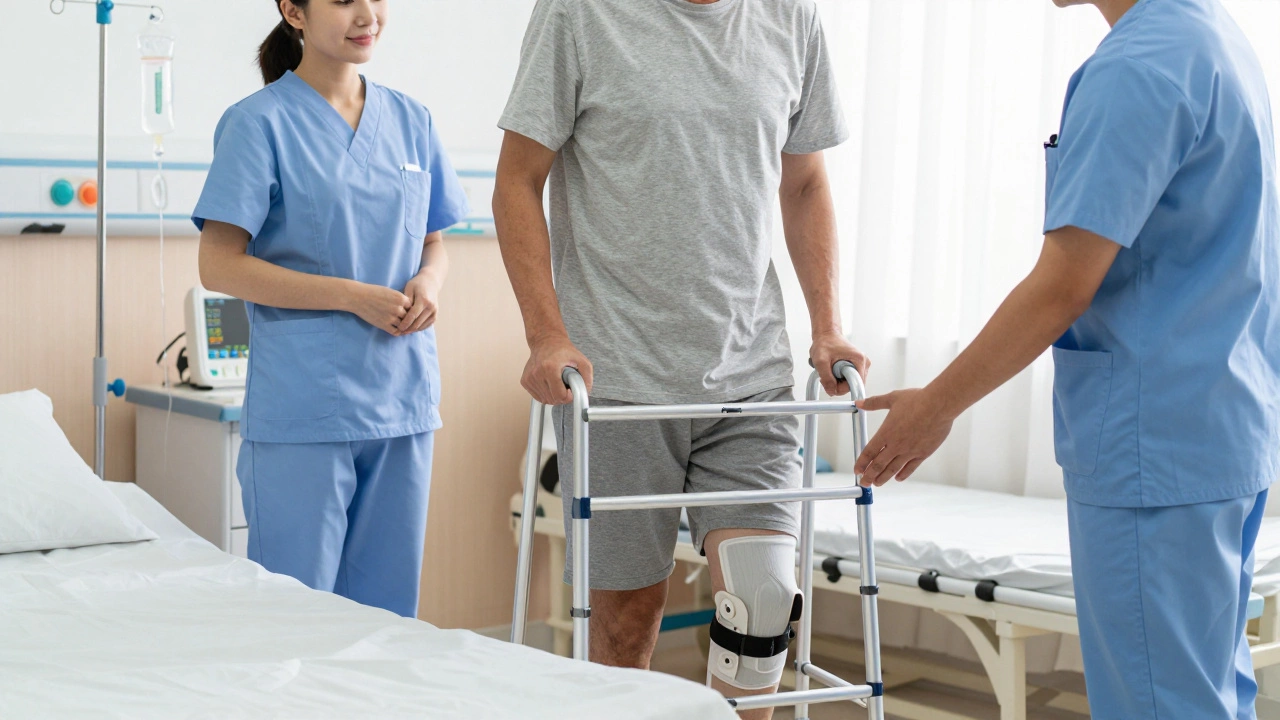
Physical therapy starts within 24 hours. Not just walking, but bending your knee, lifting your leg, and doing ankle pumps. These aren’t optional exercises. They’re critical. If you don’t start moving early, your knee stiffens. Scar tissue builds up. Recovery takes longer. By day one, most patients can stand with a walker and take a few steps. That’s the baseline. If you can’t do this by the end of day one, your discharge gets delayed.
Why Do Some People Stay Longer?
Not everyone leaves in 24 to 48 hours. If you’re over 75, have diabetes, heart disease, or are overweight, your body needs more time to stabilize. High blood sugar slows healing. Poor circulation increases infection risk. If your knee swells too much or your pain isn’t under control, staff will keep you for another day or two.
Infections are rare-under 2% of cases-but if you develop a fever, redness, or drainage from the incision, you’ll stay until it’s ruled out. Blood clots are another reason. If your leg swells suddenly or you feel short of breath, they’ll run tests. You might need an ultrasound or CT scan. That adds time.
Some patients can’t manage stairs or use the bathroom safely on their own. If you live alone and have no help at home, hospitals often recommend a short stay at a rehab center. That’s not because you’re not healing-it’s because safety matters more than speed.
What Gets You Discharged?
Hospitals don’t just kick you out after a set number of days. You have to meet clear goals:
- You can walk 10 to 15 meters with a walker or cane, without help.
- You can bend your knee to at least 90 degrees (enough to sit in a chair comfortably).
- Your pain is controlled with oral pills, not IV meds.
- You can go to the bathroom on your own or with minimal help.
- You understand your meds-painkillers, blood thinners, antibiotics.
- You have a safe plan for home: help with meals, stairs, showers, and follow-up appointments.
If you meet these, you’re cleared. If you miss even one, you stay. It’s not about hospital policy-it’s about your safety.
What If You Go Home the Same Day?
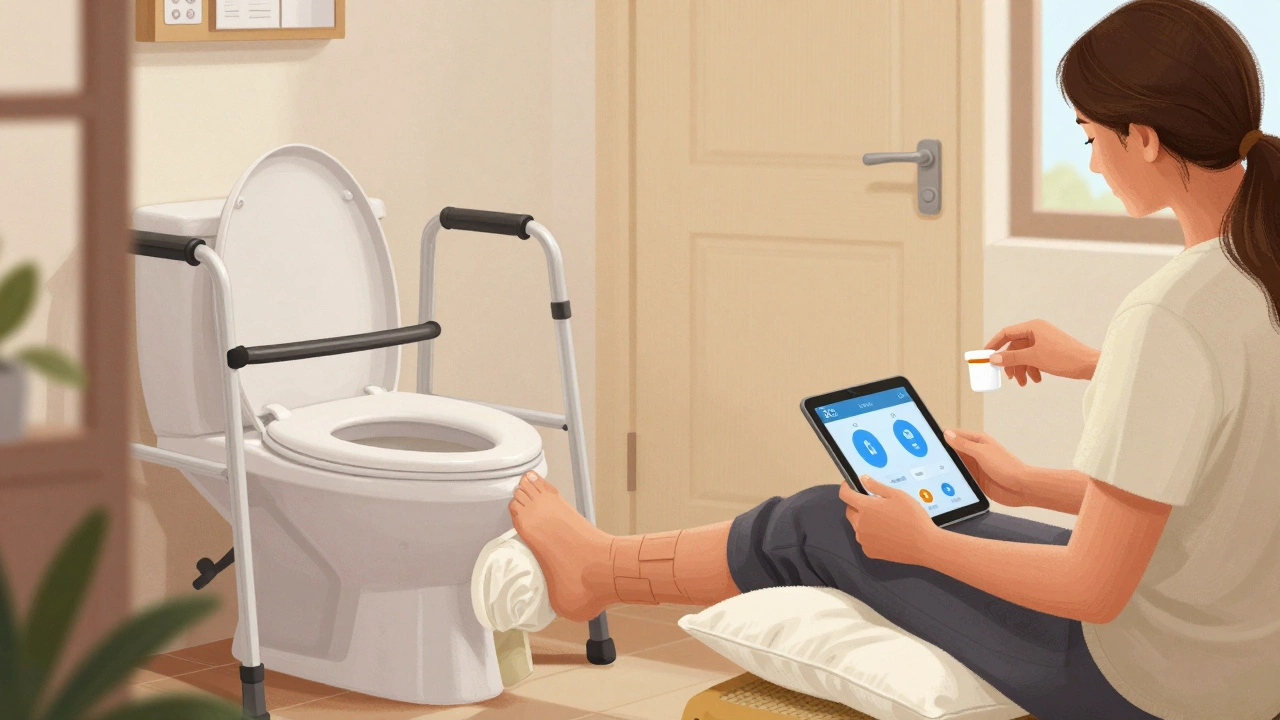
Same-day discharge is becoming more common, especially in private hospitals in cities like Bangalore, Delhi, and Hyderabad. But it’s not for everyone. You need to be under 70, in good shape, with strong support at home. You’ll need someone to stay with you the first night. You’ll also need a wheelchair or walker, a raised toilet seat, a shower chair, and a firm bed.
Before you leave, you’ll get a detailed discharge packet: when to change dressings, signs of infection, how to take your pills, and a phone number to call if something goes wrong. Many hospitals now use apps to check in with you daily. You might get a text asking, “Can you bend your knee today?” or “Are you having swelling?”
Same-day discharge saves money and reduces infection risk. But it only works if you’re prepared.
What Happens After You Leave the Hospital?
Your hospital stay is just the beginning. The first two weeks are the hardest. You’ll still need pain meds. You’ll still use a walker. You’ll go to physical therapy three to five times a week. Most people are off painkillers by week four. By week six, many can walk without a cane. Full recovery takes 3 to 6 months.
Swelling is normal for months. Your knee might feel warm, stiff, or even numb around the scar. That’s not a problem-it’s part of healing. But if you notice sudden swelling, redness, or fever after you leave the hospital, call your surgeon. Don’t wait.
Most people return to light activities like walking and swimming by 6 to 8 weeks. Driving? Usually 4 to 6 weeks, depending on which leg was operated on and whether you drive an automatic. Work? If you sit at a desk, you might be back in 4 to 6 weeks. If you stand all day, plan for 8 to 12 weeks.

What Can Go Wrong After Discharge?
Most recoveries go smoothly. But here are the top three things that cause readmissions:
- Infection: Even a small red spot near the incision needs checking. Don’t ignore it.
- Blood clots: If your calf hurts, swells, or feels hot, get it checked immediately. DVT (deep vein thrombosis) can turn into a pulmonary embolism.
- Stiffness: If you stop doing your exercises, your knee freezes. Physical therapy isn’t optional-it’s the reason your knee works at all.
These aren’t rare. About 1 in 10 people have a complication within 30 days. That’s why follow-ups matter. Your first check-up is usually 2 weeks after surgery. Then again at 6 weeks and 3 months.
How to Speed Up Your Recovery
There’s no magic trick. But these things make a real difference:
- Walk every day: Even if it’s just 5 minutes, get up and move. Sitting too long causes stiffness.
- Elevate your leg: Keep it raised above your heart when resting. Reduces swelling fast.
- Don’t skip your exercises: Your therapist gave you a list. Do them before breakfast. Make them part of your routine.
- Watch your diet: Eat protein. Eat vegetables. Avoid sugar and processed food. Healing needs fuel.
- Don’t rush: You’ll feel better in weeks. But your knee needs months to fully heal. Pushing too hard can damage the implant.
People who follow these rules recover faster, have fewer problems, and are happier with their results.
What to Expect at Your 6-Week Check-Up
Your surgeon will check your range of motion, strength, and how well you’re walking. X-rays show if the implant is in the right position. Most people are doing great by now. Some still have mild pain or swelling-that’s normal. But if you’re not walking without a cane, or your knee locks up, they’ll adjust your rehab plan.
This is also when you’ll stop taking blood thinners. Most people stop around week 4 to 6, unless they’re at high risk for clots.
By 3 months, most patients say their knee feels “normal.” Not perfect, but good enough to walk, climb stairs, and enjoy daily life without pain.