IVF Success Rate Calculator
Calculate Your IVF Success Chances
Based on data from clinics worldwide, see your projected success rates for each IVF cycle.
Enter your age and cycles to see projected success rates
Trying to get pregnant through IVF isn’t like flipping a switch-it’s a journey with twists, turns, and a lot of waiting. If you’ve started this path, you’re probably wondering: How many rounds of IVF does it take to get pregnant? There’s no single answer, but there are real numbers, clear patterns, and honest stories that can help you set realistic expectations.
Most people need more than one cycle
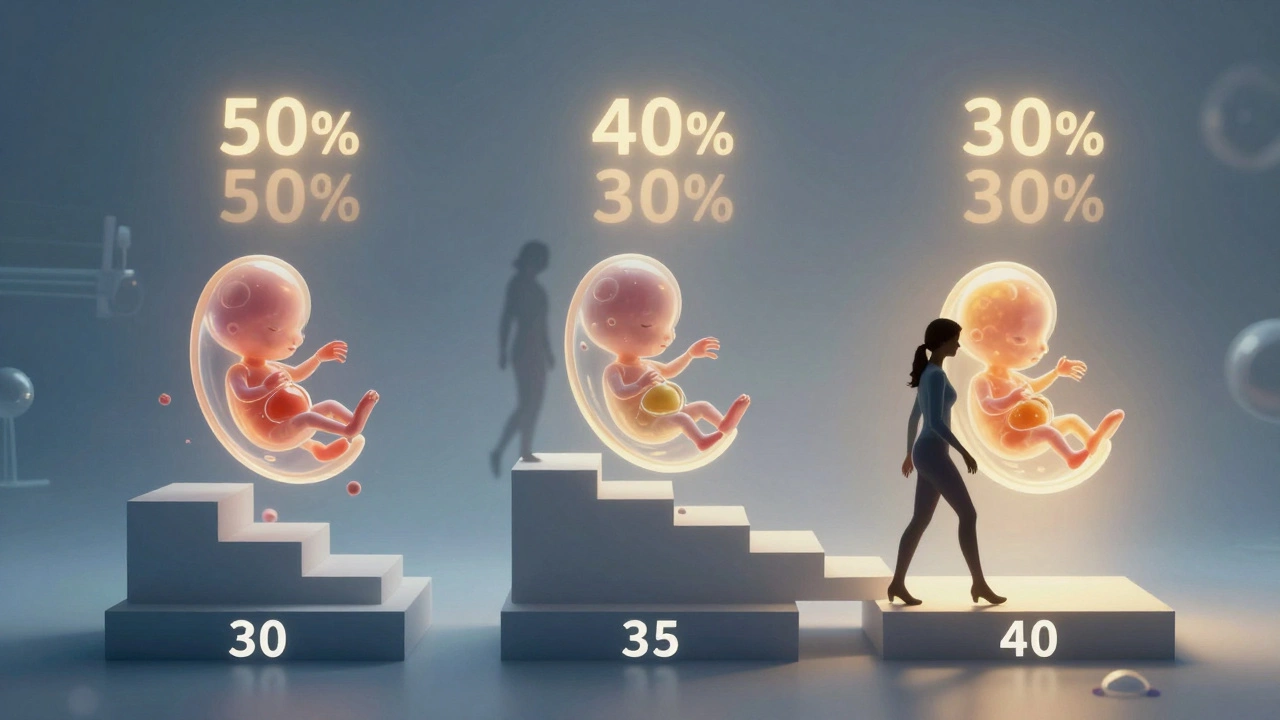
The idea that IVF works on the first try is a myth. In reality, only about 30% of women under 35 get pregnant on their first IVF cycle. That means nearly 7 out of 10 people need to try again. For women between 35 and 37, the success rate drops to around 25% per cycle. By age 40, it’s closer to 15%. These aren’t just numbers-they reflect what happens in clinics across India, the U.S., and Europe.
Many couples give up after two or three failed attempts. But data shows that cumulative success keeps rising with each cycle. After three cycles, the chance of pregnancy jumps to nearly 50% for women under 35. By the fourth cycle, it’s over 60%. That’s why doctors often recommend at least three tries before considering alternatives.
Age is the biggest factor
Age isn’t just a number in IVF-it’s the most powerful predictor of success. Egg quality and quantity drop sharply after 35, and even more after 40. A 30-year-old woman has about a 40% chance of live birth per cycle. By 42, that number falls to under 10%. And by 44, it’s less than 5%.
That’s why women over 40 often need more cycles-and sometimes donor eggs. In India, about 12% of IVF cycles use donor eggs, mostly for women over 40. Donor eggs can boost success rates back up to 50-60% per cycle, even for women in their late 40s.
What makes one cycle fail and another work?
Not every failed cycle is the same. Sometimes it’s about egg quality. Other times, it’s embryo implantation. Or maybe the uterine lining isn’t thick enough. Sometimes, nothing seems wrong-and still, it doesn’t stick.
Studies from the Indian Society of Assisted Reproduction show that about 30% of failed IVF cycles have no clear cause. That’s frustrating, but it’s normal. That’s why clinics now recommend testing after two failures: things like endometrial receptivity tests, genetic screening of embryos (PGT-A), or checking for hidden infections.
One woman I spoke with in Bangalore had three failed cycles. Nothing looked off on paper. On her fourth try, they switched from fresh to frozen embryo transfer-and she got pregnant. Sometimes, small changes like timing, medication dosage, or transfer method make all the difference.
Success isn’t just about pregnancy-it’s about live birth
Many clinics advertise pregnancy rates. But pregnancy isn’t the same as a live birth. About 15-20% of IVF pregnancies end in early miscarriage. That means even if you get a positive test, there’s still a chance it won’t lead to a baby.
For women under 35, the live birth rate per cycle is about 25-30%. For those 38-40, it’s closer to 15-20%. After 42, it’s under 5%. These numbers matter more than pregnancy rates because they reflect what most people are really hoping for: a healthy baby to take home.
How many cycles are too many?
There’s no official limit. Some people try six or seven cycles. Others stop after two. The decision isn’t just medical-it’s emotional, financial, and physical.
In India, one full IVF cycle costs between ₹1.5 lakh and ₹2.5 lakh. That includes medications, monitoring, egg retrieval, and transfer. Frozen embryo transfers are cheaper-around ₹70,000 to ₹1 lakh. After three cycles, most couples have spent ₹4-7 lakhs. That’s a lot for many families.
Doctors often suggest reassessing after three to four cycles. If you haven’t had a live birth by then, it’s time to talk about other options: donor eggs, surrogacy, adoption, or living child-free. There’s no shame in any of those paths.

What can you do to improve your odds?
You can’t change your age, but you can improve your chances in other ways:
- Get tested early. Don’t wait a year to see a specialist. If you’re over 35, go after six months of trying.
- Optimize your health. Quit smoking, cut back on alcohol, and manage stress. Studies show that women with a healthy BMI have better embryo implantation rates.
- Ask about PGT-A. Genetic testing of embryos can help pick the ones most likely to work-especially if you’ve had miscarriages or repeated failures.
- Consider frozen transfers. Some clinics find better success with frozen embryo transfers than fresh ones, especially for women with high hormone levels.
- Choose the right clinic. Look for clinics that publish their success rates by age group. Avoid places that only show overall numbers.
It’s not just about numbers
Behind every statistic is a person. A woman sitting in a clinic waiting room, scrolling through pregnancy apps. A couple arguing over whether to try one more time. A man holding his wife’s hand during the blood test.
Success isn’t just measured in cycles or embryos. It’s also measured in resilience. In the quiet courage it takes to keep going, even when the odds feel stacked. Some people get pregnant on the first try. Others need five. Some never do-and still find peace.
There’s no right number of IVF cycles. Only what’s right for you.
What’s the success rate of IVF after three cycles?
After three IVF cycles, the chance of a live birth is about 50% for women under 35. For women aged 35-37, it’s around 40%. For those 38-40, it’s close to 30%. These numbers rise with each additional cycle, but the gains slow down after the fourth try.
Is it possible to get pregnant on the first IVF cycle?
Yes, it’s possible. About 30% of women under 35 get pregnant on their first IVF cycle. But that means 70% don’t. First-cycle success depends mostly on age, egg quality, and embryo health. Don’t feel discouraged if it doesn’t work right away-it’s the norm, not the exception.
Why do some IVF cycles fail even with good embryos?
Even with genetically normal embryos, implantation can fail due to issues with the uterine lining, immune factors, or unknown biological reasons. Sometimes, the timing of the transfer doesn’t match the window of implantation. Tests like the ERA (Endometrial Receptivity Array) can help identify the best day for transfer, improving chances in repeat failures.
How does age affect IVF success over multiple cycles?
Age has a steep impact. A 30-year-old has about a 40% chance of live birth per cycle. At 38, that drops to 20%. By 42, it’s under 10%. After age 43, even multiple cycles rarely lead to a live birth using your own eggs. That’s why many women over 40 turn to donor eggs, which can restore success rates to 50-60% per cycle.
When should someone stop IVF and consider other options?
Most doctors suggest reconsidering after three to four failed cycles, especially if you’re over 40 or using your own eggs. If you’ve had no live births, it’s time to talk about donor eggs, surrogacy, or adoption. Emotional and financial limits also matter. There’s no failure in choosing a different path to parenthood.
Does stress cause IVF to fail?
Stress doesn’t directly stop an embryo from implanting. But chronic stress can affect sleep, hormones, and lifestyle habits-like skipping meals, not exercising, or drinking alcohol-which can lower success rates. Managing stress through counseling, yoga, or support groups can help you stay grounded through the process.
Are frozen embryo transfers more successful than fresh ones?
In many cases, yes. Frozen embryo transfers (FET) often have slightly higher success rates than fresh transfers, especially for women with high estrogen levels during stimulation. Freezing allows the body to recover, and the uterine lining can be better prepared. Studies show FETs have a 5-10% higher live birth rate in certain groups.
How much does IVF cost in India, and how many cycles can most people afford?
One full IVF cycle in India costs ₹1.5-2.5 lakh, including medications. Frozen embryo transfers cost ₹70,000-₹1 lakh. Most couples can afford two to three cycles before financial strain becomes serious. Some clinics offer payment plans or package deals for multiple cycles. Government hospitals in cities like Bangalore offer subsidized IVF for low-income couples under state schemes.
What comes next?
If you’re on your first cycle, be patient. If you’re on your third, don’t give up yet. If you’re thinking about quitting, talk to your doctor-not just about eggs and embryos, but about your heart.
There’s no perfect number of IVF cycles. But there is a right path for you-and it doesn’t always look like what you imagined.