Trazodone vs. Narcotics: Risk & Interaction Checker
Configuration
Select your current medications or substances to analyze risks.
Analysis Results
Feature Comparison
You pick up your prescription for Trazodone, see the word "controlled" or hear someone call it a "downer," and suddenly you’re wondering: is this stuff a narcotic? It’s a fair question. The term "narcotic" gets thrown around loosely in everyday conversation to mean any drug that makes you sleepy or feel good. But in the medical and legal world, the definition is much stricter-and trazodone doesn’t fit the bill.
Short answer: No, trazodone is not a narcotic. It belongs to a completely different class of medications known as serotonin antagonist and reuptake inhibitors (SARIs). While it shares some side effects with narcotics, like drowsiness, its chemical structure, how it works in your brain, and its potential for addiction are vastly different. Understanding this distinction matters, especially if you are ordering medication from an online pharmacy that needs to verify your prescriptions carefully.
What Actually Defines a "Narcotic"?
To understand why trazodone isn't one, we first have to define what a narcotic actually is. In strict medical terms, a narcotic refers specifically to opioids-drugs derived from opium or synthetic versions that mimic its effects. Think morphine, oxycodone, hydrocodone, or fentanyl. These drugs bind to opioid receptors in the brain to block pain signals. They are highly regulated because they carry a high risk of physical dependence, tolerance, and overdose.
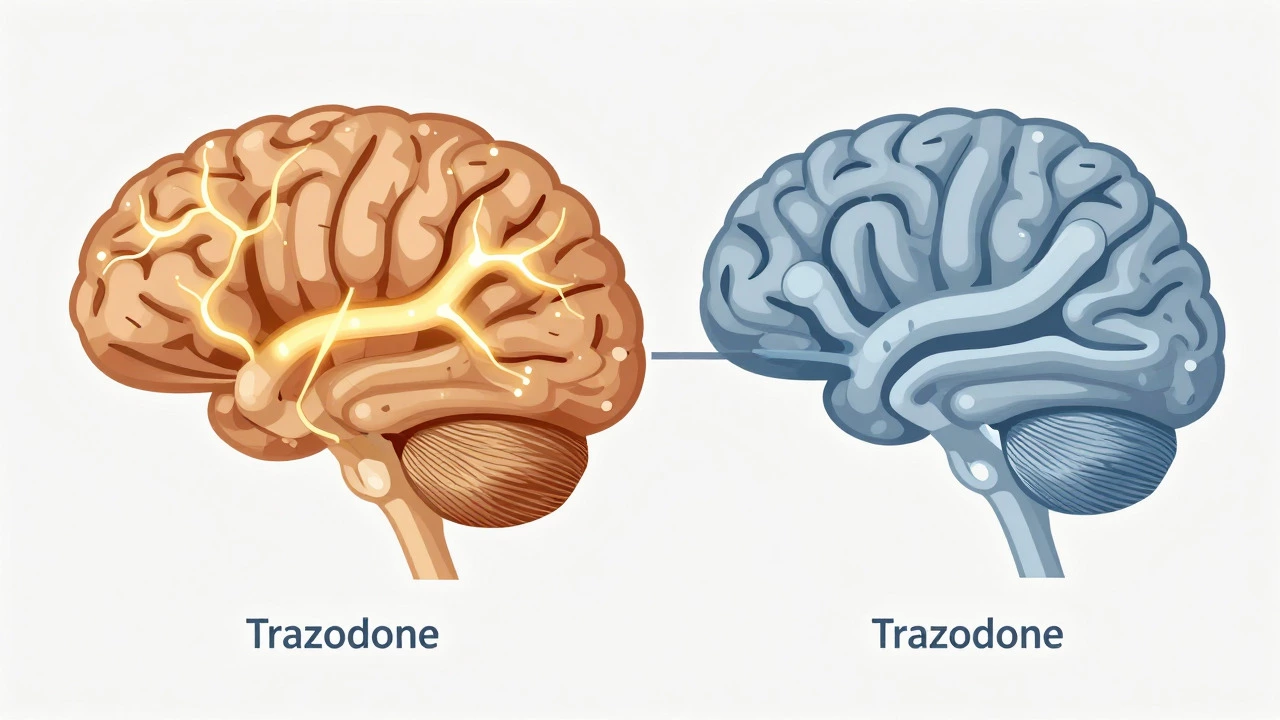
In common parlance, people often use "narcotic" as a catch-all for any sedative or mind-altering substance. This confusion leads many patients to assume that because trazodone makes them tired, it must be in the same family as heroin or Vicodin. It’s not. Trazodone affects serotonin, a neurotransmitter that regulates mood, sleep, and appetite. Opioids affect endorphins and pain perception. Two very different pathways.
| Feature | Trazodone | Narcotics (Opioids) |
|---|---|---|
| Drug Class | SARI (Antidepressant) | Opioid Analgesic |
| Primary Use | Depression, Insomnia | Pain Management |
| Mechanism | Blocks serotonin reuptake | Binds to opioid receptors |
| Addiction Potential | Low | High |
| Controlled Substance? | No (in most jurisdictions) | Yes (Schedule II-IV) |
How Trazodone Works in Your Brain
Trazodone was originally developed in the 1970s as an antidepressant. It works by blocking the reuptake of serotonin, meaning more of this "feel-good" chemical stays available in your brain. However, at lower doses, which are commonly prescribed today, its primary effect is sedation due to its ability to block histamine H1 receptors. This is why doctors frequently prescribe it off-label for insomnia rather than depression.
Unlike narcotics, which depress the central nervous system to stop pain signals, trazodone modulates mood and sleep cycles. You don’t build a tolerance to its sleep-inducing effects quickly. If you take it every night for six months, you likely won’t need to double the dose just to fall asleep, whereas with benzodiazepines or opioids, tolerance builds rapidly.
The Addiction Question: Is It Habit-Forming?
This is where the confusion really sets in. People associate "sleeping pills" with addiction. While trazodone is generally considered to have a low abuse potential, no medication is entirely free from the risk of psychological dependence. Some patients find themselves anxious about going to bed without their pill. That’s psychological reliance, not physical addiction.
Physical addiction involves withdrawal symptoms that can be dangerous. With narcotics, stopping abruptly can cause severe flu-like symptoms, seizures, or intense cravings. With trazodone, stopping suddenly might cause rebound insomnia, nausea, or irritability, but it rarely leads to life-threatening withdrawal. The Drug Enforcement Administration (DEA) does not classify trazodone as a controlled substance, which is a strong indicator of its safety profile regarding abuse.
Why Online Pharmacies Ask About Controlled Substances
If you are buying trazodone from a reputable online pharmacy, you might still encounter strict verification processes. Why? Because regulations around telehealth and digital prescriptions have tightened significantly since 2023. Even though trazodone isn’t a narcotic, pharmacies want to ensure:
- You have a valid, current prescription from a licensed provider.
- You aren’t mixing it with other CNS depressants like alcohol or benzodiazepines.
- Your identity matches the prescription holder to prevent diversion.
Some platforms automatically flag any psychotropic medication for extra review. Don’t panic if your order takes 24 hours longer to process. It’s usually just a standard compliance check, not an accusation that you’re trying to get something illicit.
Dangerous Interactions to Watch For
While trazodone itself isn’t a narcotic, combining it with actual narcotics or other sedatives can be risky. Mixing trazodone with opioids increases the risk of respiratory depression-where your breathing slows down too much. Similarly, combining it with alcohol amplifies the sedative effect, leading to extreme drowsiness, confusion, or falls.
Always disclose all medications you are taking when consulting with your doctor or pharmacist. If you are on painkillers for a recent surgery, tell them you are also on trazodone. They may adjust the timing of your doses to minimize overlap.
Common Side Effects vs. Narcotic Symptoms
It’s easy to mistake trazodone’s side effects for narcotic intoxication. Both can cause:
- Dizziness
- Drowsiness
- Blurred vision
- Constipation
However, trazodone has unique side effects that narcotics do not typically cause. One notable example is priapism-a painful, prolonged erection that requires immediate medical attention. This is rare but serious. Another is orthostatic hypotension, where your blood pressure drops when you stand up, causing lightheadedness. Knowing these specific risks helps you distinguish between normal drug effects and warning signs.
Legal Status and Storage
Because trazodone is not a controlled substance, you don’t need to store it in a locked cabinet like you would with Xanax or Adderall. However, keeping it out of reach of children and pets is always wise. Legally, possessing trazodone without a prescription is still illegal in most countries, even if it’s not "controlled." It remains a prescription-only medication (POM).
When traveling internationally, check local laws. Some countries have stricter rules on psychotropics. Carry your original prescription bottle and a letter from your doctor to avoid customs issues.
Is trazodone a Schedule IV drug?
No, trazodone is not scheduled by the DEA in the United States. Schedule IV drugs include benzodiazepines like Xanax or Valium, which have a higher abuse potential. Trazodone is uncontrolled, meaning it is not monitored under the Controlled Substances Act.
Can you get addicted to trazodone?
Physical addiction is rare. However, psychological dependence can occur if you rely on it heavily for sleep anxiety. Withdrawal symptoms are mild compared to narcotics or benzos, usually involving rebound insomnia or nausea.
Does trazodone show up on a drug test?
Standard urine drug screens look for opioids, amphetamines, cocaine, and THC. Trazodone is not included in standard panels. However, specialized tests for antidepressants or comprehensive toxicology screens can detect it. Always declare it if asked.
Is trazodone safer than Ambien for sleep?
Generally, yes. Ambien (zolpidem) is a Schedule IV controlled substance with a higher risk of complex sleep behaviors (like sleepwalking) and dependency. Trazodone is often preferred for long-term insomnia management due to its lower abuse potential.
Can I drink alcohol while taking trazodone?
It is best to avoid it. Alcohol enhances the sedative effects of trazodone, increasing the risk of excessive drowsiness, dizziness, and impaired coordination. If you do drink, limit it to one small beverage and monitor how you feel.