Diabetes Medication Matchmaker
This tool provides general educational information based on common clinical guidelines. It is not a substitute for professional medical advice. Always consult your healthcare provider before changing medications.
Your Health Profile
Ready to Analyze
Fill out the profile on the left and click "Find Potential Matches" to see which medication classes might align with your needs.
Imagine your blood sugar is a party guest that refuses to leave. You’ve tried polite hints (diet changes) and firm requests (exercise), but the numbers on your glucometer stay stubbornly high. That’s where medication steps in. But with dozens of options on the shelf, which one actually gets the job done? If you’re asking what is the best medicine to lower A1C, the honest answer isn’t a single pill name. It’s about matching the right drug mechanism to your specific body chemistry, weight goals, and heart health status.
A1C, or glycated hemoglobin, is a three-month average of your blood glucose levels. Think of it as your blood sugar’s credit score. Doctors generally aim for an A1C below 7% for most adults with type 2 diabetes. When lifestyle changes hit a plateau, pharmacotherapy becomes essential. The landscape of diabetes treatment has shifted dramatically in the last decade. We’ve moved from simple glucose-lowering agents to drugs that protect the heart, kidneys, and even help with weight loss. Let’s break down the top contenders based on current clinical guidelines and real-world effectiveness.
Understanding How Different Medications Work
Before picking a winner, you need to understand the players. Diabetes medications don’t all work the same way. Some force your pancreas to pump out more insulin, some stop your liver from dumping sugar into your blood, and others make your kidneys flush sugar out through urine. Knowing the mechanism helps predict side effects and benefits.
The most common starting point remains Metformin. This biguanide class drug reduces hepatic glucose production and improves insulin sensitivity. It doesn’t cause weight gain; in fact, many users lose a few pounds. However, it can cause gastrointestinal issues like nausea or diarrhea in the first few weeks. For many patients, Metformin is the foundation upon which other therapies are built because it’s cheap, effective, and safe for long-term use.
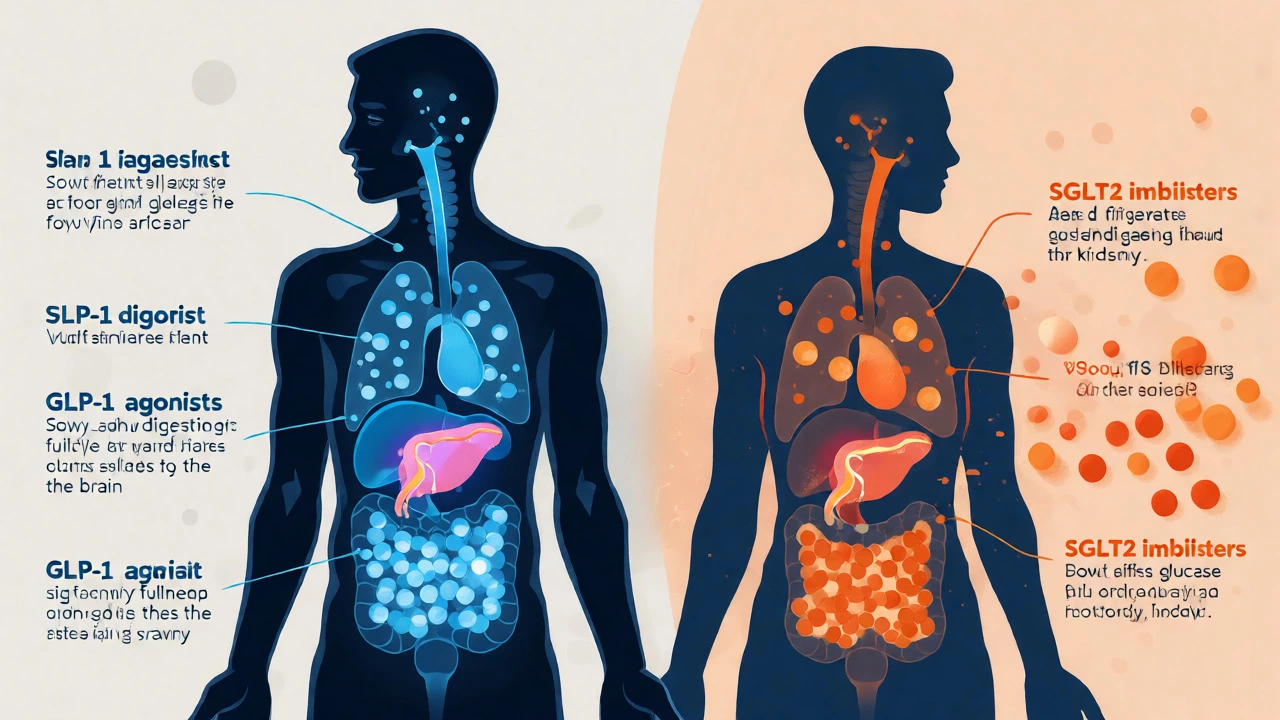
But what if Metformin isn’t enough? Or what if you have heart disease? That’s where newer classes shine. GLP-1 Receptor Agonists mimic a hormone called glucagon-like peptide-1. They slow digestion, signal fullness to the brain, and stimulate insulin release only when blood sugar is high. Examples include Semaglutide (Ozempic/Wegovy) and Liraglutide (Victoza). These aren’t just sugar-lowers; they are potent weight-loss aids and cardioprotective agents.
Another game-changer is the SGLT2 Inhibitors. Drugs like Empagliflozin (Jardiance) and Dapagliflozin (Farxiga) block the reabsorption of glucose in the kidneys, causing you to pee out excess sugar. This lowers blood pressure, reduces fluid retention, and offers significant protection against heart failure and kidney disease progression.
Comparing Efficacy: Which Drug Lowers A1C the Most?
Not all drugs are created equal in their ability to drop A1C points. Clinical trials provide clear data on expected reductions. Here is a realistic look at what you can expect from major classes:
| Medication Class | Common Examples | Typical A1C Drop | Weight Impact | Hypoglycemia Risk |
|---|---|---|---|---|
| Metformin | Glucophage | 1.0 - 1.5% | Neutral/Loss | Low |
| GLP-1 Agonists | Semaglutide, Dulaglutide | 1.0 - 1.8% | Significant Loss | Low |
| SGLT2 Inhibitors | Empagliflozin, Canagliflozin | 0.5 - 1.0% | Moderate Loss | Low |
| Insulin | Glargine, Lispro | 1.5 - 3.0%+ | Gain | High |
| DPP-4 Inhibitors | Sitagliptin, Linagliptin | 0.5 - 0.8% | Neutral | Low |
Notice the pattern? Insulin is the heavyweight champion for raw potency. If your A1C is dangerously high (above 9% or 10%), no pill will bring it down fast enough. Insulin directly replaces what your body lacks. However, it comes with the baggage of weight gain and hypoglycemia (low blood sugar) risks. For most people aiming for moderate control without gaining weight, GLP-1 agonists currently hold the crown for efficacy combined with metabolic benefits.
Matching the Drug to Your Health Profile
The "best" medicine depends entirely on your comorbidities. This is where personalized medicine matters. You wouldn’t prescribe a diuretic to someone with dehydration, and similarly, you shouldn’t pick a diabetes drug without looking at the whole patient.
If you have established cardiovascular disease or are at high risk for it, guidelines strongly recommend GLP-1 agonists or SGLT2 inhibitors regardless of your baseline A1C. Why? Because studies like LEADER and EMPA-REG showed these drugs reduce heart attacks, strokes, and cardiovascular death. Metformin, while great for sugar control, hasn’t shown the same direct life-saving cardiac benefits in large-scale modern trials.
Do you struggle with obesity? Type 2 diabetes and excess visceral fat are closely linked. In this scenario, Tirzepatide (Mounjaro/Zepbound) is emerging as a superior option. It’s a dual GIP/GLP-1 receptor agonist. Unlike standard GLP-1s, it targets two hormone pathways, leading to even greater weight loss and A1C reductions. Early data suggests it can lower A1C by up to 2.0% or more in some populations.
What if cost is a barrier? Newer injectables and pills can be expensive. If budget is tight, older sulfonylureas (like Glipizide) are cheap and effective at lowering A1C quickly. But watch out: they can cause weight gain and hypoglycemia. Thiazolidinediones (TZDs) like Pioglitazone are another affordable option that improves insulin sensitivity, though they may cause fluid retention and bone fractures in susceptible individuals.
The Role of Lifestyle and Timing
No pill works in a vacuum. Taking the best medicine to lower A1C means nothing if you’re eating refined carbs and sitting on the couch all day. Medication amplifies your efforts; it doesn’t replace them. Studies consistently show that combining metformin with structured exercise yields better results than either alone.
Timing also matters. Some drugs work best before meals (prandial regulators), while others provide background coverage (basal). For instance, rapid-acting insulins must be timed precisely with food intake to prevent post-meal spikes. Oral medications like Metformin are often taken with food to reduce stomach upset. Skipping doses or taking them inconsistently leads to fluctuating blood sugars, which keeps your A1C elevated despite being on therapy.
Adherence is the silent killer of good outcomes. Many patients stop taking their meds because of side effects. If you experience severe nausea with a GLP-1, talk to your doctor. Starting at a low dose and titrating up slowly can mitigate this. If you get urinary tract infections from SGLT2 inhibitors, hygiene practices usually resolve the issue. Never quit cold turkey without consulting your healthcare provider.
Potential Side Effects and Risks
Every medication carries trade-offs. Understanding them helps you manage expectations and report issues early.
- Metformin: GI distress is common initially. Long-term use can deplete Vitamin B12, so annual checks are wise.
- GLP-1 Agonists: Nausea, vomiting, and diarrhea are frequent. Rarely, there’s a risk of thyroid C-cell tumors (seen in rodent studies, not definitively proven in humans yet).
- SGLT2 Inhibitors: Increased urination, genital yeast infections, and rarely, diabetic ketoacidosis (even with normal blood sugar levels).
- Insulin: Weight gain and hypoglycemia are the primary concerns. Injection site reactions can occur.
- Sulfonylureas: High risk of hypoglycemia and weight gain.
Your doctor will weigh these risks against the benefits. For a younger person with no heart issues, the mild side effects of Metformin might be preferable to the injection burden of a GLP-1. For an older adult with heart failure, the fluid-shifting benefits of an SGLT2 inhibitor outweigh the minor infection risk.

Frequently Asked Questions
Can I lower my A1C without medication?
Yes, especially in early-stage type 2 diabetes. Significant weight loss (5-10% of body weight), regular aerobic and resistance exercise, and a diet low in processed carbohydrates can normalize A1C. However, if beta-cell function declines over time, medication often becomes necessary to maintain those gains.
How fast does A1C change after starting medication?
A1C reflects a 3-month average, so you won’t see immediate changes in lab results. Daily glucose readings may improve within days or weeks, but a meaningful drop in A1C typically requires 3 to 6 months of consistent therapy. Patience is key.
Is Ozempic better than Metformin for lowering A1C?
In head-to-head comparisons, Semaglutide (Ozempic) generally shows slightly greater A1C reduction and significant weight loss compared to Metformin. However, Metformin is cheaper and has a longer safety track record. Often, they are used together for synergistic effects rather than choosing one exclusively.
Do natural supplements work as well as prescription meds?
Supplements like Berberine or Cinnamon have modest evidence for lowering blood sugar, but their effect size is much smaller than prescription drugs. They are not replacements for proven pharmacotherapy in uncontrolled diabetes. Always consult your doctor before adding supplements, as they can interact with medications.
Why is my A1C still high despite taking medication?
Possible reasons include poor adherence, inadequate dosing, progressing disease requiring combination therapy, or lifestyle factors overwhelming the medication's effect. Stress, illness, and certain steroids can also temporarily raise blood sugar. Review your daily habits and discuss dose adjustments with your provider.
Next Steps for Better Control
Choosing the right medication is a collaborative decision. Bring your recent glucose logs, list of current meds, and personal health goals (e.g., "I want to lose weight" or "I’m worried about heart disease") to your next appointment. Ask specifically about GLP-1s or SGLT2 inhibitors if you haven’t tried them yet, especially if Metformin alone isn’t cutting it.
Remember, the goal isn’t just a number on a lab report. It’s preventing complications like nerve damage, vision loss, and kidney failure. The best medicine is the one you take consistently, that fits your lifestyle, and that protects your long-term health. Start the conversation today-your future self will thank you.