Mental Health Support Needs Calculator
How This Tool Helps
This calculator assesses potential support needs based on symptom severity and daily challenges. It's not a diagnosis, but a tool to help understand where you might benefit from additional support. For professional help, please contact a qualified mental health provider.
Select Your Symptoms
Rate Your Daily Impact
Rate how much each symptom affects your daily life (1 = minimal, 5 = severe)
Support Recommendations
Results will appear here after calculation
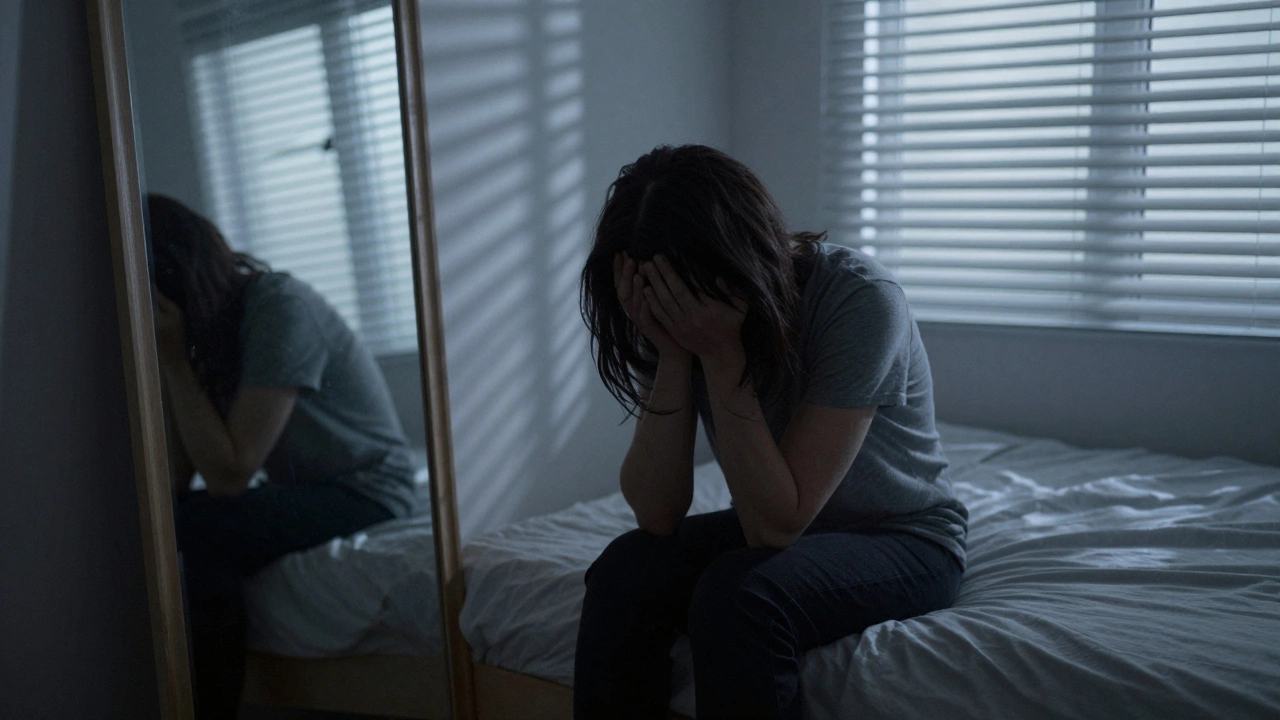
Living with a mental illness isn’t just about feeling sad or anxious. For many, it’s a daily battle that rewires how you think, feel, and connect with the world. Some conditions are harder to manage than others-not because they’re more rare, but because they attack the very core of identity, relationships, and self-trust. If you’ve ever wondered which mental illnesses are the toughest to live with, the answer isn’t just about symptoms. It’s about how those symptoms twist your reality, isolate you, and make even simple tasks feel impossible.
Borderline Personality Disorder: The Emotional Storm Inside
Borderline Personality Disorder (BPD) is often misunderstood. People think it’s just mood swings or attention-seeking. It’s not. BPD is a deep, chronic instability in emotions, self-image, and relationships. One moment, you feel invincible; the next, you’re convinced you’re worthless. Relationships swing between idealization and intense fear of abandonment. You might love someone one day and push them away the next-sometimes over something as small as a delayed text.
Self-harm isn’t rare. Neither is the feeling of emptiness that no amount of distraction can fill. Many with BPD describe it as living with an open nerve. Therapy helps-Dialectical Behavior Therapy (DBT) has changed lives-but recovery takes years. And even then, triggers can come out of nowhere: a tone of voice, a silence, a memory. The hardest part? You know your reactions are intense, but you can’t always control them. And that guilt? It never leaves.
Schizophrenia: When Your Mind Becomes a Foreign Place
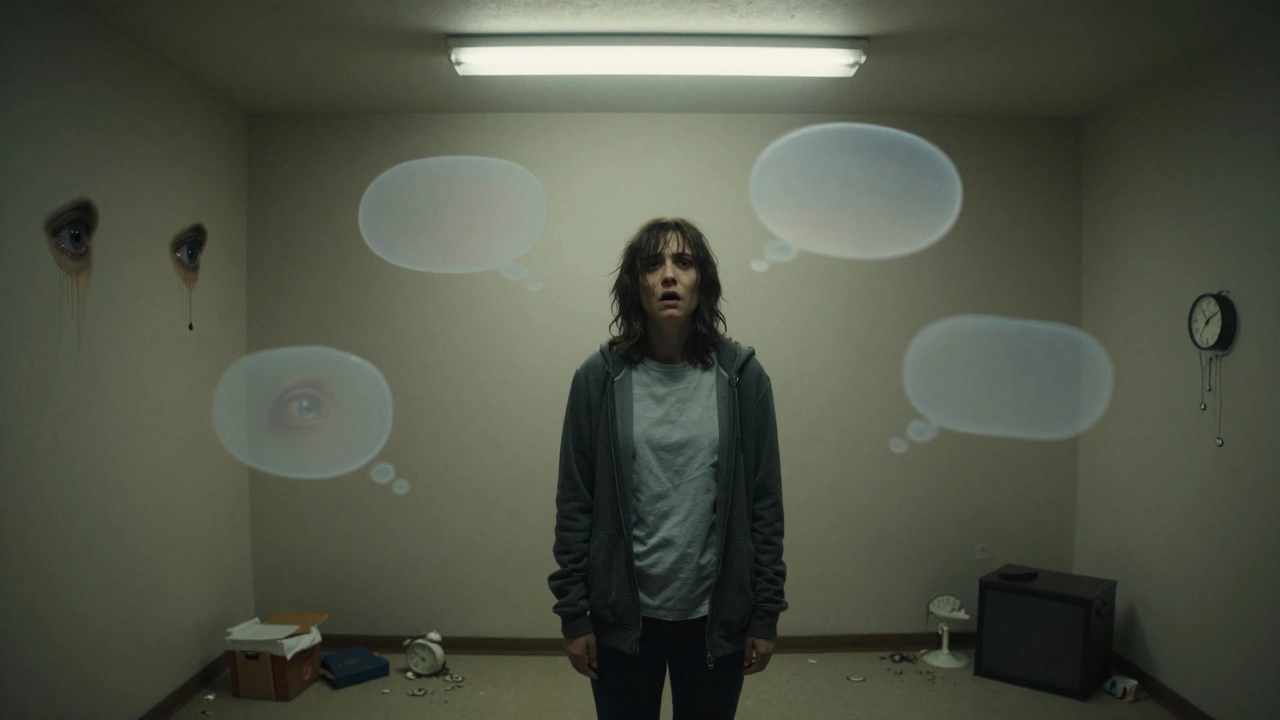
Schizophrenia doesn’t mean multiple personalities. That’s a myth. It means your brain starts misfiring. Hallucinations aren’t just hearing voices-they’re voices that feel more real than your own thoughts. Delusions aren’t just false beliefs-they’re convictions so strong, no evidence can shake them. You might believe your neighbor is spying on you through the walls. Or that your thoughts are being broadcasted to strangers.
Medication helps manage symptoms, but side effects can be brutal: weight gain, tremors, constant fatigue. Many stop taking their meds because they feel better-only to crash back into psychosis. Social isolation is common. Friends drift away. Jobs disappear. Families struggle to understand. The stigma is brutal. People assume you’re dangerous. You’re not. You’re terrified-of your own mind.
And then there’s the cognitive fog. Memory. Focus. Planning. These don’t just fade-they vanish. Making a grocery list becomes a mission. Paying bills feels overwhelming. You’re not lazy. Your brain is fighting a war you can’t see.
Severe Depression: The Weight That Never Lifts
Depression isn’t sadness. Severe depression is a physical force. It’s waking up and feeling like your bones are made of lead. It’s staring at the ceiling for hours because getting up feels like climbing a mountain. It’s crying in the shower because you can’t cry in front of anyone. It’s forgetting how to smile-even when you’re alone.
People say, “Just cheer up.” They don’t get it. You can’t “snap out” of this. Your brain has stopped producing serotonin, dopamine, norepinephrine. No amount of willpower fixes that. Medication helps some. Therapy helps others. But for many, it’s a cycle: improvement, relapse, guilt, shame, more relapse.
And then there’s the guilt. You feel like a burden. You cancel plans. You stop answering calls. You tell people you’re fine. They believe you. You hate yourself for lying. You hate yourself for not being able to fix it. Suicide isn’t a choice-it’s the only escape your brain can imagine.
PTSD: Trapped in the Past
Post-Traumatic Stress Disorder isn’t just about war veterans. It’s anyone who’s survived something that shattered their sense of safety. A car crash. Domestic violence. Childhood abuse. A sudden death. The trauma doesn’t stay in the past. It lives in your body.
Flashbacks aren’t memories. They’re time travel. One moment you’re in your kitchen. The next, you’re back in the hospital room, the smell of antiseptic, the sound of machines beeping. Your heart races. You can’t breathe. You’re not remembering-you’re reliving.
Hypervigilance is exhausting. You scan every room. You jump at loud noises. You avoid crowds. You can’t sleep. When you do, nightmares rip you awake. You stop trusting people. You stop trusting yourself. Why did this happen? Why didn’t you stop it? The guilt is heavy. The shame is louder.
Treatment helps-EMDR, trauma-focused CBT-but healing isn’t linear. Some days, you’re fine. Other days, a song on the radio sends you back ten years. And no one sees it. You look normal. You smile. You work. But inside? You’re still running.
Bipolar Disorder: The Roller Coaster With No Seatbelt
Bipolar disorder isn’t just mood swings. It’s extremes that last for weeks or months. Mania isn’t happiness. It’s racing thoughts, reckless spending, impulsive decisions, no need for sleep. You might spend $10,000 on things you don’t need. You might start five projects and abandon them all. You feel like a genius-until the crash.
The depressive episode that follows is crushing. You can’t get out of bed. You can’t speak. You feel like a ghost. You lose jobs. Relationships break. You lie to people about why you disappeared. You lie to yourself about whether you’re worth saving.
Medication stabilizes-but not always. Lithium works for some. Anticonvulsants help others. But side effects? Weight gain, tremors, kidney issues. And then there’s the stigma. People think you’re “crazy” during mania. They think you’re “lazy” during depression. No one sees the middle ground-the quiet, stable days you fight so hard to keep.
Why These Are the Hardest
What makes these illnesses so hard isn’t just the symptoms. It’s the isolation. The stigma. The lack of understanding. You can’t explain schizophrenia to someone who’s never heard voices. You can’t describe BPD to someone who’s never felt their identity dissolve. You can’t show someone the weight of depression-it’s invisible.
And then there’s the system. Therapy is expensive. Medications aren’t always covered. Support groups are hard to find. In places like Bangalore, mental health is still whispered about. People say, “Just pray.” Or, “It’s all in your head.” But it’s not. It’s biology. It’s brain chemistry. It’s trauma etched into your nervous system.
Recovery isn’t about being “cured.” It’s about learning to live with it. Finding routines. Building support. Accepting that some days will be brutal. But also knowing that some days-small, quiet, ordinary days-are victories.
It’s Not a Contest
Some people ask, “Which one is the worst?” That’s the wrong question. Every mental illness is a unique hell. OCD can trap you in rituals that take hours. Dissociative disorders can make you feel like you’re watching your life from outside your body. Eating disorders can turn food into a battlefield.
What matters isn’t ranking them. It’s seeing them. Listening. Not fixing. Not judging. Just being there. Because for people living with these illnesses, the hardest part isn’t the illness itself. It’s feeling alone in it.
Can mental illnesses be cured?
Most mental illnesses can’t be “cured” in the way a broken bone heals. But they can be managed. With therapy, medication, lifestyle changes, and support, many people live full, meaningful lives. Recovery means learning to live with the illness, not eliminating it completely. For some, symptoms fade over time. For others, they’re lifelong-but manageable.
Why do people with mental illness often feel isolated?
Stigma plays a big role. Many people don’t understand mental illness, so they avoid it. Others think it’s a sign of weakness. Families may not know how to respond. Friends stop calling because they don’t know what to say. The person with the illness often withdraws too-out of shame, fear, or exhaustion. This creates a cycle: the more alone you feel, the worse the symptoms get.
Is therapy effective for severe mental illnesses?
Yes, but it depends on the illness and the type of therapy. For BPD, DBT has proven results. For PTSD, trauma-focused CBT and EMDR work well. For depression and bipolar disorder, CBT combined with medication helps most. Therapy isn’t a quick fix-it takes time, consistency, and trust. But for many, it’s the difference between surviving and living.
Why do some people stop taking their medication?
Side effects are a major reason. Weight gain, drowsiness, tremors, or loss of libido can feel worse than the illness itself. Some stop because they feel better and think they no longer need it. Others fear judgment or stigma. In some cultures, taking psychiatric meds is seen as a sign of failure. Without support, many quit-only to relapse. Medication isn’t a cure, but for many, it’s essential.
Can lifestyle changes help with severe mental illness?
Absolutely. Regular sleep, physical activity, and a balanced diet can reduce symptoms. Exercise boosts serotonin and dopamine. Sunlight helps regulate mood. Avoiding alcohol and drugs is critical-they worsen most mental illnesses. But lifestyle changes alone aren’t enough for severe conditions. They work best alongside therapy and medication. Think of them as support, not substitutes.