Post-Op Knee Care: What Really Works After Knee Surgery
When you’ve had a knee replacement, a surgical procedure to replace a damaged knee joint with artificial components. Also known as knee arthroplasty, it’s one of the most common orthopedic surgeries in India, with over 200,000 done each year. But the surgery is only half the battle. The real work starts the moment you leave the hospital—post-op knee care decides whether you’ll walk without pain or spend months stuck in discomfort.
Recovery isn’t just about resting. It’s about moving safely, keeping the wound clean, and rebuilding strength without pushing too hard. A bad shower routine can lead to infection. Skipping physical therapy can leave you stiff for life. And waiting too long to start walking? That’s how scar tissue locks your joint in place. You need to know what’s real and what’s myth. For example, you can’t just dunk your knee in water after surgery—water exposure increases infection risk, and most doctors delay full showers for at least 48 hours. Instead, you learn sponge baths, waterproof covers, and how to pat dry without tugging on the incision.
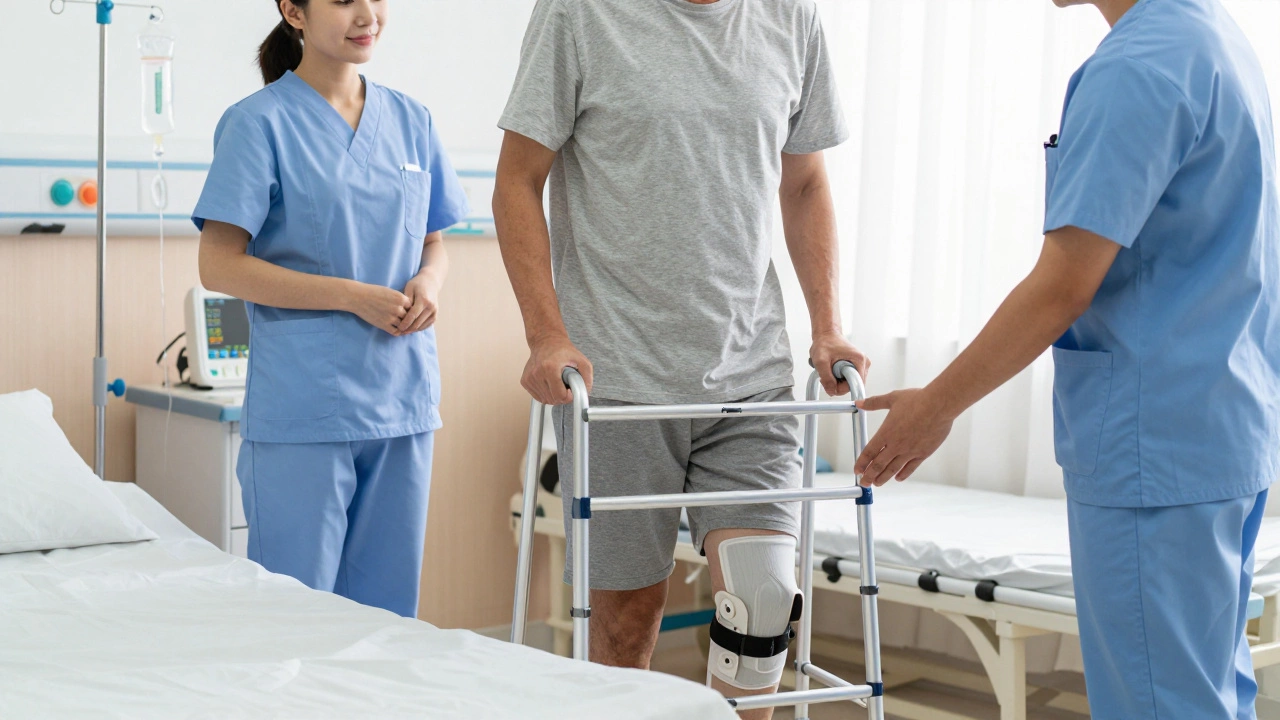
Then there’s mobility. The goal isn’t to bend your knee 90 degrees by day three—it’s to get it moving enough to prevent stiffness, without tearing the new joint loose. Simple exercises like ankle pumps, straight leg raises, and heel slides aren’t optional. They’re the foundation. And if you’re told to "just walk it off," that’s dangerous advice. Walking too soon without support can cause falls. Walking too little causes blood clots. You need a clear, step-by-step plan—not guesswork.
What about pain? It’s normal, but not endless. If your knee is hot, swollen, or leaking fluid after a week, that’s not just soreness—that’s a possible infection. And if you’re still on strong painkillers after four weeks, your rehab might be off track. Post-op knee care isn’t about enduring pain—it’s about managing it smartly, knowing when to call your doctor, and understanding what normal healing looks like.
And let’s not forget the hidden stuff: mental fatigue, fear of movement, and the frustration of slow progress. Many people quit rehab because they feel like they’re not improving fast enough. But recovery isn’t linear. Some days you’ll feel stronger. Other days, your knee will ache even when you haven’t done anything. That’s part of it. The key is consistency, not intensity.
What you’ll find below are real, practical guides written by people who’ve been through it. From how to sleep without waking up in pain, to what clothes to wear when your knee is too swollen for jeans, to why some people need a walker for months while others walk unaided in three weeks. These aren’t generic tips. They’re answers to the questions no one tells you to ask—until you’re standing in your kitchen, holding onto the counter, wondering if you’ll ever bend your knee again.
5
DecemberHow Long Do You Stay in Hospital After Full Knee Replacement?
Most patients leave the hospital 1 to 3 days after full knee replacement. Recovery depends on health, mobility, and home support. Early movement and following rehab steps are key to a smooth recovery.
Recent posts
-
 9 Jan 2026
Can IVF Babies Conceive Naturally? The Real Facts
-
 18 Nov 2025
Do I Have to Tell My Therapist Everything? Honest Answers for Therapy Newcomers
-
 9 Oct 2025
When to Seek Therapy: Signs You Should See a Professional
-
 22 Mar 2025
Best Doctor for Bones and Joints: Orthopedic Specialist Guide
-
 8 Mar 2025
What's the Most Feared Cancer?