Heart Surgery Life Expectancy Calculator
Estimate your potential survival rates based on surgery type, age, and lifestyle factors.
Your Estimated Outlook
| Metric | Base Rate | Your Adjusted Estimate |
|---|---|---|
| 5-Year Survival | ||
| 10-Year Survival |
Walking out of the operating room after heart surgery is a major medical procedure to repair or replace damaged parts of the heart, it feels like starting over. But the question that keeps patients and families up at night isn’t just about healing-it’s about how long they’ll live afterward. The short answer? For most people, modern cardiac care means living many more years, often a full normal lifespan. But the real story depends on what kind of surgery you had, your age, and how well you manage your health in the months that follow.
The Big Picture: Average Survival Rates
When we talk about life expectancy after heart surgery, we aren't guessing. We have data. According to recent studies from the Society of Thoracic Surgeons (STS) and other global health databases, the majority of patients survive the immediate post-operative period with flying colors. Mortality rates for common procedures like coronary artery bypass grafting (CABG) is a surgical procedure to restore blood flow to the heart muscle by bypassing blocked arteries are typically under 2% for low-risk patients. That means 98 out of 100 people leave the hospital alive. But survival is different from longevity. How long do you live *after* you go home?
For coronary artery bypass grafting (CABG), studies show that five-year survival rates hover around 85-90%. Ten-year survival drops slightly but remains strong, especially if patients stick to their medication and lifestyle changes. In fact, many patients who undergo CABG live into their 70s, 80s, and beyond-just like anyone else who takes care of their heart. The key difference? They’ve given their heart a second chance, and now they need to protect it.
| Surgery Type | 5-Year Survival Rate | 10-Year Survival Rate | Key Factors Affecting Longevity |
|---|---|---|---|
| Coronary Artery Bypass (CABG) | 85-90% | 70-80% | Control of cholesterol, diabetes, smoking cessation |
| Heart Valve Replacement is a procedure to replace a damaged heart valve with a mechanical or biological one | 90-95% | 80-90% | Valve type (mechanical vs. tissue), anticoagulation management |
| Heart Transplant is a surgical procedure where a failing heart is replaced with a healthy donor heart | 80-85% | 60-70% | Rejection risk, immunosuppressant side effects, infection control |
| Aortic Aneurysm Repair is surgery to fix a weakened bulge in the aorta to prevent rupture | 90-95% | 85-90% | Blood pressure control, monitoring for new aneurysms |
How Surgery Type Changes Your Outlook
Not all heart surgeries are created equal. The procedure you receive dramatically shapes your long-term prognosis. Let’s break down the most common types.
Coronary Artery Bypass Grafting (CABG): This is the classic "bypass" surgery. Doctors take veins or arteries from elsewhere in your body and use them to reroute blood around blocked coronary arteries. It’s highly effective at relieving angina and preventing heart attacks. Patients who quit smoking, manage their blood sugar, and keep their LDL cholesterol below 70 mg/dL often see no decline in life expectancy compared to the general population. In some cases, CABG actually extends life because it stops the progression of coronary artery disease.
Heart Valve Replacement: If your valve is leaking or narrowed, replacing it can be life-saving. Mechanical valves last a lifetime but require daily blood thinners (warfarin). Biological valves don’t need lifelong anticoagulants but may wear out in 10-15 years, requiring re-operation. Despite this, ten-year survival rates are excellent-often above 80%. The choice between mechanical and biological valves depends on your age, bleeding risk, and personal preference.
Heart Transplant: This is the ultimate reset button. When your own heart fails completely, a donor heart gives you a fresh start. Median survival after transplant is about 10-12 years, but many recipients live 15, 20, or even 30 years. The challenge isn’t the surgery itself-it’s managing rejection and side effects from immunosuppressant drugs. Regular biopsies, strict medication adherence, and avoiding infections are non-negotiable. Still, quality of life improves dramatically. Most transplant recipients return to work, travel, and enjoy active lives.
Aortic Aneurysm Repair: Whether open surgery or endovascular stent grafting, fixing a bulging aorta prevents catastrophic rupture. Survival rates are high, especially when caught early. Long-term outlook depends on controlling hypertension and monitoring for new aneurysms elsewhere in the vascular system.
Your Age and Health Status Matter More Than You Think
You might be wondering, “I’m 75. Will I still benefit?” Or, “I’m 45 but have diabetes. Is my outlook worse?” The truth is, age alone doesn’t dictate survival. What matters is your overall physiological reserve and comorbidities.
Younger patients (under 60) generally have better outcomes because their hearts and bodies heal faster. But older adults (70+) who are otherwise healthy-no severe kidney disease, no advanced lung issues, good mobility-also fare very well. Studies show that octogenarians undergoing elective CABG have five-year survival rates comparable to younger cohorts, provided they’re carefully selected pre-operatively.
Chronic conditions play a huge role. Diabetes doubles the risk of complications if uncontrolled. Chronic kidney disease increases mortality risk significantly. Obesity, sleep apnea, and depression also chip away at longevity. The good news? These factors are modifiable. Losing 10% of excess weight, optimizing HbA1c levels, treating sleep apnea with CPAP, and addressing mental health can add years to your post-surgical life.
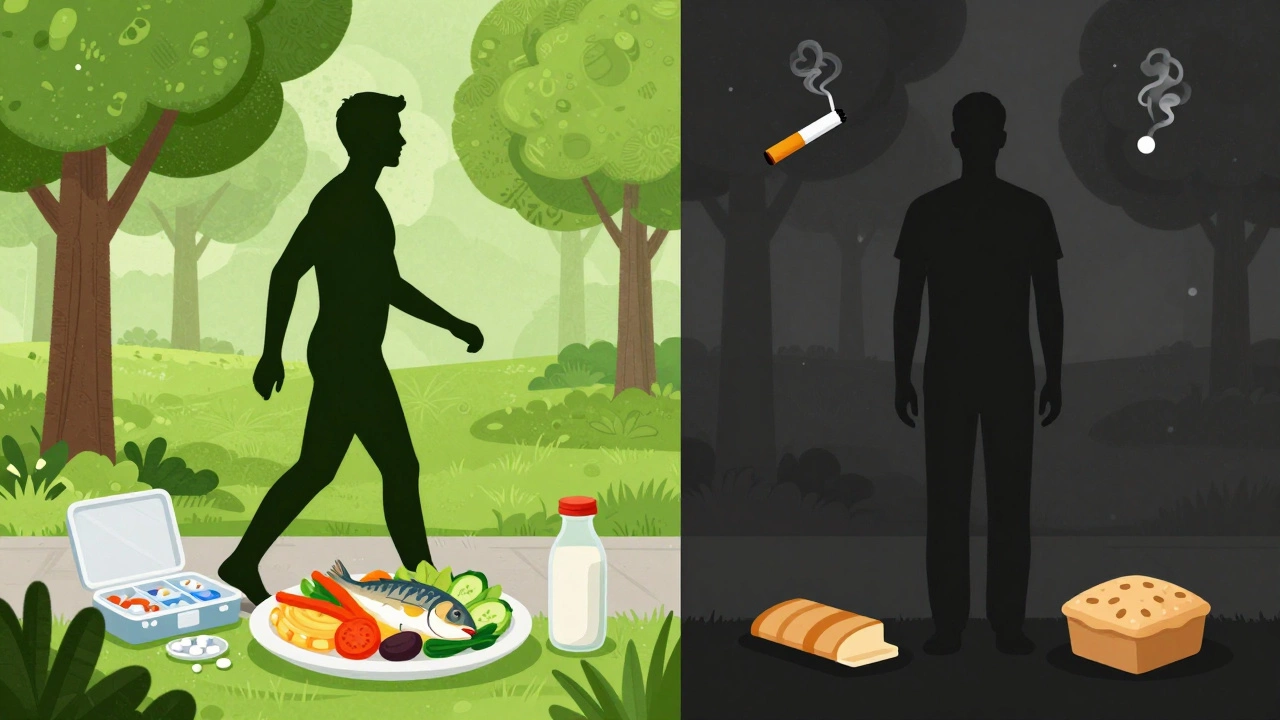
Lifestyle Choices: The Real Determinant of Longevity
Surgery fixes the plumbing. Lifestyle determines whether the pipes stay clear. Here’s what makes the biggest difference:
- Quit Smoking: This is non-negotiable. Smoking after heart surgery increases the risk of another event by 300%. Quitting within 30 days of surgery cuts that risk in half. Within a year, your cardiovascular risk approaches that of a never-smoker.
- Eat Like Your Heart Depends On It (Because It Does): Adopt a Mediterranean-style diet rich in olive oil, nuts, fish, vegetables, and whole grains. Limit processed meats, refined sugars, and trans fats. Aim for less than 1,500mg of sodium daily to control blood pressure.
- Move Every Day: Start with walking. Gradually build up to 150 minutes of moderate aerobic activity per week. Strength training twice a week helps maintain muscle mass, which declines rapidly after major surgery. Cardiac rehab programs offer supervised exercise tailored to your condition-they’re proven to reduce readmission rates by 20-30%.
- Take Medications Faithfully: Statins, beta-blockers, ACE inhibitors, and antiplatelets aren’t optional extras. They’re your armor against future blockages and arrhythmias. Skipping doses leads to preventable setbacks.
- Manage Stress: Chronic stress raises cortisol and adrenaline, straining your heart. Mindfulness, yoga, therapy, or even talking to friends can lower your baseline stress hormones. Don’t underestimate the power of emotional well-being on physical recovery.
Warning Signs That Need Immediate Attention
Even with perfect care, problems can arise. Know the red flags:
- Chest pain that returns or worsens
- Shortness of breath during minimal exertion
- Swelling in legs, ankles, or abdomen
- Irregular heartbeat or palpitations
- Fever or signs of infection at the incision site
- Unexplained fatigue or dizziness
If any of these occur, don’t wait. Call your cardiologist or go to the ER. Early intervention saves lives.
When to Consider Second Opinions or Advanced Options
If you’re facing complex anatomy, multiple failed surgeries, or rare conditions like hypertrophic cardiomyopathy, seek evaluation at a center of excellence. High-volume hospitals perform thousands of procedures annually and have multidisciplinary teams-including cardiothoracic surgeons, electrophysiologists, genetic counselors, and nutritionists-who collaborate on your care. Outcomes are consistently better at these centers.
Also explore emerging therapies. TAVR (transcatheter aortic valve replacement) allows valve replacement without open-chest surgery, ideal for high-risk patients. Hybrid procedures combine minimally invasive techniques with traditional methods. Ask your doctor if newer options apply to your case.
Can I live a normal life after heart surgery?
Yes, most people return to work, hobbies, and social activities within 3-6 months. Many report feeling better than before surgery due to reduced symptoms like chest pain and shortness of breath. Normalcy depends on adhering to rehabilitation and lifestyle changes.
Does heart surgery guarantee longer life?
No surgery guarantees extended life, but evidence shows CABG and valve replacements significantly improve survival compared to medical management alone. Longevity hinges on post-op discipline-not just the operation itself.
What happens if I ignore my medications after surgery?
Non-adherence drastically increases risks of recurrent heart attack, stroke, or valve failure. Studies show non-compliant patients face 2-3x higher mortality rates. Consistent medication use is critical for sustaining surgical benefits.
Is cardiac rehab really necessary?
Absolutely. Cardiac rehab reduces death risk by 20-30%, lowers hospital readmissions, and boosts confidence in physical activity. It combines supervised exercise, education, and psychological support-all proven to enhance long-term outcomes.
How soon can I fly after heart surgery?
Most doctors clear patients for air travel 4-6 weeks post-op, once wounds heal and energy levels stabilize. Always get written clearance from your surgeon first. Avoid long flights until fully recovered to prevent clotting risks.