Skincare Routine Builder
Answer these quick questions to identify your skin type and get a customized basic skincare plan.
Key Tips for Your Profile:
You’ve probably heard the phrase "skincare is self-care," but let’s be real-most of us just want our faces to stop breaking out or looking dull. You don’t need a ten-step routine involving snail mucin and gold flakes to get decent results. In fact, sticking to basic skincare treatments often yields better outcomes because consistency beats complexity every single time. If you’re confused by the endless product aisles at your local pharmacy or online store, this guide cuts through the noise. We’ll break down exactly what you need, why you need it, and how to actually use it without wasting money.
The Core Trinity: Cleanse, Moisturize, Protect
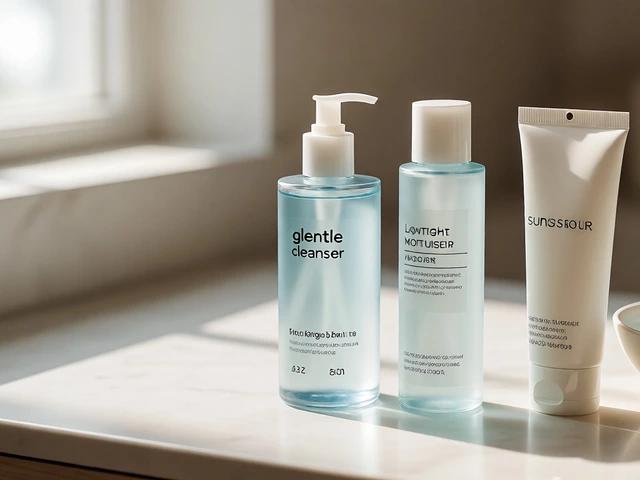
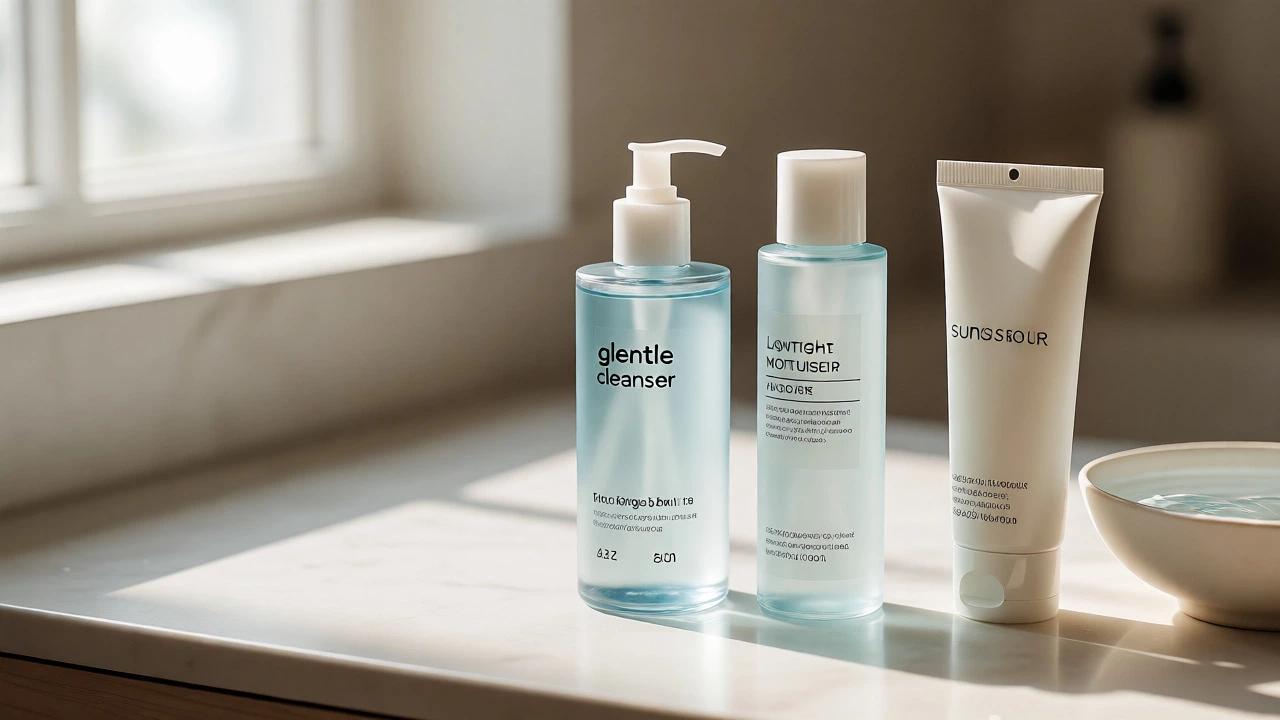
Think of your skincare routine as a three-legged stool. If one leg is missing, the whole thing wobbles and falls over. These three steps form the foundation of dermatological advice globally. They aren’t optional extras; they are non-negotiable requirements for maintaining the skin barrier, which is the outermost layer of your epidermis that keeps moisture in and irritants out.
First up is cleansing. This isn’t about scrubbing your face raw until it squeaks. That “squeaky clean” feeling is actually a red flag-it means you’ve stripped away natural oils (sebum) that protect your skin. A good cleanser removes dirt, pollution particles, excess oil, and leftover makeup without disrupting the skin’s pH balance, which ideally sits around 5.5. For most people, washing twice a day-once in the morning and once at night-is sufficient. If you have dry skin, skipping the morning wash and just rinsing with water can help preserve hydration.
Next comes moisturizing. Even if you have oily skin, you need this step. Why? Because when your skin feels dehydrated, it often overcompensates by producing more oil, leading to more shine and potentially more acne. Moisturizers work by trapping water in the skin using ingredients like humectants (which grab water), emollients (which smooth cracks between skin cells), and occlusives (which seal everything in). Look for lightweight, non-comedogenic formulas if you’re prone to clogged pores. These won’t block your follicles, keeping your skin hydrated but not greasy.
Finally, sun protection. This is the big one. Up to 90% of visible skin aging-wrinkles, dark spots, loss of elasticity-is caused by UV exposure from the sun, according to the American Academy of Dermatology. Sunscreen isn’t just for beach days; it’s an anti-aging treatment. Daily application of broad-spectrum SPF 30 or higher prevents DNA damage in skin cells. It sounds tedious, but applying sunscreen takes less than two minutes and saves you thousands on future corrective procedures.
Understanding Your Skin Type Before Buying Anything
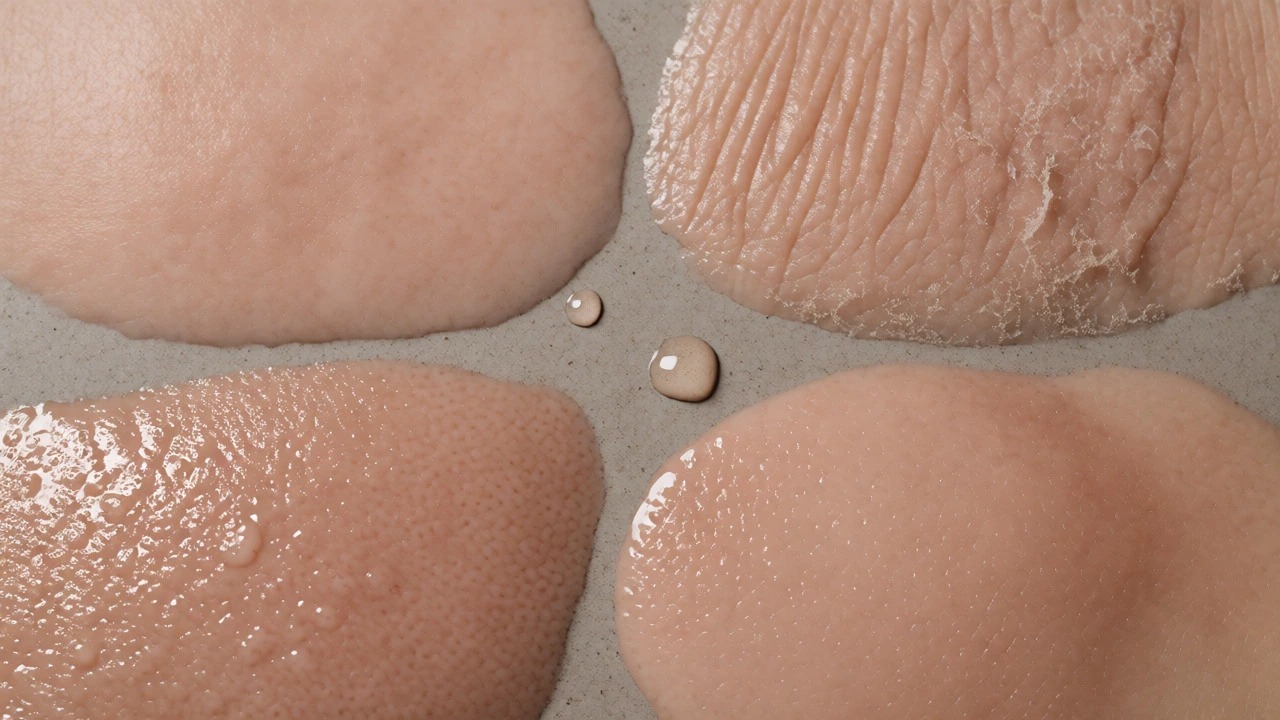
You cannot treat what you do not understand. Many beginners buy products based on influencer recommendations rather than their actual skin needs. Identifying your skin type is the first diagnostic step. Dermatologists generally categorize skin into four main types, though many people fall somewhere in between.
- Normal Skin: Balanced moisture levels, few imperfections, barely visible pores, and no severe sensitivity. Lucky you-you can tolerate a wide range of products.
- Dry Skin: Feels tight, rough, or flaky. Often lacks sebum production. Needs richer creams with ceramides or hyaluronic acid.
- Oily Skin: Shiny appearance, enlarged pores, prone to blackheads and pimples due to excess sebum. Benefits from gel-based moisturizers and salicylic acid cleansers.
- Combination Skin: The most common type. Typically an oily T-zone (forehead, nose, chin) and normal-to-dry cheeks. Requires strategic application-lighter on the forehead, richer on the cheeks.
There’s also sensitive skin, which isn’t technically a type but a condition characterized by reactivity, redness, or stinging. If your skin reacts negatively to new products quickly, stick to fragrance-free, hypoallergenic formulas. Knowing your type prevents the trial-and-error phase that leads to damaged barriers.
Step-by-Step Routine for Morning vs. Night
Your skin behaves differently during the day versus the night. During the day, it defends against environmental stressors like UV rays and pollution. At night, it shifts into repair mode, increasing cell turnover. Therefore, your routine should adapt to these biological rhythms.
| Step | Morning Goal | Night Goal |
|---|---|---|
| Cleanse | Gentle removal of sweat/oil accumulated overnight. | Thorough removal of sunscreen, makeup, and daily grime. |
| Treat | Antioxidants (like Vitamin C) to fight free radicals. | Repair agents (like Retinol or Peptides) to boost collagen. |
| Moisturize | Lightweight hydration to prep for makeup/sunscreen. | Richer nourishment to support overnight repair. |
| Protect | Broad-spectrum SPF 30+. | No sunscreen needed. |
In the morning, keep it simple. Wash, apply a serum if you use one, moisturize, and then sunscreen. Wait about 15-20 minutes after applying sunscreen before going outside to allow it to bind properly to the skin. At night, double cleansing might be necessary if you wear heavy makeup or waterproof sunscreen. Start with an oil-based cleanser to dissolve makeup, followed by a water-based foaming cleanser to clean the skin itself. Then apply your treatment products and finish with a thicker moisturizer.
Common Mistakes That Sabotage Basic Care
Even with the best products, bad habits can ruin your progress. One major mistake is changing products too frequently. Your skin cycle-the process where new cells rise to the surface and old ones shed-takes about 28 days on average. Giving a product only a week or two to work is unrealistic. Most active ingredients need 4 to 12 weeks to show visible changes. Patience is part of the treatment.
Another pitfall is over-exfoliation. Exfoliating removes dead skin cells to reveal brighter skin, but doing it too often damages the barrier. Physical scrubs with jagged walnut shells can cause micro-tears. Chemical exfoliants like Alpha Hydroxy Acids (AHAs) such as glycolic acid, or Beta Hydroxy Acids (BHAs) like salicylic acid, are gentler options. Limit exfoliation to 1-3 times per week depending on tolerance. If your skin feels tight, looks shiny but feels dry, or stings when you apply basic moisturizer, you’ve likely overdone it.
Also, ignore the myth that expensive equals effective. Price tags often reflect packaging and marketing, not ingredient quality. A $10 drugstore moisturizer with ceramides can perform just as well as a $60 luxury cream. Focus on the ingredient list rather than the brand prestige.

When to See a Professional
Basic home care handles maintenance, prevention, and mild issues. However, some conditions require medical intervention. If you experience persistent cystic acne, sudden changes in moles (asymmetry, border irregularity, color change, diameter increase, evolution), or eczema flare-ups that don’t respond to over-the-counter hydrocortisone, see a dermatologist. Conditions like rosacea, psoriasis, or hormonal acne often need prescription-strength topicals or oral medications that aren’t available off the shelf.
In Bangalore, humidity plays a role in skincare choices. High humidity can make heavy creams feel suffocating, so opting for gel-based hydrators is often smarter here than thick ointments. Adjusting your routine to your local climate is part of smart skincare management.
Frequently Asked Questions
Do I really need toner in my skincare routine?
Not necessarily. Toners were originally designed to restore pH balance after harsh alkaline soaps. Modern cleansers are pH-balanced, making toners largely optional. However, if you enjoy the refreshing sensation or use a hydrating toner with ingredients like rose water or niacinamide, it can add extra hydration. Skip it if your skin feels irritated or if you’re short on time.
Can I use the same moisturizer for day and night?
Yes, you can. Simplicity is key for beginners. If a lightweight moisturizer works well under sunscreen in the morning and provides enough hydration at night, stick with it. There’s no rule saying you must buy separate jars. Just ensure the daytime version doesn’t pill under sunscreen and the nighttime version is rich enough to prevent transepidermal water loss while you sleep.
How long does it take to see results from basic skincare?
Hydration improvements can be felt immediately, but structural changes take time. Expect noticeable improvements in texture and brightness within 4 to 6 weeks. Significant changes in pigmentation or fine lines may take 3 to 6 months. Consistency is critical; stopping and starting resets the clock.
Is drinking water enough to keep skin hydrated?
Drinking water is vital for overall health, but it doesn’t directly translate to glowing skin if your barrier is compromised. Topical moisturizers are necessary to lock in that hydration externally. Think of water as filling the reservoir and moisturizer as fixing the leak in the pipe. You need both.
What is the correct order to apply skincare products?
Apply products from thinnest to thickest consistency. Generally: Cleanser → Toner (optional) → Serum/Essence → Eye Cream → Moisturizer → Sunscreen (AM) or Face Oil (PM). Thinner products penetrate better when applied to bare skin, while thicker products seal them in.