Dental Implant Sedation Selector
Find the Best Sedation Option for Your Dental Implants
This tool helps you determine which sedation option is most appropriate for your dental implant procedure based on your anxiety level, medical conditions, and number of implants needed.
Recommended Sedation Option
Select your options above and click "Find My Recommended Option" to see your personalized recommendation.
Low risk level with this option
Estimated Sedation Cost: $0 - $1,500 (varies based on type)
Local anesthesia is often included with implant cost; sedation is an additional fee.
When you hear the word dental implants, you might picture a long, scary surgery with needles, drills, and full anesthesia. The big question on most people’s minds: Are you put to sleep for dental implants? The answer isn’t yes or no-it’s more like it depends. Most patients don’t get knocked out completely. But you can be put to sleep if you want to. Let’s break down exactly what happens, what options you have, and who gets which one.
Most dental implant procedures use local anesthesia
The majority of dental implant surgeries in the U.S. and other developed countries are done with local anesthesia. That means you’re wide awake, but your mouth is completely numb. Think of it like getting a cavity filled, but for a longer time and in more places. The dentist injects lidocaine or similar numbing agents around the jawbone where the implant will go. You might feel pressure, maybe some tugging, but no pain. Many patients even watch TV or listen to music during the procedure.Why is this the standard? Because it’s safe, effective, and cheaper. You don’t need an anesthesiologist present. Recovery is faster. There’s no risk of nausea or dizziness from general anesthesia. For healthy adults with mild anxiety, local anesthesia works perfectly.
What if you’re nervous? Sedation options exist
If the thought of being awake during the procedure makes you sweat, you’re not alone. About 30% of patients report dental anxiety, according to the American Dental Association. That’s where sedation comes in. It’s not the same as being put to sleep, but it can feel close.There are three main levels of sedation used with dental implants:
- Oral sedation: You take a pill (like diazepam or triazolam) about an hour before the appointment. You’ll feel relaxed, maybe a little drowsy, but still awake. Most people don’t remember much of the procedure afterward.
- IV sedation: Medication is given through a vein in your arm. This works faster and is easier to control. You’ll be in a twilight state-aware enough to respond to the dentist, but deeply relaxed. Many patients say they slept through it, even though they technically didn’t.
- General anesthesia: This is real sleep. You’re completely unconscious, breathing with the help of a machine. It’s administered by an anesthesiologist. This is rare for routine dental implants and usually only used for complex cases, patients with severe anxiety, or those with certain medical conditions.
IV sedation is the most popular middle ground. It’s safer than general anesthesia, more effective than oral pills, and gives you that “I don’t remember anything” feeling without the risks of full sedation. Most implant dentists offer IV sedation as an add-on service for an extra fee-usually between $200 and $600 depending on location and time needed.
When is general anesthesia actually used?
General anesthesia isn’t the default. It’s reserved for specific situations:- Multiple implants in one session (like a full arch replacement)
- Patients with developmental disabilities or extreme phobias
- Children under 12 (rare, but sometimes needed)
- Medical conditions that make local anesthesia risky
- Patients who’ve had traumatic dental experiences in the past
For example, someone needing 8 implants across both jaws might choose general anesthesia to avoid multiple visits. Or a veteran with PTSD who can’t tolerate the sound of the drill might opt for it after therapy fails. These cases aren’t common, but they’re real. Insurance rarely covers general anesthesia for dental implants unless it’s deemed medically necessary.
What does the procedure actually feel like?
If you’re going with local anesthesia, here’s what to expect:- You’ll get a numbing shot. It stings for a few seconds, then your jaw goes cold and heavy.
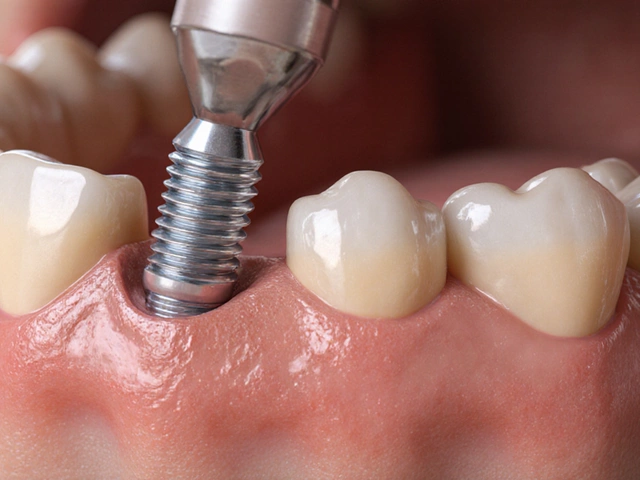
- The dentist will make a small cut in your gum, drill a hole in the bone, and screw in the titanium implant. You’ll hear the drill, feel pressure, but no pain.
- If you’re getting multiple implants, this might take 1 to 3 hours.
- Afterward, your mouth will feel swollen. You’ll be given painkillers and instructions to avoid chewing on that side.
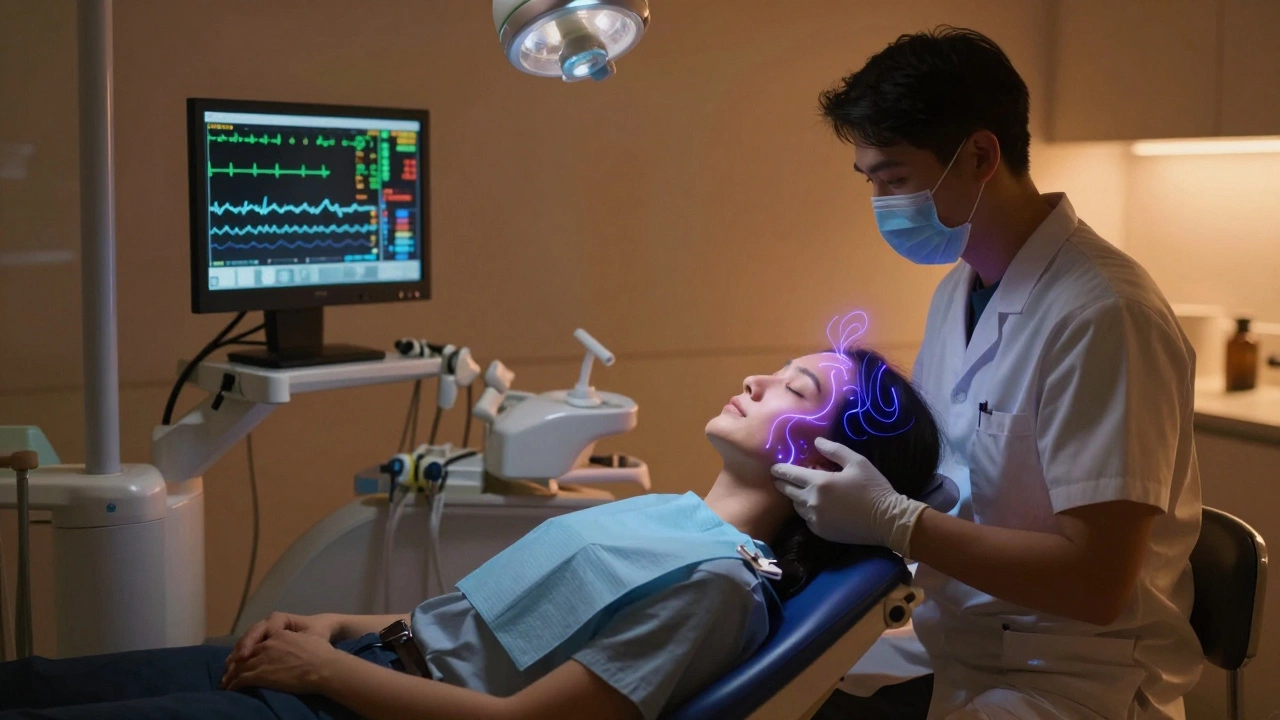
With IV sedation, the experience is similar-but you won’t remember any of it. You’ll wake up in the recovery chair, maybe a little groggy, with your mouth numb and your partner telling you it’s over. Most people say it felt like a 10-minute nap.
Recovery is the same no matter how you’re sedated
Whether you were wide awake or asleep, your recovery timeline doesn’t change. The implant needs 3 to 6 months to fuse with your jawbone. You’ll wear a temporary denture or bridge during that time. Swelling peaks at 48 hours. Bruising is normal. You’ll need to stick to soft foods for a week. Pain usually fades after 3 days. The only difference? If you had sedation, you’ll need someone to drive you home. You can’t operate a car for 24 hours after IV or general anesthesia.Cost differences between sedation types
Here’s a quick breakdown of what you might pay for each option, based on U.S. averages in 2025:| Sedation Type | Typical Cost Range | Duration of Effect | Recovery Time |
|---|---|---|---|
| Local Anesthesia | $0-$100 (often included) | 2-4 hours | Immediate |
| Oral Sedation | $150-$300 | 4-6 hours | Same day |
| IV Sedation | $300-$600 | 6-8 hours | 24 hours |
| General Anesthesia | $800-$1,500 | 8-12 hours | 24-48 hours |
Remember: The cost of the implant itself-$1,500 to $6,000 per tooth-is separate. Sedation is an add-on. Some dental insurance covers part of IV sedation if it’s deemed necessary. General anesthesia almost never is.
Who shouldn’t choose sedation?
Not everyone is a candidate for sedation. If you have:- Severe heart or lung disease
- Uncontrolled high blood pressure
- Obstructive sleep apnea
- Allergies to sedative drugs
- Are pregnant (especially in the first trimester)
then IV or general anesthesia may be too risky. Your dentist will review your medical history carefully before offering sedation. In those cases, local anesthesia with anti-anxiety medication is the safer route.
What to ask your dentist before deciding
Don’t just accept whatever’s offered. Ask these questions:- “Do you use IV sedation? Are you certified to administer it?”
- “Will an anesthesiologist be present if I choose general anesthesia?”
- “What are the risks of each option for someone with my health history?”
- “Can I see before-and-after photos of patients who had sedation?”
- “What’s your success rate with sedation in implant cases?”
Good dentists will walk you through every option. If they push one method without explaining others, that’s a red flag.
Real patient stories
Maria, 58, needed 4 implants after losing teeth from gum disease. She chose IV sedation. “I was terrified. I thought I’d scream. But I woke up and the dentist said, ‘All done.’ I didn’t remember a thing. Best decision I ever made.”James, 42, had a single implant. He chose local anesthesia. “I listened to a podcast the whole time. Felt like a dental cleaning that lasted longer. No pain, no weird side effects. I went back to work after lunch.”
Bottom line
You are not automatically put to sleep for dental implants. Most people stay awake with numbing medicine. But if you’re anxious, overwhelmed, or having multiple implants done at once, sedation is a safe, common, and highly effective option. The key is choosing what fits your comfort level-not what the dentist assumes you’ll tolerate.There’s no shame in wanting to sleep through it. Millions do. And with modern techniques, it’s safer than ever.
Do you get put to sleep for dental implants?
No, you’re not automatically put to sleep. Most dental implant procedures use local anesthesia, meaning you’re awake but numb. However, sedation options like IV sedation or general anesthesia are available if you’re anxious or having multiple implants done. The choice depends on your comfort level, medical history, and the complexity of the procedure.
Is IV sedation the same as being put to sleep?
No. IV sedation puts you in a deeply relaxed, twilight state. You’re not unconscious like with general anesthesia. You can still respond to the dentist’s instructions, but you’ll likely have no memory of the procedure afterward. It’s often called “sleep dentistry,” but technically, you’re not asleep.
How long does the dental implant procedure take?
A single implant usually takes 1 to 2 hours. If you’re getting multiple implants-say, 4 to 6 in one visit-it can take 3 to 4 hours. The actual surgery time doesn’t change based on sedation, but recovery time does. With IV or general anesthesia, you’ll need someone to drive you home and rest for the rest of the day.
Can I drive myself home after dental implant surgery?
Only if you had local anesthesia. If you received oral sedation, IV sedation, or general anesthesia, you must have someone drive you. These medications impair your coordination and reaction time for up to 24 hours. Even if you feel fine, it’s unsafe and often illegal to drive.
Are dental implants painful without sedation?
No, not during the procedure. Local anesthesia completely blocks pain. You might feel pressure or vibration, but not sharp pain. Afterward, there’s mild soreness-similar to a tooth extraction. Over-the-counter pain relievers like ibuprofen are usually enough. Most patients say the fear of the procedure is worse than the actual experience.
Does insurance cover sedation for dental implants?
Usually not. Most dental insurance plans cover the implant itself but treat sedation as an elective add-on. Some plans may cover IV sedation if you have documented anxiety or a medical condition that makes it necessary. General anesthesia is rarely covered unless it’s performed in a hospital setting for medical reasons. Always check with your provider before scheduling.