Facial Aging Treatment Calculator
Find your ideal treatment combination
Based on the latest clinical evidence, this tool recommends treatments proven to work for your specific concerns.
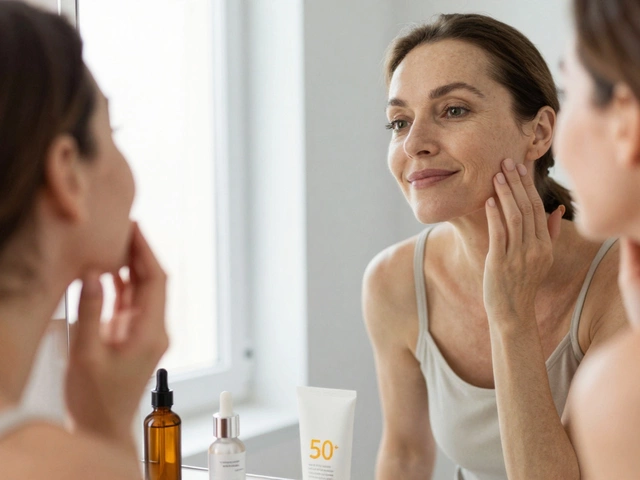
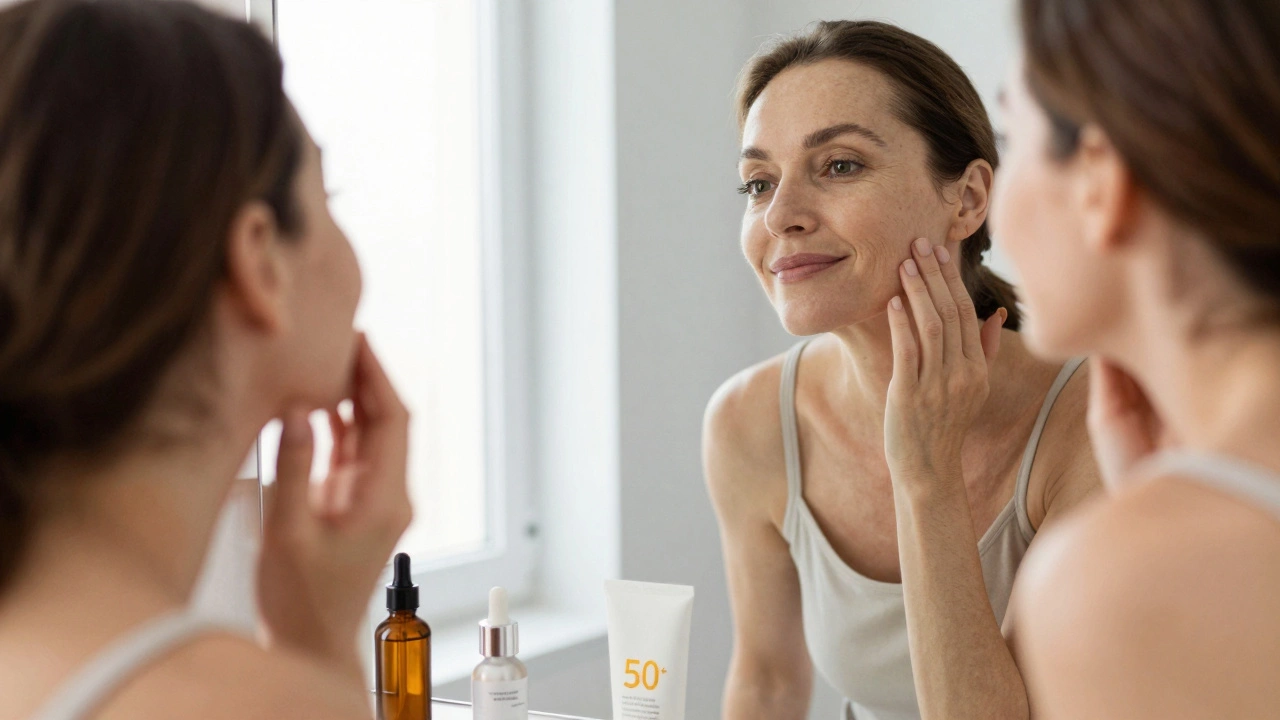
When your skin starts to look different in the mirror-fine lines deepening, cheeks losing fullness, jawline softening-it’s not just about vanity. It’s about how you feel in your own skin. The good news? You don’t need surgery to look refreshed. In 2026, science has given us real, evidence-backed ways to turn back the clock on facial aging, without going under the knife.
What causes facial aging anyway?
It’s not just one thing. Your skin ages because of a mix of time, sun, and your body’s natural changes. Starting in your late 20s, collagen production drops by about 1% every year. By 40, you’ve lost nearly a third. Elastin, the stuff that keeps skin springy, gets brittle. Fat pads under your eyes and cheeks shrink, creating hollows. And years of sun exposure? That’s what gives you brown spots and rough texture.
It’s not your fault. Genetics play a role, but lifestyle does too. Smoking, poor sleep, stress, and not wearing sunscreen daily accelerate the process. The goal isn’t to look 20 again-it’s to look like your best, most rested self.
Top non-surgical treatments that actually work
Here are the treatments backed by clinical studies and used by dermatologists worldwide in 2026. These aren’t hype. They’re tools with real data.
- Radiofrequency (RF) microneedling - This combines tiny needles with heat energy to stimulate collagen deep in the skin. It’s especially good for tightening loose skin along the jawline and neck. Studies show noticeable improvement in skin firmness after 3 sessions, spaced 4-6 weeks apart. Results last 12-18 months.
- Hyaluronic acid fillers - These aren’t just for lips. When placed strategically in the cheeks, temples, and under the eyes, they restore volume lost to aging. Modern fillers like Juvederm Voluma a hyaluronic acid-based dermal filler designed to restore volume in the cheek area and Restylane Lyft a hyaluronic acid filler approved for correcting age-related volume loss in the mid-face last up to two years. They’re reversible if needed.
- Botulinum toxin (Botox, Dysport) - It’s not just for forehead lines. In 2026, doctors use it more precisely to relax muscles that pull the face downward, lifting the brow and softening jowls. A subtle “Nefertiti lift” using small doses along the jawline is now common. Effects last 3-4 months.
- Lasers for texture and tone - Fractional non-ablative lasers like Fraxel Dual a laser system used to treat fine lines, pigmentation, and skin texture improve sun damage and pores without downtime. They don’t lift skin, but they make it look smoother, brighter, and more even.
- Topical retinoids - The gold standard for at-home care. Prescription tretinoin (Retin-A) or over-the-counter retinol (0.5-1%) boosts collagen, fades dark spots, and smooths fine lines. Use nightly, with sunscreen every morning. It takes 3-6 months to see real change, but it’s the only treatment you can do daily without a clinic visit.
What doesn’t work (and why)
There’s a lot of noise. You’ve seen ads for “miracle” creams, LED masks, and at-home ultrasound devices. Some are harmless. Most are just expensive placebo.
- Over-the-counter creams with “miracle” ingredients - Unless they contain proven actives like retinoids, vitamin C, peptides, or niacinamide, they’re mostly moisturizers with fancy labels.
- At-home RF devices - These are too weak to reach the deep layers where collagen is made. You might feel warmth, but you won’t see real tightening.
- Facial exercises - No peer-reviewed study shows they reduce wrinkles. In fact, repetitive muscle movement can deepen expression lines.
- Snake venom creams - The ingredient (Argireline) has very mild effects, nothing like Botox. It’s marketing, not medicine.

The combo approach: What dermatologists really do
The best results come from layering treatments over time. Here’s a realistic plan used by clinics in Bangalore, Dubai, and New York:
- Start with daily retinoid + daily SPF 50+.
- After 3 months, add one session of RF microneedling to tighten skin.
- At 6 months, use fillers to restore volume in cheeks and under eyes.
- Every 3-4 months, get a touch-up of botulinum toxin to prevent deepening lines.
- Once a year, do a laser session to refresh texture and tone.
This isn’t about spending a fortune. It’s about consistency. Most people spend $800-$1,500 a year on this routine-far less than a surgical facelift, which costs $7,000-$15,000 and requires weeks of recovery.
When surgery might still make sense
Not everyone is a candidate for non-surgical options. If you have severe sagging skin, deep jowls, or a very loose neck, a surgical facelift is still the most effective solution. But even then, many surgeons now combine surgery with fillers and Botox afterward to extend results and avoid the “pulled” look.
Think of it like car maintenance. You don’t wait until the engine dies to change the oil. The same goes for your skin. The earlier you start with gentle, science-backed care, the less you’ll need later.
What to look for in a provider
Not all clinics are equal. Avoid places that push you into expensive packages on your first visit. Look for:
- Board-certified dermatologists or plastic surgeons (not aestheticians doing injections).
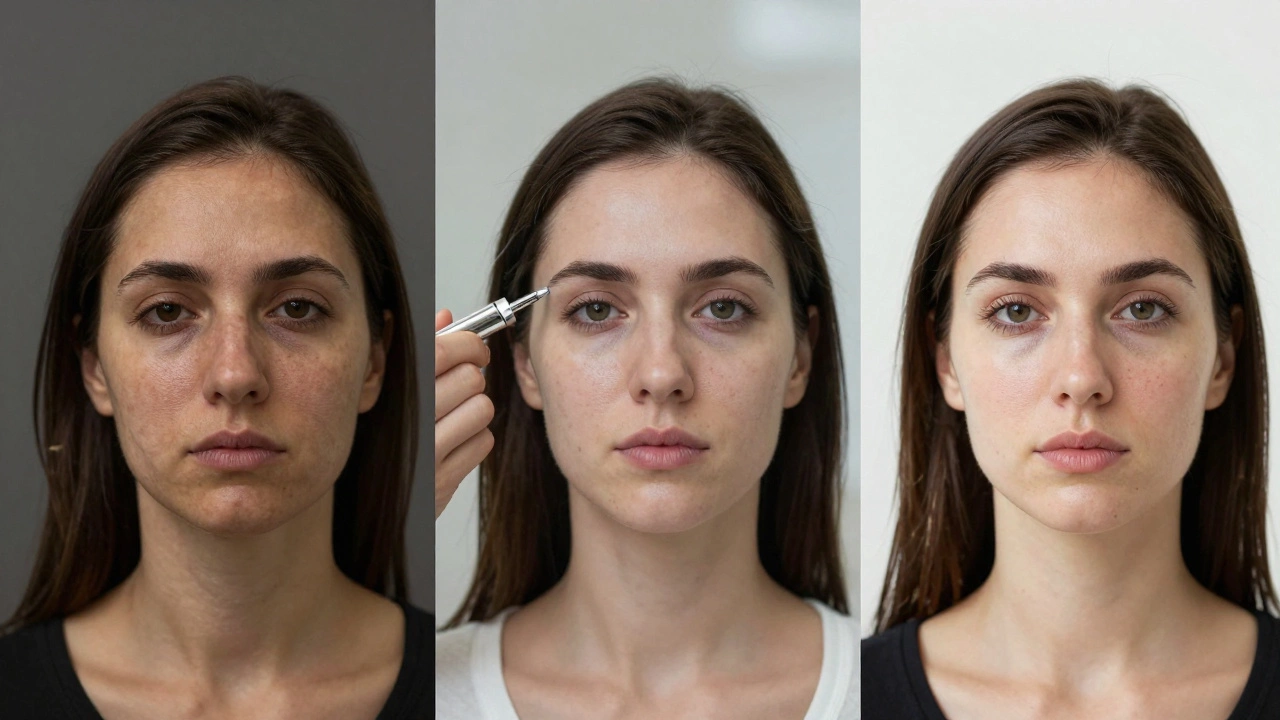
- Before-and-after photos of real patients-not models.
- Willingness to explain why one treatment is better than another for your skin type.
- Use of FDA-approved products with clear batch numbers.
In India, clinics in Bangalore, Delhi, and Mumbai have caught up with global standards. Many now use the same devices and fillers as clinics in the U.S. and Europe.
What you can do today
You don’t need to wait for a clinic visit to start. Right now:
- Switch to a retinol serum (start with 0.3% if you’re new).
- Use a broad-spectrum SPF 50+ every single morning-even on cloudy days.
- Drink more water and sleep on your back to avoid creasing your face.
- Stop smoking, if you do. It’s the #1 accelerant of facial aging.
These steps won’t erase wrinkles overnight. But in 6 months, you’ll notice your skin feels tighter, looks brighter, and responds better to future treatments.
Final thought: Aging isn’t the enemy-ignorance is
The best treatment for an aging face isn’t one magic shot or cream. It’s a smart, consistent plan built on real science. You don’t need to look like a different person. You just need to stop letting misinformation hold you back. Start with what works. Stay patient. Let your skin thank you later.
Is there a single best treatment for aging face?
No single treatment works for everyone. The best approach combines daily skincare (retinoids + sunscreen), targeted procedures (like RF microneedling or fillers), and lifestyle changes. What works depends on your skin type, age, and specific concerns-like volume loss versus loose skin.
Are at-home devices worth it?
Most are not. At-home RF or ultrasound devices lack the power to stimulate collagen effectively. You might feel warmth, but you won’t see real tightening. Stick to proven methods: retinoids, sunscreen, and professional treatments when needed.
How long do results last?
It varies. Topical retinoids need daily use for ongoing results. Fillers last 1-2 years. Botox lasts 3-4 months. RF microneedling results can last 12-18 months. Maintenance is key-most people need touch-ups every 6-12 months.
Can I avoid injections completely?
Yes, but your results will be limited. Without fillers or Botox, you can’t restore lost volume or relax deep muscle lines. You can still improve texture and tone with lasers and retinoids, but for significant changes, injections are the most effective tools available today.
Do these treatments work for darker skin tones?
Yes, but not all. Lasers like Fraxel Dual are safe for darker skin when used by experienced providers. RF microneedling and fillers are also safe. Avoid intense pulsed light (IPL) and some ablative lasers-they carry a higher risk of pigmentation changes in darker skin. Always choose a provider experienced with your skin type.
What’s the cheapest effective option?
Retinol and sunscreen. A good retinol serum costs $20-$40 and lasts 3-6 months. Sunscreen costs $15-$30 per bottle. Together, they’re the most cost-effective, science-backed way to slow aging. Everything else is an upgrade, not a replacement.
Start small. Stay consistent. Your future self will thank you.