IVF Genetic Relationship Checker
Select Your Scenario
Click on the scenario that matches your treatment plan.
Genetic Breakdown
Select a scenario on the left to see the genetic breakdown.
You spend months preparing for In Vitro Fertilization, a medical procedure where fertilization happens outside the body in a laboratory dish. You endure hormone injections, clinic visits, and the emotional rollercoaster of waiting for results. When that positive pregnancy test finally appears, relief washes over you. But then, a quiet question creeps into your mind: "Is this baby actually mine?" It is a valid concern. Because IVF involves lab technicians, embryos, and sometimes third-party donors, the line between biological connection and medical intervention can feel blurry.
The short answer is: it depends entirely on whose cells were used to create the embryo. If you use your own eggs and your partner’s sperm, the baby is genetically yours in every way. However, if you rely on donor eggs, donor sperm, or a gestational carrier, the genetic picture changes. Let’s break down exactly how genetics work in different IVF scenarios so you know what to expect.
When You Use Your Own Eggs and Sperm
This is the most common scenario for couples undergoing IVF due to issues like blocked fallopian tubes, endometriosis, or male factor infertility. In this case, the process looks like this: doctors retrieve mature eggs from your ovaries and collect sperm from your partner. A embryologist combines them in a petri dish. Once fertilization occurs and the embryo develops for a few days, it is transferred back into your uterus.
Genetically speaking, there is no difference between a baby conceived this way and one conceived naturally through intercourse. You contribute 50% of the DNA, and your partner contributes the other 50%. The lab environment is just the meeting place; it does not alter the genetic code. So, yes, the baby is 100% genetically yours. The only difference is the method of delivery, not the biology.
Using Donor Eggs: Who Is the Genetic Mother?
Many women turn to egg donation when their ovarian reserve is low, they have premature ovarian failure, or they are approaching menopause. Here, the dynamic shifts. An egg donor provides the oocytes (eggs) that are fertilized with your partner’s sperm.
In this scenario, you are the gestational mother-the person who carries the pregnancy-but you are not the genetic mother. The donor is the genetic mother because she provided the egg containing half the DNA. Your partner remains the genetic father. This means the child will share physical traits, eye color, and potential hereditary health markers with the donor, not with you. While you bond with the baby during nine months of pregnancy, biologically, the genetic link traces back to the donor.
Using Donor Sperm: Who Is the Genetic Father?
Single women and same-sex female couples often use donor sperm to conceive. In these cases, your own eggs are retrieved and fertilized with sperm from a banked donor. You are both the genetic mother and the gestational mother. The donor is the genetic father.
If you are part of a couple where the male partner has severe infertility or azoospermia (no sperm production), and you use donor sperm, the donor becomes the genetic father. The carrying partner is the genetic mother. The non-carrying partner has no genetic link to the child, though they are the social and legal parent. Understanding this distinction helps families plan for future conversations about heritage and identity.
Gestational Surrogacy: Carrying vs. Genetics
Surrogacy adds another layer to the conversation. There are two types: traditional and gestational. Traditional surrogacy uses the surrogate’s own egg, making her the genetic mother. This is rare today due to complex legal and emotional implications. Most modern arrangements involve gestational surrogacy, where the surrogate carries an embryo created from the intended parents’ eggs and sperm (or donors).
In gestational surrogacy, the surrogate has zero genetic connection to the baby. She provides the womb, but not the DNA. If you use your own egg and your partner’s sperm, and a surrogate carries the baby, the child is still 100% genetically yours. The surrogate’s role is purely physiological-she supports the pregnancy, but she does not contribute genes.
Does the Lab Process Change the DNA?
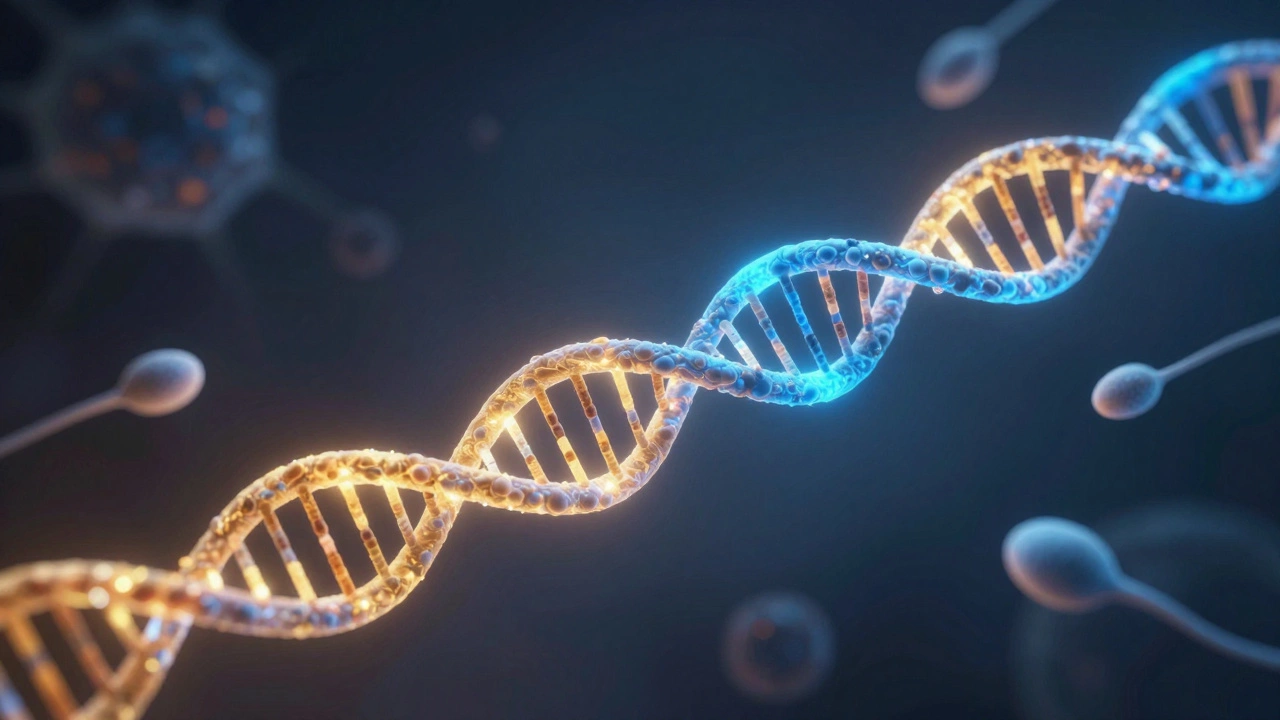
A common myth is that IVF babies are "test-tube babies" with altered genetics. This is false. The procedures used in the lab, such as Intracytoplasmic Sperm Injection (ICSI), where a single sperm is injected directly into an egg, do not rewrite the genetic code. They simply assist fertilization. The DNA remains intact from the original gametes (egg and sperm). Studies spanning decades show that IVF-conceived children have normal genetic development comparable to naturally conceived peers.
Preimplantation Genetic Testing (PGT)
Some clinics offer Preimplantation Genetic Testing (PGT), formerly known as PGD. This involves taking a tiny biopsy from the embryo to screen for chromosomal abnormalities or specific genetic disorders. Does this change who the baby is genetically? No. PGT is a diagnostic tool, not an editing tool. It helps select healthy embryos for transfer. The DNA tested is the same DNA that makes up the baby. It confirms genetic health; it does not alter lineage.
| Scenario | Genetic Mother | Genetic Father | Gestational Carrier |
|---|---|---|---|
| Own Egg + Partner’s Sperm | You | Partner | You |
| Donor Egg + Partner’s Sperm | Egg Donor | Partner | You |
| Own Egg + Donor Sperm | You | Sperm Donor | You |
| Donor Egg + Donor Sperm | Egg Donor | Sperm Donor | You |
| Own Egg/Sperm + Gestational Surrogate | You | Partner | Surrogate |
Legal Parentage vs. Genetic Parentage
It is crucial to distinguish between biology and law. In many countries, including India, the legal parents are those who intend to raise the child, regardless of genetic links. If you use donor eggs, you are the legal mother. If you use a surrogate, you are the legal parent. Courts generally prioritize the intent to parent over DNA. However, laws vary by region. Always consult a family lawyer before starting treatment to ensure your parental rights are protected, especially when third parties are involved.

Telling Your Child About Their Origins
If you use donors, the question isn’t just "is the baby genetically mine?" but "how do I explain this to my child?" Experts recommend honesty from an early age. Children raised in open environments where donor conception is discussed normally tend to have better psychological outcomes. Hiding the truth can lead to trust issues later. Frame the narrative positively: "We wanted you so much that we asked for help from a kind person who gave us the gift of life." This shifts the focus from lack of genetic tie to abundance of love and intention.
Common Myths Debunked
- Myth: IVF babies are less healthy.
Fact: While there is a slightly higher risk of certain conditions due to underlying infertility causes, IVF itself does not cause genetic defects. - Myth: Donor babies look nothing like the parents.
Fact: If you provide one gamete (egg or sperm), you will share 50% of the DNA. The child will likely resemble you in many ways. - Myth: You lose parental rights if you use donors.
Fact: Legal frameworks protect intended parents. Donors typically waive all parental rights and responsibilities at the time of donation.
Conclusion: Connection Beyond DNA
Whether your baby shares your DNA or not, the bond you form is real. Parenting is defined by care, presence, and love, not just chromosomes. If you use your own gametes, you have a full genetic match. If you use donors, you have a partial or zero genetic match, but you remain the primary caregiver and legal parent. Understanding the specifics of your treatment plan empowers you to navigate these questions with confidence. Talk to your fertility specialist about your options, and consider counseling if the idea of non-genetic parenthood feels overwhelming. You are building a family, and that starts with clarity.
Is an IVF baby born from donor eggs genetically related to the mother?
No. If you use donor eggs, the egg donor is the genetic mother. You are the gestational mother because you carry the pregnancy, but you do not share DNA with the child. The child will be genetically related to the egg donor and the sperm provider.
Can I find out the identity of the sperm or egg donor?
It depends on the type of donation. Anonymous donations keep the donor's identity secret. Open-identity donations allow the child to contact the donor once they reach adulthood (usually 18). Many clinics now encourage open-identity donations to support the child's right to know their origins.
Does IVF increase the risk of genetic disorders?
IVF itself does not cause genetic mutations. However, older egg donors or mothers may have a higher natural risk of chromosomal issues. Preimplantation Genetic Testing (PGT) can screen embryos for known genetic conditions before transfer, significantly reducing this risk.
Who is the legal parent if a surrogate carries the baby?
In gestational surrogacy, the intended parents are the legal parents, even though they did not carry the child. The surrogate has no legal claim to the baby if proper contracts are signed beforehand. Laws vary by country, so legal consultation is essential.
Will my IVF child look like me if I use donor sperm?
Yes, partially. Since you provide the egg, you contribute 50% of the DNA. Your child will inherit traits from both you and the sperm donor. They may have your eye color, hair texture, or facial structure, combined with features from the donor.