
Supplement Compatibility Checker
Select the supplements you are planning to take to check for potential conflicts or synergies.
Analysis Results
Recommended Strategy:
The goal isn't to stop taking your vitamins, but to time them right. Understanding how Vitamin Interactions is the process where two or more nutrients or medications affect the absorption or efficacy of one another works can turn a mediocre supplement routine into one that actually works.
The Big Clash: Calcium and Iron
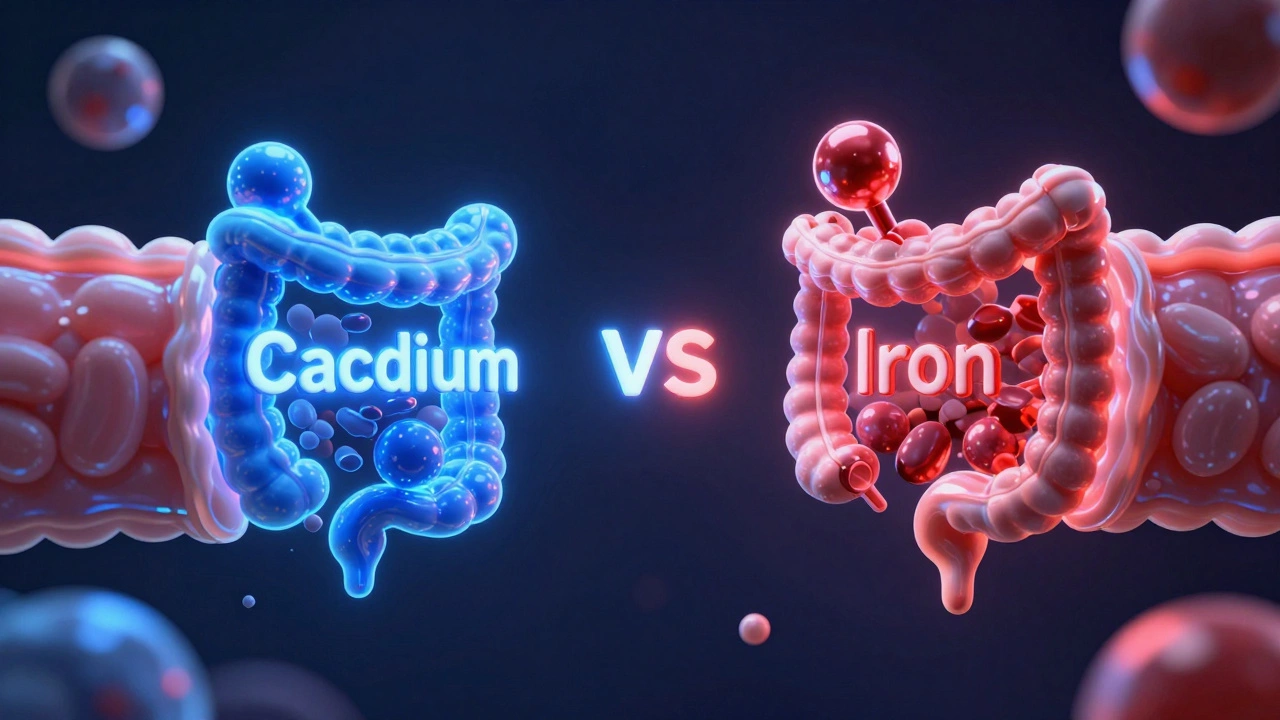
If there is one pair you need to keep apart, it is these two. Calcium is a essential mineral used for bone health and muscle contraction and Iron, a mineral critical for transporting oxygen in the blood via hemoglobin are fierce competitors. They use the same transport carriers in your gut. If you take them at the exact same time, the calcium often wins, leaving the iron stuck in your digestive tract.
Think of it like a narrow doorway where only one person can fit at a time. If the calcium crowd gets there first, the iron simply can't get in. This is a huge problem for people dealing with anemia. If you're taking an iron supplement for low blood levels, avoid dairy products or calcium pills for at least two hours before or after. Instead, pair your iron with Vitamin C, which actually opens the door wider for iron absorption.
The Zinc and Copper Balancing Act
Zinc is great for your immune system, but too much of it can accidentally shut down your copper levels. Zinc is a trace mineral vital for immune cell function and protein synthesis and Copper, a mineral necessary for iron absorption and nerve function have a see-saw relationship.
When you flood your system with high-dose zinc (usually above 40mg per day), your body produces a protein called metallothionein. This protein binds to copper and prevents it from being absorbed. Over a few months, this can lead to a copper deficiency, which might manifest as extreme fatigue or neurological issues. If you're taking a high-dose zinc supplement for a cold or skin issue, do it for a short period, or make sure your supplement includes a small amount of copper to keep the balance steady.
Water-Soluble vs. Fat-Soluble: The Timing Secret
To get the most out of your routine, you need to know the difference between the two main families of vitamins. Water-Soluble Vitamins, including Vitamin C and the B-Complex, don't need fat to be absorbed. You can take these on an empty stomach, and any excess is usually flushed out through your urine.
On the other hand, Fat-Soluble Vitamins (A, D, E, and K) are different. They need dietary fat to hitch a ride into your cells. If you take Vitamin D3 on an empty stomach with just a glass of water, you're likely absorbing far less than what's on the label. Pair these with a meal containing avocado, eggs, or olive oil.
Wait, there's a twist: some fat-soluble vitamins can compete with each other. For example, very high doses of Vitamin A can interfere with the absorption of Vitamin K, which is essential for blood clotting.
The Magnesium and Calcium Tug-of-War
We already mentioned that calcium and iron clash, but calcium and Magnesium-a mineral involved in over 300 biochemical reactions in the body-also have a complex relationship. While they are often sold together in a single pill (Cal-Mag), taking them in massive doses simultaneously can actually inhibit the absorption of both.
The trick here is the ratio. Most health experts suggest a 2:1 ratio of calcium to magnesium. However, if you are taking therapeutic doses for a specific condition, like magnesium for sleep or calcium for osteoporosis, try splitting them. Take your calcium in the morning and your magnesium in the evening. Since magnesium has a calming effect on the nervous system, taking it before bed is a win-win.
Quick Reference: Supplement Compatibility Table
| Supplement A | Supplement B | Interaction Effect | Best Strategy |
|---|---|---|---|
| Iron | Calcium | Calcium blocks iron absorption | Separate by 2-4 hours |
| Zinc | Copper | High zinc depletes copper | Use balanced formula or cycle zinc |
| Vitamin D | Fatty Meal | Fat increases absorption | Take with a meal |
| Magnesium | Calcium | Competitive absorption at high doses | Split morning/evening |
| Vitamin C | Iron | C enhances iron absorption | Take together |

Hidden Dangers: Supplements and Medications
It isn't just about vitamin-to-vitamin clashes. The real danger often happens when a supplement meets a prescription drug. For instance, Vitamin K is essential for bone health, but if you are taking blood thinners like Warfarin, Vitamin K can counteract the drug's effect, potentially leading to dangerous clots.
Similarly, St. John's Wort is a popular herbal supplement for mood, but it is notorious for inducing enzymes in the liver that clear out other medications faster than they should. This can make birth control pills or heart medications less effective. Always treat your supplements as "drugs" in the eyes of your pharmacist-they have chemical properties that change how your body processes other substances.
How to Build a Conflict-Free Schedule
You don't need a chemistry degree to organize your vitamins. Just follow a few simple rules of thumb. First, group your "synergists." Take your Vitamin D and Vitamin K2 together, as they work as a team to put calcium into your bones instead of your arteries. Pair your Iron with a squeeze of lemon or a glass of orange juice.
Second, isolate your "competitors." If you have a heavy-duty mineral routine, move your Iron to the morning and your Calcium/Magnesium to the night.
Third, listen to your body. If you take a certain combination and feel nauseous or notice a weird skin reaction, it might be an interaction or a sensitivity. Keep a simple log for a week of what you took and when. This makes it much easier for a doctor to spot a problem if you actually do feel sick.
Common Mistakes to Avoid
- The "Everything at Once" Approach: Popping 10 pills with a glass of water before work is the least effective way to supplement. You're creating a traffic jam in your gut.
- Ignoring the Label: Some multivitamins are formulated with chelated minerals, which are specially bound to prevent these interactions. If your supplement says "chelated," the manufacturers have already done some of the hard work for you.
- Overdoing the "Natural" Mindset: Just because it's a vitamin doesn't mean it's harmless. Chronic overdose of Vitamin A can be toxic to the liver, and too much Zinc can leave you with a copper deficiency that takes months to fix.
Can I take a multivitamin if it contains both calcium and iron?
Yes, you can, but be aware that the absorption of both might be lower than if you took them separately. Multivitamins often use different chemical forms of these minerals to reduce the conflict, but for people with severe deficiencies (like iron-deficiency anemia), a separate, timed dose is much more effective.
Does Vitamin C actually help with iron absorption?
Absolutely. Vitamin C helps convert iron into a form that is more easily absorbed by your small intestine. This is why doctors suggest drinking orange juice with iron tablets.
What is the best time to take Magnesium?
For most people, the evening or right before bed is best. Magnesium helps relax muscles and supports the production of GABA, a neurotransmitter that helps you fall asleep. Taking it then also avoids any absorption conflict with morning calcium supplements.
Are there any vitamins that are safe to take together?
Many are! For example, Vitamin D and Vitamin K2 are a great pair. Similarly, B-complex vitamins generally work well together since they are all water-soluble and often involved in the same energy-production pathways.
Should I take vitamins on an empty stomach?
It depends. B-vitamins and Vitamin C are fine on an empty stomach. However, A, D, E, and K need fat to be absorbed, and minerals like Zinc or Iron can cause nausea if taken without food. Generally, taking most supplements with a light meal is the safest bet.