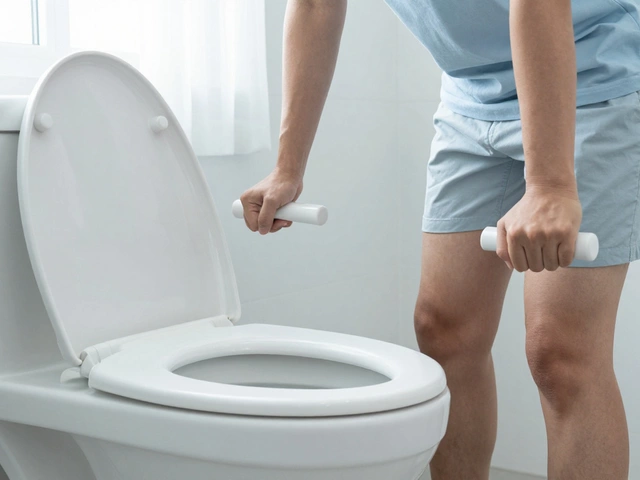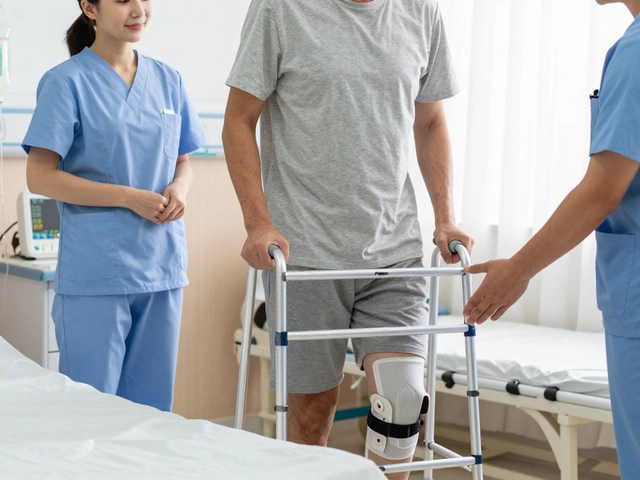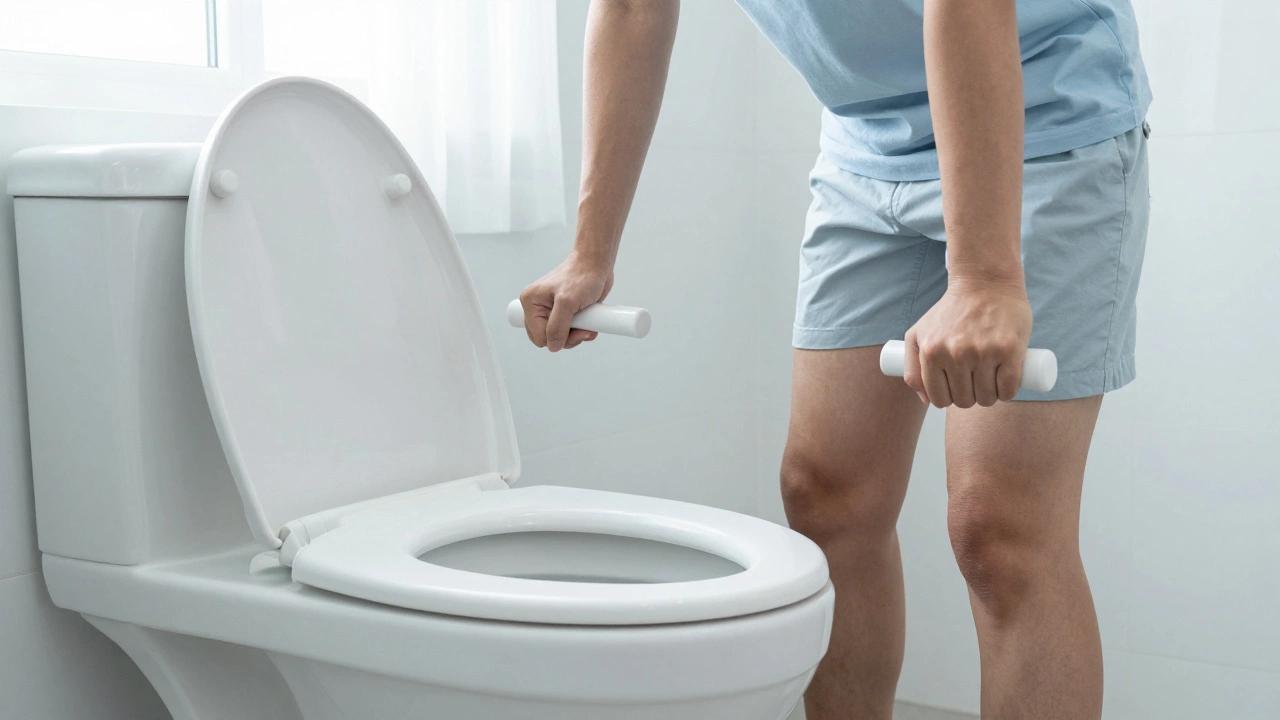
Knee Angle Safety Visualizer
Safety Status
Current Position:
Seat Height: 15 inches
Knee Angle: 90 degrees
Status: Warning
It sounds simple, but sitting down and standing up from a toilet can feel like climbing Mount Everest after knee replacement surgery is a common orthopedic procedure where damaged joint surfaces are replaced with artificial implants.. The fear of falling or bending your new knee too far is real. Most surgeons give you strict rules about how much you can bend your leg-usually no more than 90 degrees. Ignoring these limits can dislocate your new joint or damage the soft tissues healing around it.
This guide breaks down exactly how to navigate this daily task safely. We will cover the right tools, the step-by-step mechanics of moving, and how to protect your investment in a pain-free life.
The Golden Rule: Respect the 90-Degree Limit
Before you even think about the bathroom, you need to understand the biomechanics at play. After total total knee arthroplasty is the medical term for full knee replacement surgery, your surgeon likely told you not to bend your knee past 90 degrees for the first six weeks. Why? Because bending deeper than that puts excessive stress on the quadriceps tendon and the patellar mechanism. It also increases the risk of posterior capsule strain, which can lead to instability.
A standard toilet bowl sits at about 15 inches from the floor. When you sit on it, your hips drop lower than your knees, forcing your knee into a flexion angle of roughly 100 to 110 degrees. This violates the precaution. To fix this geometry, you need to change the height of the surface you are sitting on.
Essential Tools for Bathroom Safety
You cannot rely on muscle strength alone during the early weeks of recovery. You need equipment to bridge the gap between standard bathroom fixtures and your surgical restrictions. Here are the non-negotiable items:
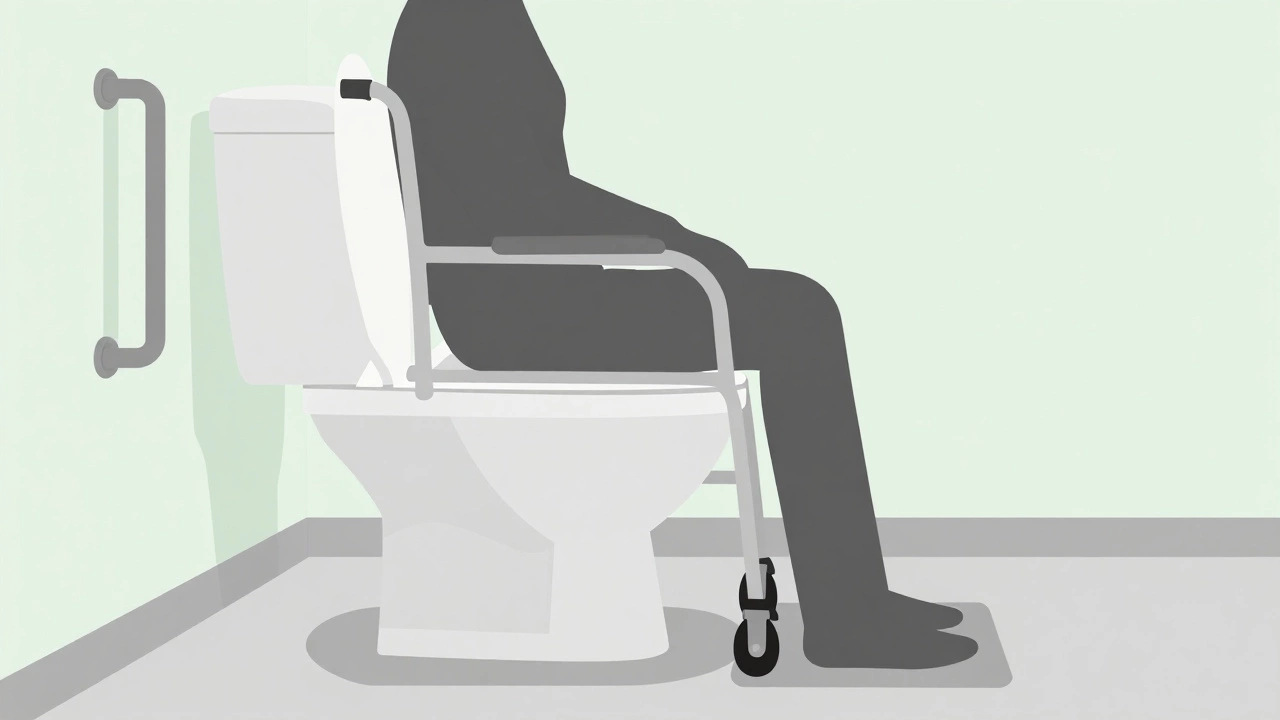
- Raised Toilet Seat: This is the most critical tool. Look for a model that adds at least 4 to 6 inches of height. A higher seat keeps your knee angle shallow (less than 90 degrees) when seated. Some models come with armrests, which provide leverage for standing up.
- Toilet Frame with Arms: If a simple riser feels unstable, invest in a sturdy frame that attaches to the toilet base. The side arms allow you to push yourself up without straining your core or hip muscles excessively.
- Walk Behind Aid (Commode Chair): For the first two weeks, many patients prefer a commode chair placed over the toilet. It looks like a shower chair with a hole in the seat. It provides four points of contact (legs) and often has wheels for easy removal. It offers maximum stability if your balance is compromised by pain medication.
- Grab Bars: Install grab bars on the wall next to the toilet. They must be anchored into wall studs, not just drywall anchors, to support your full body weight.
| Tool | Stability Level | Height Adjustment | Best For |
|---|---|---|---|
| Raised Toilet Seat | Moderate | Fixed (+4-6 inches) | Patient with good balance |
| Toilet Frame with Arms | High | Fixed (+6-8 inches) | Weak upper body or poor balance |
| Commode Chair | Very High | Adjustable | First 2 weeks post-op |
| Wall Grab Bar | High (with seat) | N/A | Assisting stand-up motion |
Step-by-Step: How to Sit Down Safely
Moving slowly is not just a suggestion; it is a safety protocol. Rushing leads to loss of control. Follow these steps precisely:
- Position Yourself: Stand facing the toilet. Place your operated leg slightly behind your strong leg. This shifts your center of gravity forward onto the healthy limb.
- Engage Your Core: Tighten your abdominal muscles. This stabilizes your pelvis and prevents twisting.
- Lower Slowly: Bend your strong knee first. Let your operated leg follow, keeping it straighter than the other. Do not let your operated knee bend beyond a comfortable angle. Use your hands on the armrests or grab bars to control the descent.
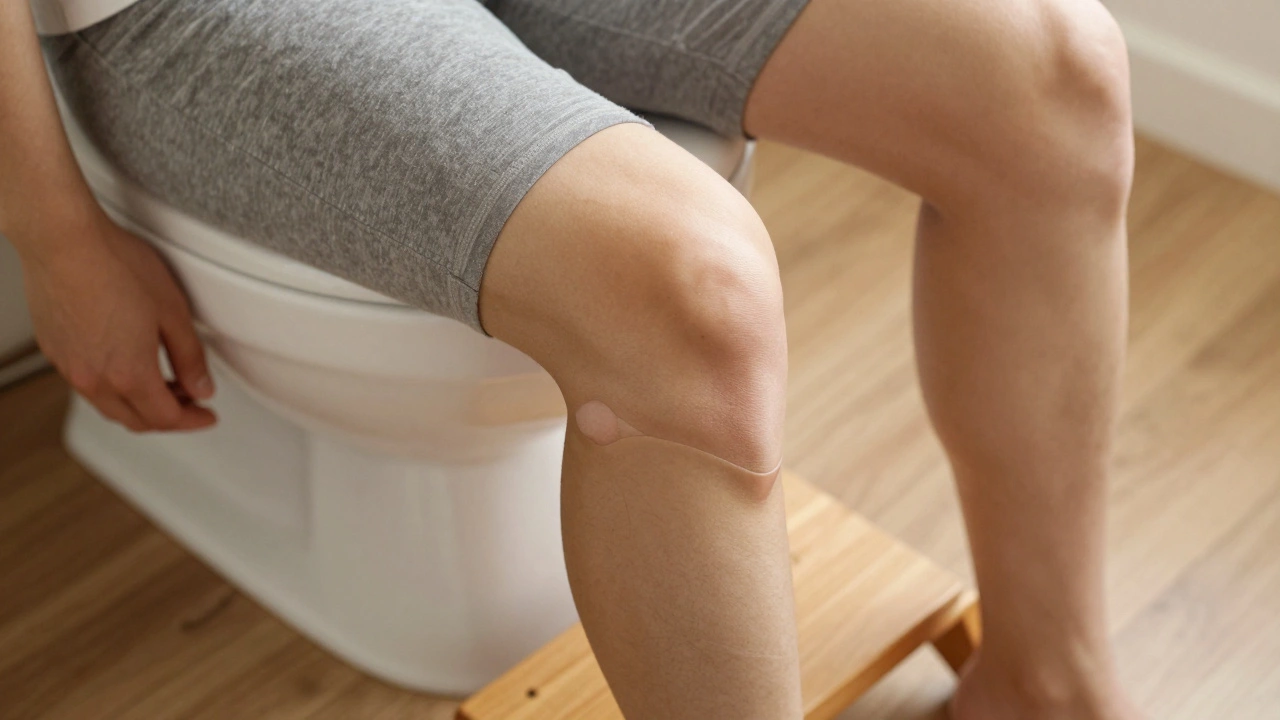
- Check the Angle: Once seated, pause. Look at your operated knee. Is it bent less than 90 degrees? If your thighs are parallel to the floor, you are safe. If your butt is lower than your knees, you are too low. Adjust immediately.
Pro Tip: Keep your feet flat on the floor. If your toes are curling because the seat is too high, use a small footstool under your feet. This actually helps maintain proper posture and reduces strain on the lower back.
Step-by-Step: How to Stand Up Safely
Standing up requires more power than sitting down. Gravity is now working against you. Here is how to generate force without hurting your knee:
- Shift Forward: Slide your hips to the front edge of the toilet seat. This shortens the lever arm, making it easier to lift your body weight.
- Plant Your Feet: Ensure both feet are flat. Push through the heels of your strong leg. The operated leg should act as a guide, bearing minimal weight initially.
- Push with Arms: Use the armrests or grab bars to push down. Your arms should do about 30-40% of the work. This takes pressure off the quadriceps of the operated leg.
- Extend the Operated Leg: As you rise, keep the operated leg straighter than the strong leg. Think "straighten out" rather than "bend and spring."
- Pause Before Walking: Once upright, hold onto the bar for a few seconds. Check for dizziness or lightheadedness, especially if you are taking opioids. Only then release and begin walking with your assistive device (walker or cane).
Common Mistakes That Lead to Falls
Even with the right tools, bad habits can cause injury. Avoid these pitfalls:
- Twisting: Never twist your torso while sitting or standing. Turn your entire body using your feet. Twisting puts shear force on the new implant and the healing bone.
- Sitting Too Long: Prolonged sitting can cause blood clots (Deep Vein Thrombosis). Get up every 20-30 minutes if possible. Keep bathroom visits efficient.
- Ignoring Pain Signals: Mild discomfort is normal. Sharp, stabbing pain means you are violating a precaution. Stop immediately and reassess your position.
- Using Slippery Surfaces: Wet floors are dangerous. Use a non-slip mat outside the shower/bathtub, but ensure it lies completely flat so you don't trip over edges.
When to Return to a Normal Toilet?
Most patients can transition back to a standard toilet height between 6 to 8 weeks post-surgery, provided they have regained sufficient quad strength and flexibility. However, "normal" is subjective. If you still struggle to stand up without using your arms, or if you feel instability, continue using the raised seat longer. There is no prize for returning to a low toilet quickly. Prioritize long-term function over short-term convenience.
Consult your physical therapist. They can assess your knee flexion and extension range of motion. If you can actively extend your knee fully and bend it to 90 degrees without lag, you are likely ready to wean off the aids gradually.
Can I use a bidet after knee surgery?
Yes, but caution is needed. Electric bidets with adjustable nozzles are safer because you can clean without leaning forward. Manual sprayers require you to reach back or lean, which may compromise your balance or exceed the 90-degree bend limit. Always test the range of motion before relying on it.
Is it better to squat or sit?
Absolutely not. Squatting forces the knee into extreme flexion (often 120+ degrees), which is strictly prohibited after knee replacement. Always use a seated position with a raised seat to maintain safe angles.
How long should I use a raised toilet seat?
Typically 6 to 8 weeks. However, individual recovery varies. If you have weak hip muscles or balance issues, you may need it longer. Listen to your body and your surgeon's advice. It is cheaper to keep the seat than to repair a fall-related injury.
What if I live in an apartment with a low toilet?
You must modify the environment. Rent or buy a portable commode chair that fits over the existing toilet. Do not attempt to build a permanent platform unless you are sure it meets building codes and is stable enough to hold your weight plus momentum.
Does the type of anesthesia affect bathroom safety?
Yes. General anesthesia and epidurals can leave you groggy and unsteady for 24-48 hours. During this window, do not attempt to use the toilet alone. Have a caregiver assist you or stay nearby. Dizziness is a major cause of early post-op falls.